Former Vice President Kamala Harris: ‘We cannot normalize’ Donald Trump’s behaviors
Feb 13, 2026 | 7:02 am ET
Description
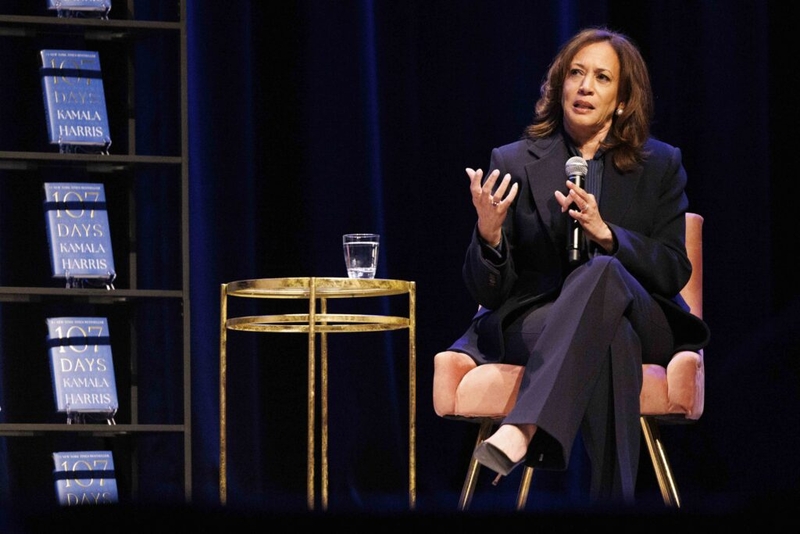
Former Vice President Kamala Harris speaks to the crowd at the Montgomery Performing Arts Centre as part of her book tour, "A Conversation with Kamala Harris," on Thursday, Feb. 12, 2026 in Montgomery, Ala. (Estela Munoz for Alabama Reflector)
Former Vice President Kamala Harris criticized President Donald Trump at an appearance in Montgomery Thursday, saying “we cannot normalize” the behaviors exhibited by the current administration.
Speaking to over 1,000 people at the Montgomery Performing Arts Centre as part of a promotional tour for her book, “107 Days,” the 2024 Democratic presidential nominee said “people are living with a lot of fear right now, and it is a result of many things.”
“We are in the unfortunate moment of having a president of the United States who uses the bully pulpit and the power of the presidency in a way that is to demean, belittle, bully, marginalize and divide,” Harris said.
She said when people live in fear they won’t fight back, but “if we feel powerless, we will be powerless. But if we feel powerful, we will be powerful.”
And things “might get worse before they get better,” Harris said to the crowd.
“At the end of it, there’s going to be an extraordinary amount of debris based on destruction, not on disruption,” she said.
Harris also said U.S. Attorney General Pam Bondi was the “personal lawyer” of a “corrupt president” who doesn’t want to address the victims of Jeffrey Epstein. The former vice president said democracy was “incredibly fragile, as we are witnessing.”
“When the people lose confidence in their government, part of what we have to understand is that when you lose that trust it nurtures cynicism and lowers expectations,” Harris said.
She said the distrust can be seen in the Trump Administration’s response to key issues like health care, child care and affordability.
“We have a health care system that’s still — we made progress with Obamacare, but it still means that there are poor people dying every day in America because they’re poor,” Harris said. “When we look at the fact that child care has been and continues to be unaffordable for most parents, in particular working parents. When we look at what’s happening in terms of affordable housing and not only the ability to buy a home, but to pay rent as well.”
When asked by moderator Tarana Burke, an activist and founder of the Me Too Movement, about how America can rebuild, Harris said the past wasn’t much better for certain groups.
“Don’t come at that thought with any nostalgia for how great things were before when for a lot of people, what was in place before wasn’t working either,” she said.
The former VP said she’d been spending a lot of time in the South including a surprise visit to Alabama State University, one of the 14 Historically Black Colleges or Universities in Alabama to engage with a student-led voter registration campaign.
“If you want to measure how well the country is doing, come down South. If you want to remember history, come down South, if we’re to think about the future of the nation, come down South,” she said.
Earlier in the event, Burke said that “evil isn’t sustainable.”
“We’ve seen cycles of it in our past and we’ve come through it in different ways but it also feels like a deep lack of imagination,” she said.
Harris said that “what we are seeing is the implementation, a swift implementation, of a plan that has been decades in the making,” mentioning former U.S House Speaker Newt Gingrich and the Southern Strategy, an electoral strategy used by Republicans to increase support among white voters, as examples of how the behaviors of the Trump administration have been implemented in the past.
Harris closed the event by reminding audience members that the status quo can be changed if people try.
“When you try and change the status quo, you’ll see that it’s quite dynamic in the way people fight against change,” she said. “But if we just decide it’s going to be too difficult, we’ll never get anywhere.”
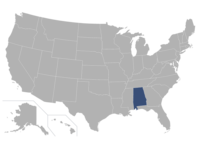
Montgomery