Former FL Supreme Court justice speaks out for an independent judiciary
Dec 15, 2025 | 7:00 am ET
Description
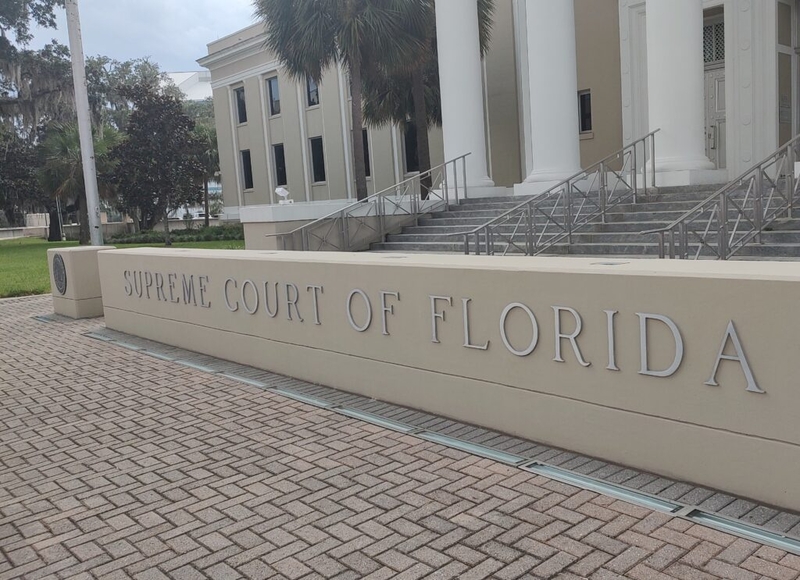
Florida's Supreme Court. Sept. 8, 2023. (Photo by Florida Phoenix)
At a time of attacks on the judicial system, a coalition of former state chief justices around the country has organized to educate the country about the role of the judiciary and the significance of its independence.
The Alliance of Former Chief Justices is a nonpartisan effort by more than 40 former state chief justices, including Barbara Pariente, who served on the Florida Supreme Court from 1997 to 2019 and was chief justice from 2004 to 2006. The group is a creation of Keep Our Republic, a nonpartisan civic education organization founded in 2020 to advocate for the rule of law and protecting democracy.
“There are increasing partisan attacks on judges in both the federal and state courts, not based on anything other than an outright partisan attack,” Pariente told the Phoenix in a phone interview last week. “And I think that it’s important for those of us who have been intricately involved with the judicial system to have our voices heard, because individual judges cannot speak out.”
President Donald Trump and allies in his administration and in Congress have questioned the legitimacy of federal judges in stark terms this year as jurists appointed by both Republicans (including Trump himself) and Democrats have rebuked his moves on illegal immigration, crime, and more.
Those verbal attacks led a bipartisan group of 150 former federal and state judges in May to send a letter to Attorney General Pam Bondi condemning the Trump administration’s attacks on the judiciary.
Criticism of the judiciary isn’t new
Previous presidents have certainly expressed displeasure with the high court.
Following a series of decisions that halted key components of the New Deal, President Franklin D. Roosevelt stunned the nation in 1937 by introducing a plan to expand the court to gain favorable votes. The plan to “pack” the court was a bust with the American public and Congress, however, and died in the Senate Judiciary Committee just five weeks later.
During his State of the Union address in 2010, President Barack Obama bashed the Supreme Court for its Citizens United case. His later criticism of the court regarding an Arizona immigration case prompted then-Justice Antonin Scalia to fire back in a written dissent.
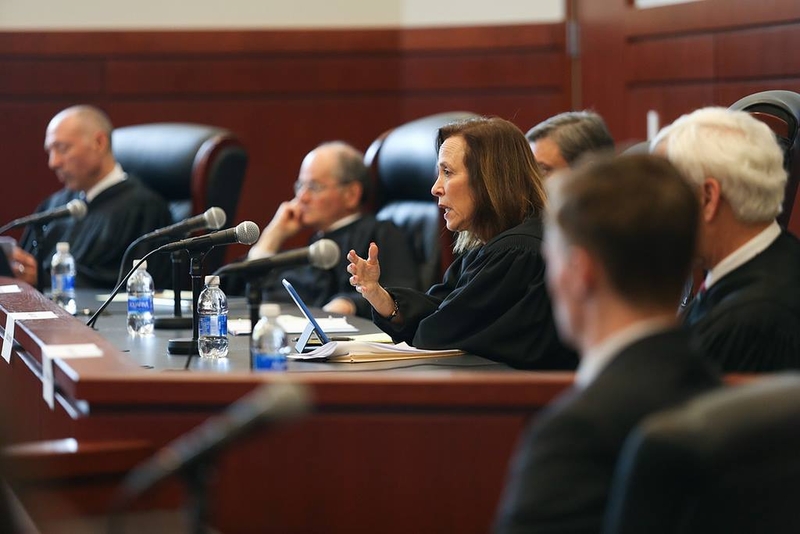
“It’s the most dangerous development I think in our country’s history,” Pariente said.
“There’s nothing wrong being unhappy with a decision. Litigants are unhappy all the time, but name-calling of the judges who rendered these decisions press against that. That is a danger, because it leads to undermining the rule of law, which has been something that has been a constant in this country for just about 250 years.”
Open letter
In 1941, FDR declared Dec. 15 “Bill of Rights Day” to recognize the importance of the first 10 Amendments to the U.S. Constitution, ratified on that day in 1791. Noting the significance of that moment, the Alliance of Former Justices is posting an open letter standing up for the judiciary as a co-equal branch of government.
“Judges cannot take sides and keep their oath to provide equal justice to all,” the letter reads. “Some people, particularly those with strong policy views, chafe under this system. They may attack judges in the hope of influencing their rulings or convincing the public that the judiciary is just another political branch. While commenting on whether particular cases were rightly or wrongly decided is a basic part of public discourse, assertions that judges are mere politicians in robes are different. Such attacks undermine the integrity of the rule of law and threaten the promise of equal justice. These attacks upset the careful balance that Madison and the other Founders crafted to limit government overreach and protect the freedoms of all.”
Pariente says the news media often focus too much on whether a judge was appointed by a particular president, something she says doesn’t happen in the state court system (in part because Florida has been controlled by one political party — Republicans — going on three decades).
“I think the danger we see from the top from President Trump and his allies tends to affect the way the public then sees judges and their decision making,” she said.
For many years at the beginning of this century, Pariente was part of a bloc of justices considered liberal-leaning. That all changed around the time of the 2018 elections, when state law required her and two other justices (Peggy Quince and Fred Lewis) to step down because they’d reached the then-mandatory retirement age of 70 (a 2018 state constitutional amendment approved by the voters extended the mandatory retirement age for justices to 75).
The Phoenix asked Pariente whether she cared to weigh in on how conservative the Florida Supreme Court has become since she stepped down in 2018. That was the year Ron DeSantis was elected governor; he’s now appointed five of the seven justices serving on the bench.
“That’s something I’m not commenting on,” she said, laughing. “I need to stay within my wheelhouse.”
Tallahassee, FL