And then there were 8. Democratic field narrows slightly in race for CD2.
May 22, 2026 | 4:40 pm ET

Description
Top: Teresa Benitez-Thompson, Kathy Durham, Gamaliel Zavala Enriquez, Matthew Fonken. Bottom: Johnny Kerns, Greg Kidd, Morgan Wadsworth (Candidate photos)
The Democratic primary race for Nevada’s Congressional District 2 began with 11 candidates. Eight are still standing.
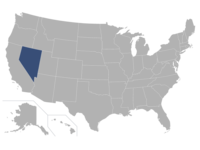
The district, which has been red since its creation following the 1980 census, encompasses much of Northern Nevada and its largely rural counties. Rep. Mark Amodei, who has held the seat since 2011, is stepping aside.
The closest a Democrat has come to winning the district was in 2006, when Jill Derby lost the general election to Republican Dean Heller by 5.4%.
Republicans outnumber Democrats in CD2 196,326 to 122,535 registered voters. Democrats are hoping some 157,396 registered non-partisans, disillusioned by President Donald Trump, could help them turn the tide.
The winner of the Democratic primary will move on to face the winner of CD’2 Republican primary in November.
Teresa Benitez-Thompson
Teresa Benitez-Thompson is the most politically experienced of the candidates and perhaps the best known. She was first elected in 2010 to the Nevada Assembly, where she eventually became majority leader. After three terms, Benitez-Thompson served as chief of staff for her former legislative colleague, Attorney General Aaron Ford, a position she left in March before filing for office.
“I’m meeting as many people as I can. It’s not just about me talking at people. It’s about me listening and understanding what is on people’s minds,” she told the Current during a phone interview. “I’m not taking anything for granted. I’m not assuming that anyone knows me.”
In a campaign video on her website, Benitez-Thompson says she wants to be a “firewall” for Nevadans against Trump’s “disastrous policies.”
Constituents, she says, are concerned that the president “acts as if laws and rules don’t apply to him, as if he’s not beholden to anyone for accountability. Not to the Supreme Court. Now more recently not to the IRS. He’s created this shield around himself, and he’s empowered to do whatever he wants, whenever he wants. They very much want a government that’s responsible to them.”
The national zeitgeist could portend the best scenario yet for Democrats to win CD2.
“I think I’ve got a chance to engage communities across Northern Nevada. I think that they want a representative who’s going to be responsive to them,” she says, adding if elected she’d hold frequent town halls “and not hide from the communities.”
Given Republican majorities in both houses of Congress, Democrats have been ineffective in attempts to rein in Trump.
Benitez-Thompson says her parliamentary skills would be an asset to the caucus. “It’s a skill set I picked up during the 2015 session when we were in the minority.”
She notes funding for Trump’s ballroom “got squashed” coming out of two committees “by internal procedural moves. You have to use your parliamentarian rules. For me it’s no holds barred. Even in a big caucus, you still have to find a way to be effective for your community.”
Amodei, Benitez-Thompson says, has ignored constituent services, an area where she intends to focus. Constituents, she says, “don’t hear from our current congressman’s office, calls go unreturned, letters go unreturned. Even if I can’t make a big federal policy change, I still want to find a way to make a change for individuals and be a great constituent services representative.”
Benitez-Thompson says she believes “policy is more important than partisanship right now” and that “people are tired of the fighting.” She points to a candidate night forum in Lyons County in which she was the only Democratic candidate. Republican candidates told the crowd that “‘Washington, D.C. isn’t listening to us. Prices are too high. Do you know how much I had to pay to put gas in my truck? Groceries cost too much, and we don’t have access to health care.’ Those are the same things I’m saying. The community wants answers, regardless of partisanship.”
Her former employer, the Attorney General, is representing the Nevada Gaming Control Board in a lawsuit against Kalshi, one of several prediction markets to gain ubiquity in the last year.
Kalshi is rejecting the notion that it should be regulated by the state to accept sports bets from Nevada bettors. The platform asserts the Commodity Futures Trading Commission’s federal authority preempts Nevada law.
“The authority I trust most on gaming is the Nevada Gaming Control Board standard for the United States, for the gold standard for the world,” Benitez-Thompson says. Kalshi, she notes, wants “to exist outside of all the rules and safeguards and regulations that we have with the Nevada Gaming Control Board, and all of the consumer protections” that go along with state regulation. “I think that there should be no federal preemption. Each state should be able to regulate as they see fit.”
If elected, Benitez-Thompson says her first priority would be to restore eligibility for Nevadans at risk of losing Medicaid. “When those 30,000 lose coverage, that does not mean that their chronic illness goes away or their health problems go away. All it means is they’re going to wait until their condition is so exacerbated that they present to the emergency room.”
Her next steps would be to restore funding for Affordable Care Act subsidies, and Medicare reimbursement rates, “because once again, hospitals, clinics, clinicians and rural hospitals can’t keep the doors open if we’re constantly lowering the payments.”
Her ultimate health care goal “is to move us to the most access, to the most quality care that we can at the lowest or no cost,” she says, adding she’s “not committed to how we get there.”
On the energy front, Benitez-Thompson says she doesn’t put much faith in Republican Gov. Joe Lombardo’s assertions that he’s clawed back funding for a handful of solar farms mothballed by Trump last year. “I don’t trust these handshake agreements,” she says of Lombardo’s claims. “Get it on paper, get something real, and then we can see if change comes.”
Benitez-Thompson is endorsed by PLAN Action, NOW National and NOW Nevada Political Action Committees, IATSE, and the Central Labor Council, according to her website.
She reported $57,000 in first quarter contributions, including $20,000 in a loan, and has about $53,000 on hand.
Kathy Durham
Kathy Durham teaches civics, history and economics in West Wendover, a small town on the Nevada and Utah border. She served on the Wendover City Council from 2018 to 2022. She entered the race before Amodei announced he was not running for re-election.
“The Democrats have never won this race before, because they’ve never run anyone from the rurals,” Durham said during a phone interview. “They have always relied on Washoe to win it, and they can never pull enough of the rural votes.”
Durham says she believes she can win because she understands “the issues that we face here in the rurals, and how people in the rurals feel like we’re forgotten.” True or not, “perception is reality,” she says, noting she’s lived in rural Nevada for 26 years.
Additionally, Durham says she can “bridge the gap” in a “very divided nation.”
“At the end of the day we’re all struggling with economic issues, whether it is putting food on the table, finding access to affordable healthcare, or finding housing for ourselves or for our kids that are graduating and trying to start their families,” she says.
Her experience as a teacher allows her to “talk about the root causes of those issues without making it partisan. I don’t focus on red versus blue. I focus on the kitchen table issues, and I break them down just like I do for my students in the classroom, in a nonpartisan way, by looking at the root cause of the problem.”
Those high school seniors, about three-quarters of whom are from immigrant families, according to Durham, are noticing similarities between the America of today and the dawning of the Nazi era in Europe. “If most people could think back and remember their history classes, I think they could very easily make the connections.”
If elected, Durham says she intends to hold officials accountable.
“Our Constitution is not being followed. Not only is it being dismissed, it’s being dismantled and disregarded,” she said. “There are a lot of investigations that we need to be having, and a lot of oversight hearings we need to have.”
Her priority in office would be to repeal Trump’s tax cuts for the rich, which were made possible by massive cuts to safety nets such as Medicaid, the Supplemental Nutritional Assistance Program (SNAP), and Affordable Care Act subsidies.
Health care can be fixed one step at a time, she says, with the eventual goal of removing the middle man – the vertically integrated insurance industry, and adding a single-payer system where the government pays medical professionals.
“Every aspect of the healthcare industry is basically owned by your insurance company, and because there’s only three or four insurance companies, there’s very little competition,” she says. “Let’s get me to office, reverse the cuts that were made to Medicaid, restore the ACA tax credits, and then work on a system with no copays, no premium, and good quality care.”
Durham says Democrats in Congress are likely doing all the can with their hands tied by Republicans. She says it’s hard to say Democrats erred in caving late last year during the government shutdown.
“I used to play poker, and you don’t play a hand if you think you’re going to fold it,” she said. “So either you have the shutdown and you stay firm on it, no matter what it costs, until you get what you want, or you don’t put the people through the pain and then fold anyway, because we ended up getting nothing.”
Nevada gaming regulators are currently engaged in a legal battle over control of the state’s sports betting industry. The Commodities Futures Trade Commission says its authority over prediction markets extends to allowing the platforms to take sports bets from inside the state.
If elected, Durham says she’ll work to keep federal regulators out of Nevada’s gambling industry. “I really do think that that should be a state’s rights issue, and I think that our state should be able to decide.”
Gamaliel “Gamy” Enriquez
Gamaliel “Gamy” Enriquez says he has a “PhD in the School of Hard Knocks” that enables him to connect with those who struggle.
Enriquez was born to Mexican immigrants who eventually became U.S. citizens. During the Great Recession he lost his job with Wells Fargo and went to work for a financial firm that was, without his knowledge, he says, engaged in fraud. As a result, Enriquez was charged with wire fraud and mail fraud. He was under pretrial supervision for about a decade, and served 10 months in a halfway house.
He has since obtained a Masters Degree in Public Administration from the University of Nevada Reno.
Enriquez has a small business importing organic sustainable coffee from Columbia. He helps make ends meet by delivering for Door Dash, a job that gives him an up close view of CD2’s K-shaped economy, characterized by a divide in prosperity.
“I go to these gated communities, right on the foothills of the Sierra Nevadas,” he says of neighborhoods where the luxury of delivered meals doesn’t put a dent in the wallet. “Then I deliver to mobile parks, and it just blows my mind. Everything is so expensive.”
Nevada, he says, “has been treated as a colony for such a long time. It’s a shame that we have so much wealth, and we are kept divided by identity politics.” Enriquez adds he intends to “leverage his passion for justice in Congress to make laws that truly benefit Americans from across the political spectrum.”
The first-time candidate is not a political novice. He served as a delegate for U.S. Sen. Bernie Sanders during the Vermont senator’s 2016 presidential bid. He says a Sanders interview he heard in 2015 about economic inequality was an epiphany. “We are all a product of our environment, specifically a set of rules, laws, political, economic, and social. One set of rules for the 1% and a completely different set of rules for the 99%.”
Enriquez observes “there’s a reason why, for the last decade, both Trump and Bernie Sanders have been among the most popular politicians in America. Both are rightly criticizing the established order. However, they offer night and day solutions. Bernie Sanders is about inclusion, and Trump has pulled a fast one on folks. He has sold them snake oil.”
The notion that one can “pull themselves up by their boot straps” is a fallacy, says Enriquez, whose legislative agenda is to establish universal income of $1,300 a month “from cradle to grave, paid for by billionaires who do not pay their fair share. When safety nets aren’t universal they are easier to cut.”
On the immigration front, he contends Republicans and Democrats have maintained a system that is “broken by design. They say we need to secure the border first, then we’ll talk about reform. That’s hogwash designed to ensure reform never happens. The truth is, we cannot have border security without comprehensive immigration reform.”
Enriquez is cognizant that apathy may overcome potential voters and encourages those who believe in change to participate.
Matthew Fonken
Matthew Fonken is no stranger to red rural districts. The candidate says he was raised on a farm in Arkansas and his last job was national field director for Blue Wave America, which organizes red rural districts across the nation.
“I’ve been organizing this district for a decade, getting folks out to vote, talking, teaching them how to get involved in their local government,” he says. “Whether it’s testifying in front of their county commission or their city council or state legislature, I’ve been fighting for federal issues.”
He’s worked in civil engineering, urban planning, hospitality management, and as the executive director of the Nevada State Democratic Party. Now he wants to represent Nevada in Congress.
“Working people built this country. It’s time they had someone in congress who fights like it,” says his website.
“What we have seen for decades now is both parties are beholden to their big donors. They’re beholden to corporations and billionaires,” Fonken says. “Right now we have an administration that is not being held accountable, and that is by our own Democratic Party.”
If elected, Fonken says he’d work with the Nevada delegation to “hold the line” and not cave to Republicans – a challenge in a delegation that prides itself on its bipartisanship.
“Holding the line is for the American people, not for the party,” he contends. “That is where bipartisanship comes in. There are plenty of Republicans who love their country and believe in its promise still, and we need those folks in coalition with us to stand against this administration.”
Trump’s latest endeavor – a $1.8 billion fund for those he perceives to have been victimized by the Justice Department – is “absurd,” says Fonken. “Capitol police defended this nation, defended democracy for hours that day against an insurgency that was promoted by Trump, and it is a dangerous precedent to set” to reward the rioters. “I would be standing with my delegation, with congressional members, in coalition against this.”
On the health care front, Fonken notes “millions of Americans are going to be affected by cuts to Medicaid, and the Affordable Care Act” and suggests new lawmakers work to “get those folks covered as soon as possible” and then “start working toward a Medicare for all system.”
Fonken supports a moratorium on the construction of data centers “to make sure we have the proper economic impact studies done.”
Gerold Gorman
The Current was unable to locate a website or any signs of an active campaign for Gorman.
In 2022, he received 2% of the vote in the Democratic primary race for CD2.
Johnny Kerns
Johnny Kerns announced his candidacy for CD2 in February 2025, long before Amodei said he would not seek reelection.
Kerns is a retired homicide investigator – not with a police department, but independently and in partnership with the Department of Justice and the Bureau of Justice Assistance.
He’s also an author, drawing on murder cases he solved for inspiration.
In 2024 he unsuccessfully ran for Senate District 15 on a platform of revising Nevada’s eviction laws, which he calls “some of the more draconian in the country.”
He’s running for Congress primarily because of the United States’ $39 trillion deficit, which he calls the greatest national security threat to America.
“Well-respected leaders have pointed out it is a far more serious threat than AI, terrorism, Iran, Korea, China, or Russia,” he said during a recent interview. “I think about how many issues we could solve if we weren’t spending $150 billion a month on interest. We could house people, give people health insurance, and not strip government safety nets. When Donald Trump says we can’t afford universal pre-K or healthcare, what he’s really saying is we have to choose between guns and butter, and I think the American people have had enough.”
Kerns acknowledges a Democratic victory in CD2 would be a challenge. He’s concentrating on the primary, for now.
“I’m hewing to the center,” he says. “I’m hoping my law enforcement background is appealing to moderates and the more conservative members of the community. I’m gay, and I’ve been active in the LGBTQ community, and really trying to rally that base.”
Kerns notes “four or five of my opponents decide to band together and create the anti-establishment caucus,” he says of Josh Hebert, Samuel White, and Mark Jolle, who dropped out of the race in the past week to endorse Morgan Wadsworth. “I really think it is more of an anti-experience caucus. They’re all newcomers, no experience in government. To me that’s a tough sell, because in order to serve in the United States Congress, you’ve got to have a really well-rounded base of knowledge about the 30 committees of the House, what they do, and the functions of the Senate.”
Kerns says he has reservations regarding the Truckee Meadows Public Lands Management Act that would make more than 15,000 acres available for development, while setting aside some 700,000 acres for conservation.
“We have tribal lands. We have water issues, energy issues, and so if you’re just going to open up that land and build a bunch of data centers and drive up the cost of living for working Nevadans, you’re really not addressing the problem,” he asserts. “You’re making it worse.”
Kerns says he’s willing to cut congressional Democrats some slack for their legislative impotence, given their minority status. He suggests it’s time to take a lesson or two from Republicans.
“You almost have to admire their cunning, because even in the minority, they keep their members in lockstep,” he says, crediting Leader Mitch McConnell’s grip on the caucus. “The Democrats can’t always really keep their members in line. To me that is a problem with the whips and with leadership.”
While he admires and values bipartisan compromise, a specialty of Nevada’s delegation,
“when it comes to things that go against the constitutional values of our American democracy, there can be no compromise. We cannot compromise our integrity or our ethics to watch a few things slide by and hope that it doesn’t get worse.”
Greg Kidd
Greg Kidd, a technology and finance businessman who owns a home in California, says he’s lived in a second home in Lake Tahoe’s Crystal Bay for five years. In 2024 he self-funded his race to the tune of $9 million as a nonpartisan against Amodei and garnered 36% of the vote.
Kidd was previously a Republican. He’s loaned his current campaign $560,000.
Kidd says it’s “clear that the Republican Party is just not functioning as a party. It’s just an organization of a person, and the Democratic Party now clearly has got to get its act together to basically bring accountability back to Congress. I want to make sure I’m working with the only functioning party in the country today to get the House flipped and to get accountability back.”
He’s endorsed by Rep. Susie Lee (D-NV).
The tech expert says on his website that large artificial intelligence companies should be taxed, with a share of “productivity gains” paid to Americans.
“Here in Nevada, we’re seeing data centers prioritized over citizens, and AI companies doing everything they can to avoid regulation,” he wrote in a recent paid piece that appeared in This is Reno. Kidd added that he’d fight for “real AI regulation that prioritizes human flourishing.”
Tax incentives should be awarded to companies that “upskill” workers displaced by AI, says Kidd’s website, and powerful AI models should be required to undergo product safety certification in the same manner as prescription drugs.
The best approach, he says, is to elect representatives who understand AI. The government, he adds, needs to know the technology it seeks to regulate and develop contingency plans now for “large-scale risks.”
“There’s all sorts of uses of AI that are problematic and need strong federal regulations,” he said during an interview. “Surveillance is one area. Kill technology. We’ve seen it also just in the new things coming out with Tesla and self-driving vehicles.” He supports federal legislation to control AI, which he says should not be used to “build a surveillance state” or for autonomous military weapons.
Data centers, Kidd says, should not be subsidized, but rather “paying us” by replenishing water and power. “You wouldn’t put them in a place, for me, like Nevada, where we’re short on power, and we’re short on water.”
The nation, he notes, lacks “a national strategy for the grid, so the whole concept of the balance between production, transmission, and storage is helter skelter. We don’t even have a federal strategy on energy, and data centers.”
Kidd, who served in the Federal Reserve’s payments division, notes he comes “from a regulatory background. I worked on the deregulation of the telecommunications industry. We had a national strategy. We consciously changed it to allow innovations like the internet to flourish, and we need to do the same thing for energy.”
He calls Lombardo’s piecemeal approach to winning back funding for solar projects “helter skelter. It’s better than nothing, but that’s just like a patronage system. You can’t compete with China when you just have a system of favors – a governor of the same party, and he gets a couple of gold coin tokens thrown back his way, because he hobnobs. Hobnobbing is not a substitute for a strategy.”
Kidd, a digital currency entrepreneur, doesn’t put much stock in Nevada’s legal fight against federal regulators who assert supremacy over Nevada gaming law when it comes to sports betting on prediction markets.
“While I laud the intention, you have to understand some things to have effective regulation,” he says in reference to the internet. “You need strong regulation at the federal level. You can have additional regulation at the state level, but if you’re going to have states playing themselves off against each other, it’s just a race to the bottom.”
Having a variety of state regulations is confusing and ineffective, he says.
“I support regulating sports betting on prediction markets, because sports are just another thing that people bet on. Whether you do it in a casino or you do it on the internet, you don’t get a different kind of regulation because of the roof you have hanging over your head.”
A campaign spokesperson subsequently told the Current that Kidd “would work to ensure Nevada retains its primacy.”
On health care, Kidd supports a single-payer system, in which medical professionals are paid a salary and health insurance ceases to exist.
He believes other necessities should be free, including phone service, public transportation, pre-school, and kindergarten.
Kidd says Trump has “picked a war” with Iran that has only inflated the value of that nation’s resources to $27 trillion – half the value of the U.S. stock market. “It is a gift to the Iranian regime and Vladimir Putin.”
If elected, he says he’ll stand up to bullies by funding Ukraine and abandoning “penny-wise-pound-foolish isolationism.”
He also champions immigration reform that allows for the “right levels of legal immigration and guest workers.”
America’s tax code, he says, should be adjusted so that it doesn’t disproportionately hurt those who are unable to pay.
Nevada, he says, has the most “antiquated property taxes in the country,” based on depreciated value rather than market value. The state’s education system, which is funded by property taxes, has the “worst spending per student in the country. And the worst outcomes.”
Morgan Wadsworth
Morgan Wadsworth hails from a Nevada ranching family. At a recent gathering of the candidates in Carson City, Wadsworth noted she’s the first in her family to attend college.
Wadsworth says she got into the race because of health care and because Amodei voted for Trump’s Big Beautiful Bill. The 27 year-old says she’s had no health insurance since her ability to remain on her family’s policy expired at age 26.
“I’ve watched both parties fail to deliver,” she says on her website.
Wadsworth says she supports the Make Billionaires Pay their Fair Share Act, which is sponsored by Sen. Bernie Sanders and California Rep. Ro Khanna.
Wadsworth has raised $3,600. Her website says she declines contributions from the American Israel Public Affairs Committee, one of the most influential lobbying groups in the U.S.
She did not respond to the Current’s request for an interview.
Las Vegas, NV