Final executive punished for VC Summer failure to spend at least 10 months in prison
Nov 20, 2024 | 5:24 pm ET
Description
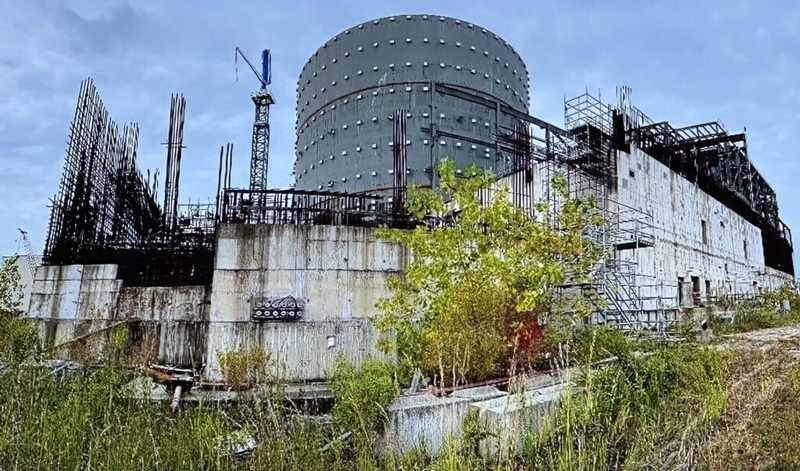
The unfinished Unit 2 nuclear reactor pictured Sept. 12, 2024, at VC Summer nuclear site near Fairfield. (Provided by S.C. Nuclear Advisory Council)
COLUMBIA — The final businessman punished for lies contributing to the $9 billion failure of a South Carolina nuclear power project must spend most of 2025 in prison and pay a $100,000 fine.
The sentencing Wednesday of Jeff Benjamin, a top executive for Westinghouse Electric Co., puts an end to the seven-year criminal investigation into the V.C. Summer debacle, which cost residents and businesses billions of dollars. It also caused one company to declare bankruptcy and another to fold, and landed two other men in prison.
Benjamin pleaded guilty in December to aiding and abetting the failure to keep accurate corporate records, a charge that carries a maximum sentence of 20 years.
U.S. District Judge Mary Geiger Lewis sentenced him to the maximum under his plea deal: One year in prison.
Benjamin will be eligible for parole after 10 months, prosecutors said.
It’s unclear when he will report to prison to start his sentence.
7 years after SC nuclear debacle, advisory group suggests potential restart of failed project
Benjamin admitted to telling presidents of the now-defunct SCANA that the plan to build two nuclear reactors in rural Jenkinsville, a town about 30 miles northwest of Columbia, was still on track, despite the subcontractor his company had hired saying there was no way the power plants would be done in time.
In order for the project to receive more than $1 billion in federal tax credits, it had to be completed by the end of 2020. But Benjamin knew by 2015 that the subcontractor Westinghouse had hired for construction was estimating that the project would take until at least 2022, attorneys said.
SCANA filed a public disclosure based on Benjamin’s false assurances, misleading investors and allowing the money to continue rolling in for the project to continue. Benjamin did not attempt to correct the information in the report, his attorneys and prosecutors said Wednesday.
Even after pleading guilty, Benjamin’s attorneys argued that he did not knowingly lie. He had reason to be skeptical of reports from the subcontractor, which had not yet completed its own report that would have allowed Benjamin to get a better idea of the schedule, attorney William Sullivan argued.
At the same time, Benjamin told the judge Wednesday that he did not “believe in my heart” that the deadlines he had set out were feasible. He knew based on the subcontractor’s reports that delays might run up a total of $2 billion to $4 billion.
“That would’ve been survivable,” Benjamin said.
At the very least, a heads up that the subcontractor had some concerns about the timing could have potentially prevented some of the mess that followed, Lewis said.
“This is not a mistake,” the judge said. “This is an intentional action and a crime.”
Senators rail against fast-tracked gas plant proposal: ‘That still burns me!’
Westinghouse told SCANA and state-owned Santee Cooper, the utilities that jointly hired the company to build the two reactors, in 2017 that the company was facing a $6.1 billion loss from the project.
The utilities then abandoned the project, but not before spending $9 billion.
Westinghouse declared bankruptcy. SCANA was eventually acquired by Dominion Energy.
Dominion’s 800,000 customers are still paying 5.6% more on their monthly electric bills — about $8 per month for the average residential customer — to pay off $2.3 billion in debt for the failed reactors.
Part of the reason prosecutors agreed to a plea agreement was because the full extent of the damages Benjamin’s actions caused would be difficult to prove in court, said Assistant U.S. Attorney Winston Holliday.
By the time Benjamin started working on the project in 2013, it was already over budget and delayed. The eventual downfall of the power plants, including the loss of roughly 4,000 promised jobs, can’t be chalked up to a single person’s actions, Holliday said.
But there was no question that he played a significant role in its downfall, Lewis said.
Considering that Benjamin had no other criminal history, and that he pleaded guilty, he usually would have received a prison sentence between zero and six months. Friends and family pleaded for Lewis to sentence him to probation, saying he is an honest man with a sense of integrity who has suffered recent cardiac problems that might get worse in prison.
But Lewis opted for a longer sentence in the hopes of deterring other corporate executives from feeling they could get out of similar situations by simply writing a check, she said.
“I have to make sure that this is enough for people to say, ‘It doesn’t matter if I’m in the C-suite or if I’m in the projects. I have to respect the law,’” Lewis said.
Benjamin was the fourth and final executive sentenced in the case.
SCANA CEO Kevin Marsh spent two years in federal prison. The company’s Chief Operating Officer Stephen Byrne got 15 months, which he has not yet served. Each had to also pay a $5 million fine for misleading regulators.
Here’s how much SC power customers are still paying for a failed nuclear project
Carl Churchman, who worked as the head of the VC Summer project under Benjamin, received six months of home detention after pleading guilty to lying to an FBI agent on the case.
Those four were the people prosecutors could prove had broken the law, Holliday said.
Prosecuting those four cases took seven years because of complicated legal filings from high-powered defense attorneys.
Benjamin’s case came last in part because he had to be indicted twice, after Lewis previously ruled grand jurors who agreed to his first indictment may have been ratepayers who had to pay more because of his crime.
The sentencing comes as legislators are poised to again consider a controversial energy bill that drew criticism from environmental and consumer groups for undoing safeguards put in place after the VC Summer debacle and shrinking the state’s regulatory panel that oversees utilities.
The bill, which is meant to address concerns about whether the state will have enough energy to continue supporting its economy, would allow Dominion Energy and Santee Cooper to potentially partner on building a natural gas plant in Colleton County.
The House passed the proposal 88-21, but it died in the Senate. Its leaders instead decided to study it future during the off-session months.
Columbia