Experts: Ending Alabama PSC elections will likely do little to lower power bills
Feb 20, 2026 | 8:01 am ET
Description
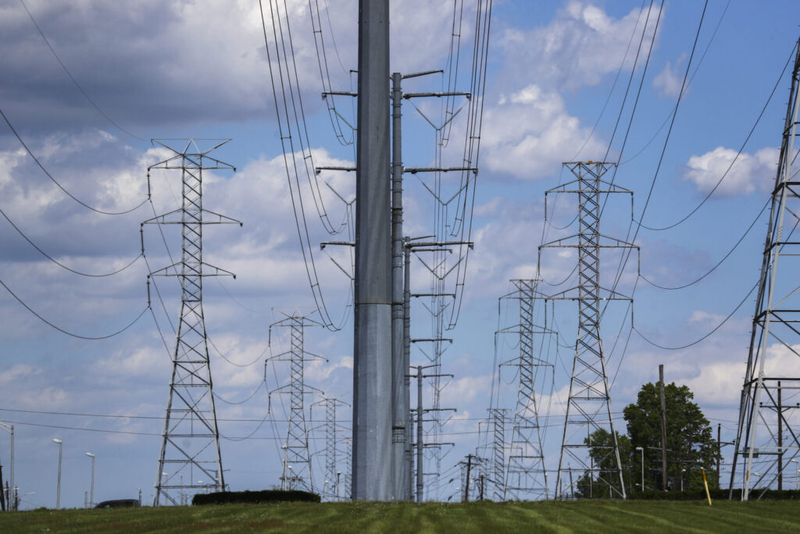
The Alabama House of Representatives is considering legislation that would end elections to the Alabama Public Service Commission and replace it with an appointed body. Supporters said it could lower Alabama's high power bills, but experts say that the way a regulator is assembled does little to affect prices. (Dana DiFilippo/New Jersey Monitor)
Supporters of a bill that would end popular elections to the state’s utility regulation board argue it could help bring down Alabama’s high power bills.
“I think that if we move toward an appointed Public Service Commission, we have an opportunity to reset things and at least have an opportunity to get our rates down,” said Rep. Chip Brown, R-Hollinger’s Island, the sponsor of HB 392, which would end elections to the Alabama Public Service Commission, after a House committee approved the bill last week.
But public utility experts said evidence that appointing utility regulators leads to lower costs is, at best, mixed. Electricity rates are tied to other factors independent of how utility regulation boards are formed.
“In general, utility bills reflect decades of utility investment decisions and PSC decisions about the return on equity,” said Ari Peskoe, director of the Electricity Law Initiative at the Harvard Law School Environmental and Energy Law Program, in a statement.
Peskoe said that regulators approve the rates that public utilities charge customers from operations and investments.
“Utility rates vary because utilities have different operational costs and make different investment decisions, in part based on geography and a host of factors beyond the utility’s control,” he said.
Brown’s bill was removed from consideration shortly before a scheduled vote on Feb. 12. Brown continued to defend the bill later that day.
“This is all about trying to get our rates down,” he said in a press conference. “And it is about a Public Service Commission that has been failing the state of Alabama for over 100 years. We have not had open rate hearings for decades, so this is an effort to try and bring the Public Service Commission out of the dark and into the light.”
What drives costs
House Speaker Nathaniel Ledbetter, R-Rainsville, told reporters last week that he supported Brown’s bill.
“Alabama is one only one of 10 states that doesn’t appoint the Public Service Commission members,” he said. “Of the states in the United States, those 10 states with an election have the highest utility rates in the country.”
It was unclear whether Ledbetter was referring to electricity rates solely or the cumulative rates that people pay for all their utilities, but residents in Alabama are paying some of the highest electricity rates in the southeastern United States.
According to the Energy Information Administration, state residents pay more than 16 cents per kilowatt-hour for electricity, more than any neighboring state of Kentucky, Tennessee, as well as Mississippi.
But elections alone do not predict high energy rates. Hawaii and Maryland, whose state utility regulators are appointed, had the highest average monthly electricity bill at almost $200 for November 2025, according to Electricity Plans, a website that tracks electricity rates. Connecticut, which also has an appointed board, had an average monthly electricity bill of $187. Alabamians pay an average of $183 a month.
Montana, which elects its state public utility regulator, pays about $109 per month for electricity, the third lowest in the country. Nebraska, which also elects its state regulator, is within the 10 states with the lowest electricity costs.
Experts say bills have been rising throughout the country, though not at the same rates. Alabama’s bills have been rising at the same rate of inflation, according to Erik Nordman, director of the Institute of Public Utilities at Michigan State University.
“The places that we see electricity rates rising the fastest are in California, and in the northeast, including New York and Maine,” Nordman said.
Rising fuel costs are playing a role in higher electricity prices. Extreme weather is also a factor, whether wildfires in California or hurricanes and tornadoes in the Southeast.
The costs related to nearly all factors of production needed to generate power have increased, according to a December 2024 report by the Lawrence Berkeley National Laboratory.
The report states that capital expenditures related to distribution systems increased by about 44%.
“We have lots of electric infrastructure that is more than 50 years old and needs to be replaced just to keep the system working,” Nordman said. “That includes transformers, poles, wires, generating equipment, transmission lines, all these things generally. At the same time, we are trying to have more resilient infrastructure, so we don’t have as many outages as we used to.”
Generating profit
Infrastructure needs have an outsized impact on electricity prices because that is how companies such as Alabama Power generate profit. They are allowed to generate a profit for capital investments and recoup the cost of business operations.
But the rate of return, and with it the rates charged to customers, depend on the veracity of the state regulator at analyzing the economic reality compared to the rates that the public utilities want to charge.
“The Public Service Commission is going to have a relationship with the utility as the regulator,” Nordman said. “At some point, you have to trust what the utility is telling you, but also, you do have to do your due diligence and verify that these are real needs of the utility.”
Since 1982, the Alabama PSC has used a process known as rate stabilization and equalization, which effectively guarantees utilities a rate of return on their investments. Unlike a traditional rate hearing, the utility does not have to publicly present data to justify a rate increase, and the public is largely excluded.
The PSC has largely accepted the rate requests made by Alabama Power, the state’s largest utility. This includes the purchase of a natural gas power generating station in Autauga County that allows the company to charge an additional $3.32 to the monthly bill of residents.
At Alabama Power’s request, the PSC last year implemented a rate freeze for the next couple of years in response to increasing electricity rates. The move came shortly after Georgia voters sent two Democrats to that state’s Public Service Commission after a campaign focused on affordability issues.
Opponents of the bill say it does nothing to address the current ratemaking process.
“Essentially, this bill does nothing to actually reduce cost,” said Daniel Tait, executive director of Energy Alabama, a member-based organization that advocates for more renewable energy. “This is a governance change that is being proposed. There is no material difference between elected commissions and appointed commissions.”
The rules in some states require that commissions be composed of both Democrats and Republicans. Brown’s bill would not require bipartisan appointments
Organizations such as Energy Alabama said that the impact of changing who is on the commission pales in comparison to changing the process currently in place for deciding electricity rates.
Tait said opening the rate-setting process could lower bills “because it cracks open the books and actually deals with things like profit of the utility company.”
Energy Alabama, in collaboration with the Southern Environmental Law Center, filed an appeal with Alabama Supreme Court to join a docket to set the rate Energy Cost Recovery, which is the fee that Alabama Power charges to customers for the cost to purchase fuel to generate electricity.
“What makes it worse in Alabama is the underlying rate structure, the lack of a rate case, and high profits,” Tait said. “Alabama Power has one of, if not the highest, profit margins of investor-owned utilities in America. That is just untenable in a state that has as much poverty as we do.”
Currently, the PSC adjusts the rate based on interim consent orders without public input, which there has not been a hearing since 2008.
For his part, Brown’s bill includes a section that requires the PSC to host a hearing with public utilities to discuss the costs and rates. However, Tait wants additional reforms.
“There are things that the Legislature could force the Public Service Commission to open up regarding energy efficiency, for instance, and helping people save on their utility bills through those sorts of investments,” Tait said. “Things over experience and background, expertise, those types of requirements, could very well be good.”
Montgomery