Environmental groups join call to open DTE data center contracts to public scrutiny
Nov 21, 2025 | 3:31 pm ET
Description
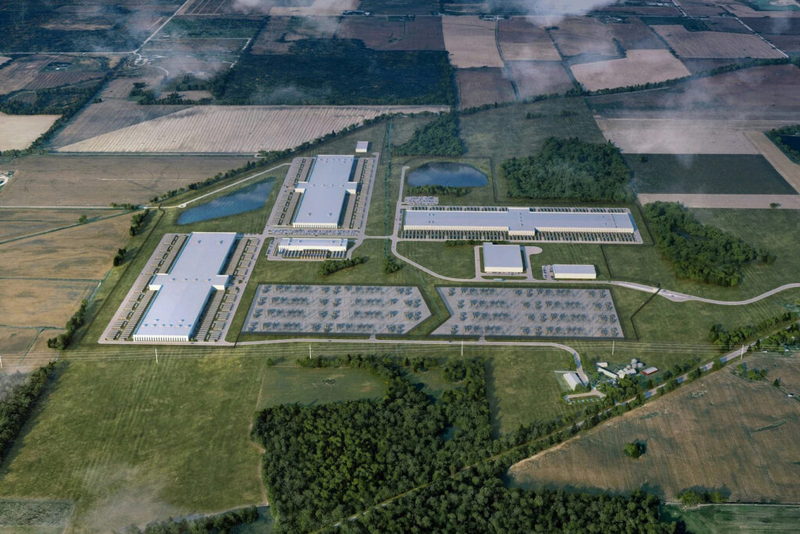
A rendering of Related Digital’s planned data center in Saline Township, Mich. Credit: Related Digital
A handful of environmental advocacy groups on Thursday submitted a petition to intervene as energy regulators review contracts for one of the state’s largest energy companies to supply energy for an incoming data center in Saline Township.
The Sierra Club, Michigan Environmental Council, Natural Resources Defense Council and Citizens Utility Board of Michigan are calling on the Michigan Public Service Commission to initiate a contested case proceeding in reviewing DTE Energy’s contracts, arguing that this type of proceeding is needed for the groups to properly evaluate the company’s proposal and advocate for Michiganders who will be impacted by the project.
At the end of October, DTE filed an ex parte request with the commission, which oversees Michigan’s energy companies. This type of request does not require public hearings, nor does it allow interested parties to conduct discovery and file testimony for the commission to review before making its decision on the contracts.
Michigan Attorney General Dana Nessel filed her own request asking the commission to treat the matter as a contested case to ensure customers aren’t left to foot the bill on energy costs tied to the project.
While the public service commission has since announced plans to hold an online session for public comments, Nessel argued that taking comments without hosting formal hearings on the matter or declaring a contested case, amounted to “performative listening rather than thorough public scrutiny.”
Michigan regulators to host public hearing on DTE contracts for Saline Township data center
As of Tuesday, Nessel’s office said the commission had not responded to her request. Matt Helms, a public information officer for the public service commission, declined to comment Friday when asked if the regulatory body had responded to either Nessel’s request, or the environmental organizations’.
In a statement to the Michigan Advance, Ryan Lowry, a DTE spokesperson, said the contracts under review by the public service commission ensure that its customers rates will not increase as a result of the data center project, which is being developed by Chat GPT creator Open AI, Oracle and Related Digital.
“DTE, like the Attorney General and the [public service commission], is focused on customer affordability, which is why we have taken additional steps in our contracts with Oracle to ensure the data center will absorb all costs associated with the storage assets that are being developed as part of this project,” Lowry said.
However, both Nessel and the environmental intervenors argue the company hasn’t provided enough evidence in its request to prove that residents will not be impacted by the deal.
“Transparency is not optional. Under Michigan law, the [commission] cannot approve utility requests that will result in increased costs for ratepayers without giving other interested parties an opportunity to fully participate in the proceeding,” Elena Saxonhouse, a managing attorney with the Sierra Club’s Environmental Law Program, said in a statement. “With so many data center proposals on the way, and so many questions about how each project will impact already high utility bills for Michiganders, the [commission] cannot allow utilities to rush through contract approvals without scrutiny.”
In their filing with the public service commission, the environmental groups pointed to the body’s decision in March to deny Consumers Energy, another major energy provider, ex parte approval in seeking to revise its terms of service for large energy customers like data centers, with the commission noting “The electric load of new data centers presents unique and significant cost implications, and the development of an evidentiary record to consider the… application is prudent and reasonable.”
Lansing, MI