Editor’s notebook: The silence of Tennessee’s ‘statesmen’
Jun 01, 2026 | 5:59 am ET
Description
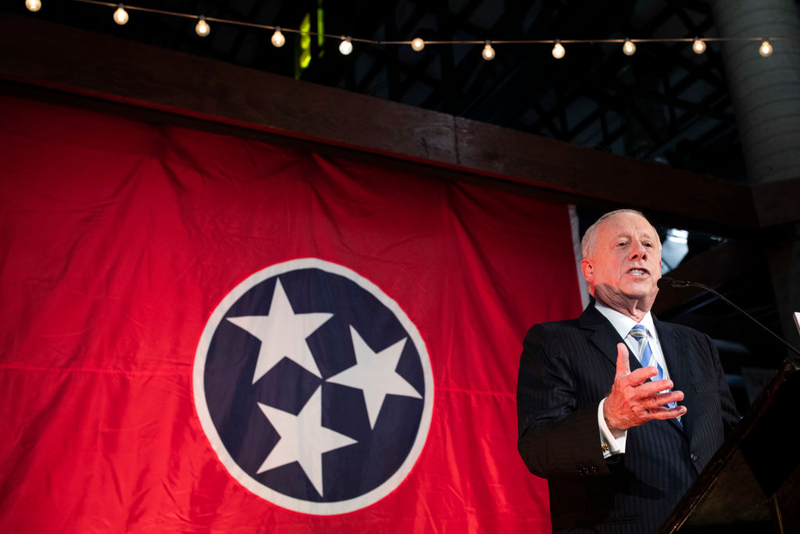
Former Tennessee Gov. Phil Bredesen, photographed during his 2018 U.S. Senate run, won all 95 counties in his 2006 gubernatorial reelection race and remains highly-thought of in the state, bur rarely addresses controversial issues.(Photo by Drew Angerer/Getty Images)
Politically interested Tennesseans of a certain era often invoke the ghost of Howard Baker, longtime Republican U.S. senator, when they talk of statesmen and trends in the Tennessee GOP.
Baker, who served in the Senate from his 1966 election through 1984, was known as the “Great Conciliator” for his skill in brokering bipartisan deals and his commitment to civil discourse. He served as the ranking minority member on the committee investigating President Richard Nixon’s involvement in the Watergate scandal — a scandal that seems petty compared to those that have transpired in recent years.
What would Baker, who died in 2014, say of politics today, ask pundits?
Baker’s not around to opine, but there are several former U.S. senators and governors with plenty of political capital to expend, free to offer their opinions on state politics.
Often cited as Tennessee statesmen of the current generation: Democratic former Vice-President Al Gore; former Govs. Phil Bredesen, a Democrat, and Bill Haslam, a Republican; and Republican former U.S. Sen. Lamar Alexander.
But it’s rare for any of the group to speak out on controversial issues. The Lookout reached out for comment on the state’s sudden mid-decade redistricting anyway.
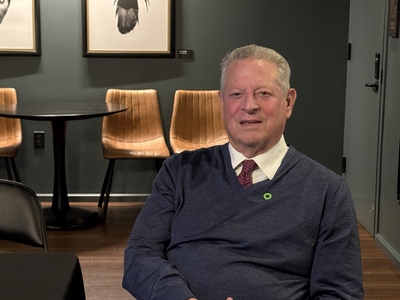
Gore, who also served as U.S. representative and U.S. senator before being tapped to be President Bill Clinton’s veep, spoke with Lookout reporter Cassandra Stephenson during a recent interview and addressed the special legislative session in early May to redraw Tennessee’s congressional maps.
“The very idea that we have made enough — this is the Supreme Court’s apparent view — that we’ve made enough progress on the racial divide in America that now it’s time not only to stop any kind of remedial efforts, but also to try to criminalize any remedial efforts, you know, by labeling it DEI and condemning it and punishing people for even trying to address the obvious problems that we still have,” said Gore, who labeled the redistricting “a problem for democracy.”
But redistricting isn’t the only Tennessee issue that calls for comment. Chief among others is the continued attempt to whitewash history.
Alexander, who retired from the Senate in 2018, is promoting a new book about his 60 years in politics called “The Education of a Senator.” In a recent interview with The New York Times, says he wishes current senators would stand up to President Donald Trump, saying Trump has “steamrolled over a compliant Senate in his second term.”
The cynical will say that Alexander is making a bid to seal his legacy, but me, I appreciate that Alexander is speaking out, finally. When he was still in the Senate in Trump’s first term, he stymied Trump impeachment hearings, voted to confirm Betsy DeVos — a billionaire Trump supporter with no experience in education — as secretary of Education and argued Democratic senators should defer to the president.
But as the saying goes, when you know better, you do better.
Alexander offered a public statement recently when Knox County Schools banned the historical novel “Roots,” a move that again made national news for making Tennessee look stupid, before the school board issued a take back. The Pulitzer Prize-winning book detailing the horrors of slavery was named a state book in 2024 and was written by Alex Haley, who lived in Tennessee at several periods in his life, and a personal friend of Alexander’s.
“Alex was a Tennessean, a frequent guest at the governor’s residence when we lived there. Our children knew him well. He told them stories from Roots,” Alexander said in a statement. “We don’t believe in canceling part of our history. We wanted our children to understand that the American Republic has never been a perfect union but that its greatness is that it has always struggled to reach noble goals.”
My efforts to reach Haslam and Bredesen were fruitless.
The pair have a podcast called, “You Might Be Right,” sponsored by the Baker School of Policy and Public Affairs at the University of Tennessee.

In the podcast, which draws its title from one of Baker’s expressions, the pair discuss topics including the national debt, climate change, the future of separation of powers and charter schools. Haslam and Bredsen launched their first season with an episode titled, “Am I using my morals as a weapon or a gift?”
More than half a dozen people, Republican and Democrat, have contacted me to ask my take on why neither of the former governors have made public statements about the recent redistricting, gerrymandering in general or hyperpartisanism.
My guess is that they let their podcast, which draws on the notion of “civility,” do all the talking for them.
But Tennessee has a leadership void and a podcast isn’t enough. These days, when what passes for “leadership” in Tennessee often means parroting the mean-spirited talking points of Trump, including anti-immigrant rhetoric and name-calling, state residents dearly want to hear from the two men I often hear referred to as two of Tennessee’s best governors.
Sure, both Haslam and Bredesen have done their time in the political barrel — both served as mayors, Haslam of Knoxville, Bredesen of Nashville, before becoming two-term governors — but neither have anything to lose.
A mentor once told me that what’s last remembered is best remembered and the way for the current crop of former lawmakers to solidify their cred as statesmen isn’t through books or podcasts or resting on their past laurels: it’s by raising their voices now, at a time when the public arena and their former constituents would greatly benefit by hearing from leaders who are sane, moral and still popular.

Nashville, TN