DHS extends permits for immigrants set to lose status when justices’ order takes effect
Jul 10, 2026 | 5:04 pm ET
Description
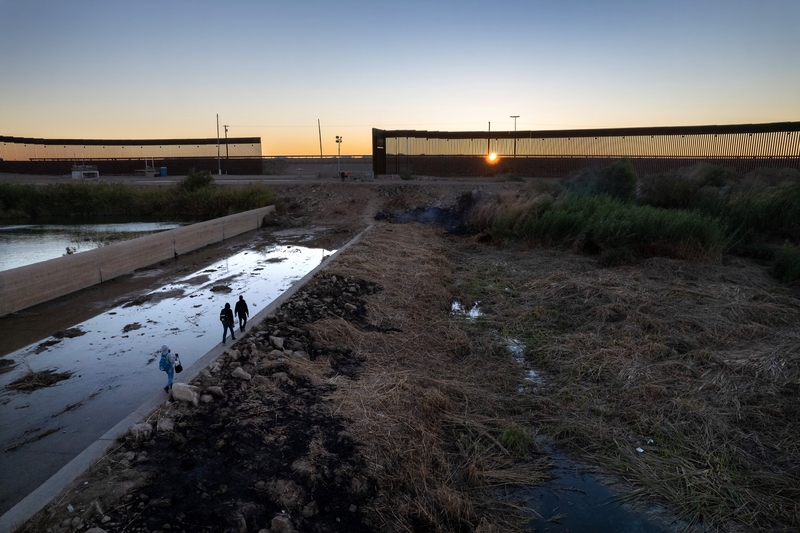
An immigrant family from Haiti walks towards a gap in the U.S.-Mexico border wall near Yuma, Arizona, in December 2021. (Photo by John Moore/Getty Images)
WASHINGTON — U.S. Citizenship and Immigration Services on Friday postponed the date that immigrants from seven countries affected by disaster and violence can legally work in the country, extending a deadline that was at odds with federal court orders not yet aligned with a U.S. Supreme Court ruling that paved the way for quick deportations.
The Department of Homeland Security agency issued new guidance to employers saying work authorization for hundreds of thousands of immigrants with Temporary Protected Status impacted by a recent Supreme Court decision would expire in one to two weeks, instead of Friday.
The agency said Haitians with TPS will have valid work authorization until July 24, while nationals of Burma, Ethiopia, Somalia, South Sudan, Syria and Yemen with TPS will have it until July 17.
The decision came hours before immigrants hailing from those countries were set to lose their work authorizations under earlier USCIS guidance.
The Supreme Court ruled June 25 that the Trump administration could move forward with a plan to end TPS for immigrants from Haiti and Syria, even while the lower courts continue hearing legal challenges.
The conservative justices found the Trump administration’s decision to end TPS was not subject to judicial review, impacting several other cases challenging the termination of humanitarian protections.
But the lower courts had not aligned their cases with the Supreme Court order by Friday, leaving in place, for now, their orders forbidding deportation.
Typically, decisions from the high court go into effect 32 days after a ruling. USCIS jumped ahead of that schedule with its July 1 guidance. The July 24 expiration date is still within 32 days of the court decision and could be further delayed.
Trump and asylum
During his second term, President Donald Trump has ended TPS for about 1 million immigrants who were initially granted humanitarian protections because they hail from countries deemed too dangerous to return.
Federal judges are still hearing arguments about if the Trump administration's decision to end TPS was based on discriminatory practices, such as race or country of origin.
But the 6-3 conservative Supreme Court majority did not find that immigrants challenging their legal protections being revoked were “entitled” to any judicial holds postponing the end of their TPS.
TPS recipients from Haiti and Syria will have their deportation protections in place until lower courts lift them or unless they have a protected status other than TPS, such as a pending asylum case.
But not every TPS recipient can apply for asylum. For example, if someone has TPS due to a natural disaster, they are unlikely to meet the criteria for asylum, which is fear of persecution “on account of race, religion, nationality, membership in a particular social group, or political opinion.”
The Trump administration last year stopped processing asylum cases for immigrants from dozens of countries, including Haiti and Syria, but a federal judge in June struck down that policy.
DHS has said that it plans to deport those who have lost TPS following the Supreme Court’s decision.
So far, the administration has declined to renew protections for 14 countries under TPS. The remaining countries with TPS are El Salvador, Lebanon and Ukraine.
Homeland Security Secretary Markwayne Mullin has until Saturday to extend TPS for immigrants from El Salvador, who were the first to receive protections from the program.
TPS can be renewed on cycles ranging from 6 to 18 months. It does not provide a path to citizenship.
Healthcare crisis
TPS beneficiaries from Haiti make up one of the largest shares of immigrants in the program Congress created in the 1990s.
The states with the largest population of TPS recipients from Haiti are Florida, New York, Massachusetts, New Jersey, Pennsylvania and Ohio according to the immigration advocacy group fwd.us.
More than 50,000 Haitians with TPS work in the healthcare industry, and lawmakers from both parties have raised concerns about the consequences of such a sudden loss of workers.
New York Republican Rep. Mike Lawler, warned that “immediately shutting off TPS will create a crisis in our hospitals, nursing homes, and in the (intellectual disabilities) community.”
Members of a union that represents healthcare workers along the East Coast gathered in New York City Friday to protest their opposition to work permits ending for TPS recipients and raised concerns that a sudden loss of workers would exacerbate the shortage of caregivers.
A 2024 report found that nearly half of all nursing homes in the U.S. struggle with staffing shortages.
“If TPS ends, we will face a caregiver crisis, the likes of which we've never seen,” said Andy Cassagnol, the executive vice president of Service Employees International Union Local 1199.
He said the move will worsen staffing shortages in home care settings and nursing homes.
“This is a cruel, heartless, and inhumane policy that will rip parents away from their children and devastate whole communities,” Cassagnol said of the Supreme Court’s decision. “Imagine seniors and individuals living with disabilities waking up to find their favorite aide is just gone. Maybe someone who is the only familiar face in their lives has disappeared.”
U.S. Rep. Ayanna Pressley, a Massachusetts Democrat who sponsored a bill in the House that would extend TPS for Haiti for three years, said in a statement following the Supreme Court’s decision that the “implications of this ruling are nothing short of catastrophic.”
Haitians allege racism
But even if Pressley’s bill managed to garner 60 votes in the Senate, it’s unlikely that Trump would sign the measure after he vowed on the campaign trail to end TPS for Haitians and used pejorative language to describe Haiti and its people.
The president’s words regarding Haiti have been central to TPS recipients' claims that the decision to end protections was due to racism, not an evaluation of improved country conditions.
The conservative majority of the Supreme Court noted equal protection arguments were unlikely to prevail in the lower courts.
“None of the cited statements by either the President or the Secretary was overtly racial, and in substance all expressed policy views that could rest on race-neutral justifications,” Justice Samuel Alito wrote for the majority.
All States Newsroom content is free to republish. Read our republishing policy for more information.