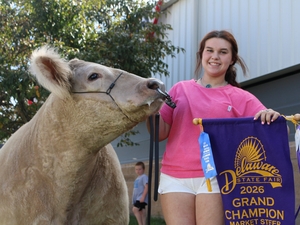
At the Delaware State Fair, young farmers showcase their cattle-log
Aug 03, 2026 | 8:10 am ET
Description
Photo courtesy of Spotlight Delaware
Why Should Delaware Care?
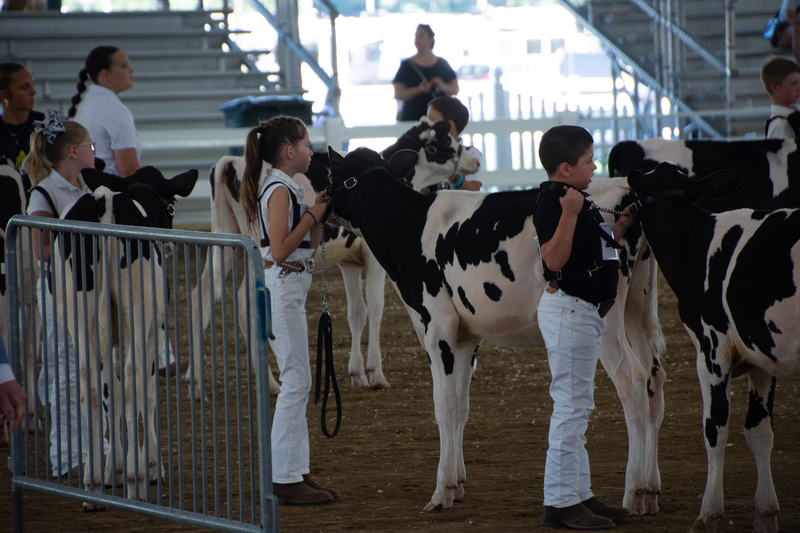
The Delaware State Fair attracts hundreds of thousands of attendees each year to play carnival games, admire prize-winning farm animals, enjoy deep-fried treats and more. Behind the rows of cattle, goats, sheep and swine are some of Delaware’s young farmers, many of whom raise their livestock as part of 4-H and FFA chapters — organizations that develop youth agriculture skills in schools and rural communities across the state.
Each year, kids and teens from across the state take part in the Delaware State Fair, showing off the livestock they have raised for months and vying for the opportunity to cash in for their hard work.
This year’s fair brought contestants from many rural corners of Delaware, as well as some out-of-staters, to enter their animals into various competitions across the 10-day event judging both market readiness and youth showmanship.
When not actively competing, kids milled about the various pens and barns across the State Fairgrounds in Harrington, cleaning, feeding, primping and pruning their animals for competition.
For some, the fair is also a lesson in learning to let go. Many animals showcased at the state fair will be auctioned or sold after competition, and ultimately slaughtered for their meat.
Spotlight Delaware spoke to some of the fair’s young competitors and the advisors who mentor them about what the experience has meant for them.
Little farmers win big
On Wednesday, July 29, the fair’s livestock buildings showcased rows of cattle, swine, and sheep. Many young kids and families sat in camping chairs next to their livestock pens, some of which were adorned with winning ribbons.
Jonathan Tucker, a twelve-year-old whose family owns a farm in Bridgeville, showed two animals at the beef cattle show this year.
Tucker modestly said he’s been “pretty successful” at the fair – he placed in the top three in the showmanship categories with both of his cows.
One of his cows, 50-Cent, is a 14-month-old, 1,200-pound steer from Ohio. When Tucker got him, 50-Cent was only 700 lbs.
His secret to helping 50-Cent put on the weight?
“I just fed him a lot,” Tucker said.
For market steers, or male cattle that are raised for their meat, the fair rules require that the cows weigh between 1,000 to 1,500 lbs.
Tucker explained that it is better for cattle to be on the higher-end of that range because that means they have more meat on their bodies.
50-Cent made it to the top of his class, meaning he was eligible to compete for Grand and Reserve Champion steer — the highest awards given in the youth market beef livestock competitions.
During the school year, Tucker makes time to groom his cattle when he returns home from school. But during the summer months leading up to the fair, he’s able to spend even more time preparing them for the fair.
“It’s just a lot of dedication,” he said. But he added that his parents help him, too.
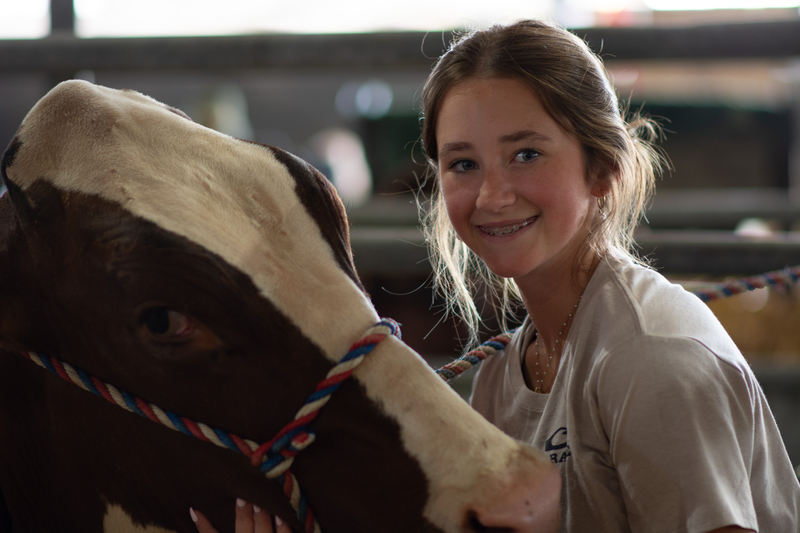
Fifteen-year-old Karley Busker lives on a third-generation dairy farm in Harrington with about 600 cows. One of her cows, Elon, took home first prize in the showmanship category this year.
The key to the competition is mostly in the walk, she said.
This is not Busker’s first rodeo (or state fair, rather). She has a few notches on her belt from previous entries, but after a rough showing last year, she is pleased with Elon’s win.
“I feel like it matters more to me because it’s more about my skill,” Busker said.
Across the fairgrounds, eight-year-old Van Bull of Bridgeville tends to – and energetically jumps around – Amy, his nearly 6-month old lamb.
Bull said he named Amy, along with the rest of his family’s herd. It’s one of his favorite parts about raising livestock.
The other, he said, is when he wins ribbons and gets a check. Last year, Bull won $579, to which his mom told him, “I should save up on a house.”
Every day, Bull runs out to the field on his family’s property to feed the herd of sheep. What he likes best about the animals? “That they’re fluffy.”
After finishing up with Amy, Bull helps his friend, 8-year-old Owen Taylor, tend to cattle. Taylor is showing Lavender, a cow from G&S Dairy — one of Delaware’s twelve remaining dairy farms.
Taylor lives on a farm just over the state line in Maryland, but he is competing at the fair as a part of the Peach Blossom 4-H Club, located near Greenwood.
He diligently keeps watch of Lavender in a small beach chair set up by her pen, frequently jumping up to clean up any of her dung.
Learning to let go
Alison Scott advises the Future Farmers of America (FFA) chapter at Lake Forest High School in Felton, just a few miles north of the fairgrounds. As part of Scott’s animal science class, kids have the opportunity to join a show team and compete at the fair.
This year, they brought eight lambs – about half of the stock born and raised at the school. The kids learn how to tag, vaccinate, trim, shear, dock tails and “do all the work to raise them,” Scott explained.
“There’s a lot of work that goes into that from day one,” she said.
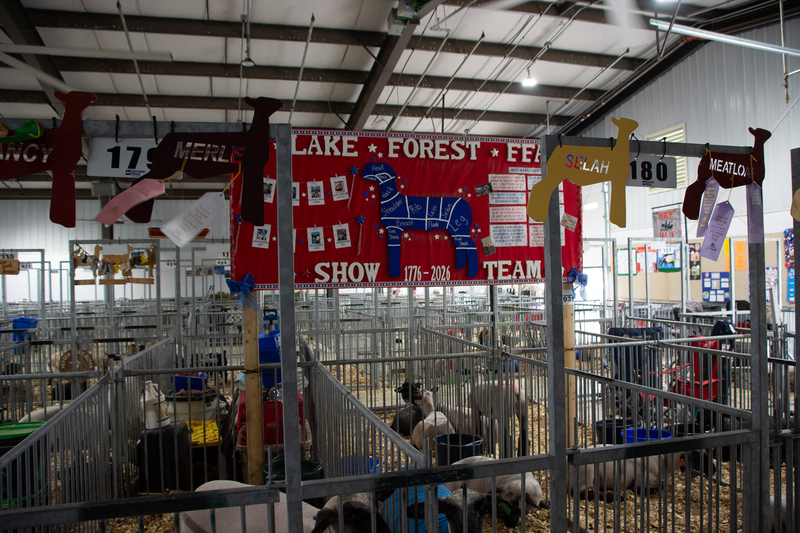
One of the class’s lambs placed in the top three of its market class at the sheep show. Next, it will head to auction. Scott said the money from selling the lamb will go back to the chapter to buy more animals and pay for supplies.
From the start, Scott teaches her students that the lambs are not pets, but raised for meat.
“I try to tell them, ‘Listen, this lamb, in the six months that it’s been alive, has had more love than most of your animals,’” she said.
For the lambs that don’t make it to auction, Scott said they will either go back to the chapter or be sold to a private buyer.
“I have repeat customers,” Scott said. “They say it’s delicious.”
Dover