Lawmakers eye proposals to shield elections from federal interference, speed up ballot processing
Aug 03, 2026 | 8:00 am ET
Description
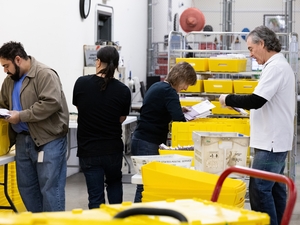
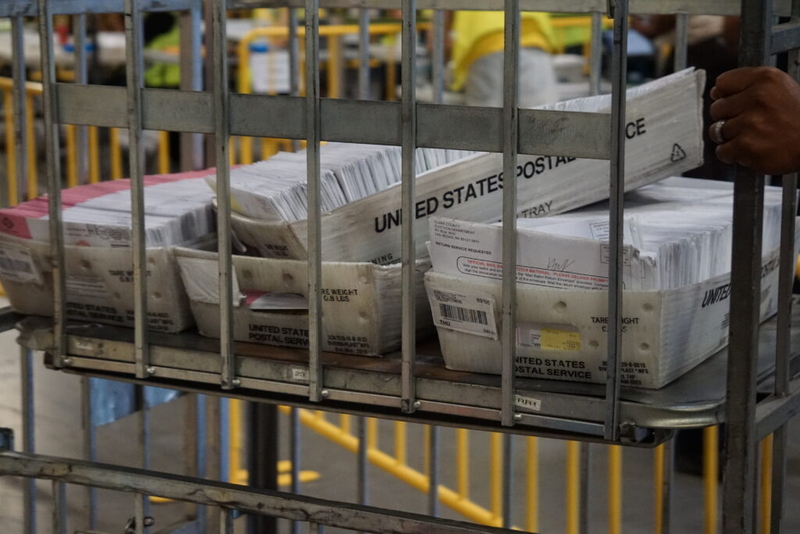
Mail ballots at the Clark County Election Center on June 9, 2026. (Photo: Jeniffer Solis/Nevada Current)
Nevada lawmakers next year may consider legislation meant to shield state-run elections from federal interference.
The Nevada State Legislature’s Joint Interim Committee on Legislative Operations and Elections on Friday voted to sponsor a bill for the 2027 session modeled after legislation passed by New Mexico earlier this year. The legislation would, among other things, restrict armed federal agents near polling places–something that is already banned by federal law but that President Donald Trump didn’t rule out when asked about potentially deploying the option in the future.
New Mexico’s bill requires county clerks to adopt procedures to request police help in emergencies and created a fourth degree felony for “intentionally obstructing access to polling places,” according to reporting from Source New Mexico.
“The Constitution says states run their elections, and that bill makes that painfully clear to the federal government,” said New Mexico Gov. Michelle Lujan Grisham, a Democrat, of her state’s bill, which passed in March and went into effect in May.
Like New Mexico, Nevada’s election practices have been targeted by the Trump administration through lawsuits. The Trump administration has demanded voter roll information and been rebuffed by both states.
The Nevada Legislature isn’t slated to meet until February 2027. But interim committees typically select their bill draft requests (BDRs) in the summer prior.
The Joint Interim Committee on Legislative Operations and Elections also instructed staff to draft a bill setting more stringent timelines for the processing of mail ballots in Nevada’s two largest counties. Clark and Washoe counties would be required to record the return of a mail ballot within 12 hours of arrival and review the signatures on mail ballot envelopes within 24 hours of its arrival. Rural counties would be permitted to send their in-state mail ballots out sooner.
That bill draft request (BDR) stemmed from recommendations made to the committee by the Nevada Secretary of State’s Office. It was one of several SOS-backed recommendations.
Nevada has been widely criticized for not having election results out quicker. It was cited by some as one of the reasons the Democratic National Committee did not select Nevada to hold the “first in the nation” primary, something party leaders in the state have been pushing for for years.
Earlier this month, the DNC approved Nevada to be the second in the nation, behind South Carolina.
The 2027 Nevada Legislature will also get an opportunity to revisit the possibility of establishing automatic vote recounts for tight elections. Under current law, candidates can request a recount but must pay for it–an issue that made headlines in 2024 when a Reno City Council candidate lost by 15 votes, requested a recount, hastily withdrew her request over funding concerns, and then was unable to undo her withdrawal a day later. The anticipated cost of that recount: $50,000.
The committee requested a bill be drafted to change the law so that recounts are triggered automatically for ballot questions and certain offices if the difference is 0.25 percent or less. Recounts for races with margins outside of that threshold could still be requested by the defeated candidate but would not be automatic or funded by taxpayers.
A similar bill was introduced last year by Democratic Assemblymember Cecelia González, who chairs the legislative operations and elections committee. That bill was discussed and amended in its first committee but failed to advance to the full floor.
Other proposals backed
In addition to the federal interference bill and ballot processing timeline bill, three other Nevada Secretary of State’s office recommendations were picked up by the committee for future bills. Those bills would:
- Allow incarcerated voters in county and city jails to vote via the state’s Effective Absentee System for Elections. EASE is currently used by many overseas military, disabled and rural native communities.
- Adjust the state’s ballot dropbox laws, allowing counties to set them up starting the day mail ballots are distributed. Currently, dropboxes are set up only during the state’s two-week early voting period and on Election Day. The proposal would also expand the types of locations ballot dropboxes can be.
- Require some political candidates to complete a questionnaire on their background and work experience. The practice would likely be similar to one already in place for current judicial candidates.
The committee will also introduce a bill allowing state and local candidates and elected officials to use campaign funds for dependent care, such as childcare, when relevant to their campaigns and official duties. That policy was recommended by Vote Mama, a national group focused on the political participation of mothers.
The committee was limited to 10 bill draft requests but can make additional recommendations. For the 2027 session, the committee voted to send a letter to the governor and the Legislature’s finance committees recommending “the appropriation of funding for the purchase of new voting machines and/or the replacement of existing voting machines” as needed to meet the federally set standards.
The committee also approved a statement urging the SOS’s office to explain to voters that, if they receive a mail ballot that was sent to the incorrect address, they can and should write “return to sender” on it and place it back in the mail.
Many of the BDR requests and recommendations were approved unanimously by committee members. A few, such as the ballot dropbox bill and New Mexico-inspired bill, saw opposition from some Republicans.
The 2027 Legislative Session is scheduled to begin in early February.
Las Vegas, NV