To conform or not to conform? Maine debates changes to tax code
Feb 20, 2026 | 4:57 am ET
Description
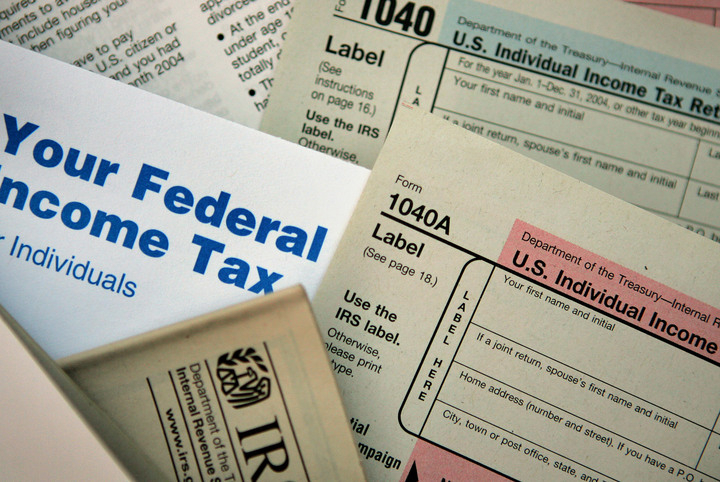
Tax changes in President Donald Trump’s spending package already apply to federal returns, but whether they’ll also apply to state returns is the subject of legislative debate. (Photo Illustration by Scott Olson/Getty Images)
Gov. Janet Mills proposed Maine adopt most of the tax changes in President Donald Trump’s signature federal spending package — barring a select few.
Mills recommended the state reject the provisions on not taxing tips, overtime, certain car loan interest and deductions for seniors, drawing the ire of the Legislature’s Republican minority. GOP lawmakers argue not conforming will hurt Maine taxpayers, while business interests and licensed accounting professionals emphasize the practical benefits of reducing compliance burdens.
These changes already apply to federal returns, most being available retroactively for 2025 through 2028, but whether they’ll also apply to state returns is the subject of legislative debate.
Meanwhile, Democratic lawmakers and progressive groups argue that those narrowly targeted provisions won’t provide meaningful relief for low- and middle-income Mainers, and instead mask the broader implications of the federal policy changes, which offer tax breaks to the ultra-wealthy and big corporations.
How much conformity would cost Maine is another consideration, which lawmakers across the country are also weighing.
While the federal government can cut taxes without regard to the federal budget, the state cannot because it’s legally required to balance its budget. If the state were to immediately adopt all federal changes, it would cost an estimated $400 million and create a shortfall in the current budget and the next, according to the governor’s office.
“Tax policy is kind of like squeezing a balloon,” Democratic Rep. Dan Sayre of Kennebunk, who chairs the Taxation Committee, told Maine Morning Star. “You can make a change here and it just makes the problem worse somewhere else when you’re operating in a balanced budget environment.”
The state’s budget for 2026 and 2027 is $11.65 billion, and lawmakers are now considering a $275 million addition proposed by Mills earlier this month largely to cover health care thanks to both federal policy changes and rising state costs. This proposal comes as Maine is expected to take in nearly $250 million more over the next two years than previously thought.
Tax collection makes up about half of state revenue. The majority of Maine’s tax dollars come from personal income, closely followed by general sales. The governor recently increased some taxes — on cigarettes and cannabis — and added a tax on streaming services to offset increased program costs.
Mills has consistently shot down other Democrats’ attempts to change the income tax code, but several people who testified on the tax conformity proposal during hearings Thursday urged lawmakers to again push for those changes.
These proposals to raise the tax rate on corporations and millionaires and alter the state’s tax brackets are in limbo. Some were recalled back to committee for revisions after initial floor votes or got caught in the Legislature’s opaque funding process.
“Instead of repeating that there isn’t funding for programs, we could instead be making needed changes to how we grow revenue for our state,” said Lily James, advocacy coordinator for the Maine Women’s Lobby.
What’s tax conformity?
Maine, like most states, uses the federal code as a starting point for calculating state income taxes. When the federal code changes, the state doesn’t automatically adopt those changes. Instead, Maine passes legislation to determine which parts it wants to align with, and which it doesn’t.
It’s a routine occurrence often involving minor changes that typically don’t ignite political drama.
That’s not been the case this year after the substantial federal policy changes in Trump’s “One Big Beautiful Bill.”
Some states chose to use special sessions to address the revisions. Mills issued preliminary instructions in the fall. But that was never going to be the final word on the topic.
A state law passed last session allowed the governor to make temporary adjustments but any changes have to be consistent with already enacted Maine tax laws. Mills determined she could only direct the state to conform to some items.
The governor is now addressing the remaining measures in her supplemental budget proposal, which the Legislature must weigh in on.
The governor’s proposal
Mills recommends the state keep taxing tips, overtime, certain car loan interest and deductions for seniors. Meanwhile, she suggests the state adopt other federal provisions, such as increased standard deductions, but not immediately. Her proposal is in her budget plan and a separate conformity bill, LD 2010, and both had public hearings on Thursday.
Under the new federal policy, people 65 and older can claim an additional deduction of $6,000. Taxpayers can also deduct up to $10,000 in interest paid on loans for new, American-made, personal vehicles purchased between 2025 and 2028.
The changes to taxes on tips and overtime apply to a subset of workers and conditions.
Federal income taxes were eliminated on the first $25,000 of qualified tips earned by workers in “tipping occupations” making less than $150,000 per year.
Some criticize the selectivity of the change, including Sayre, the taxation committee chair.
“If you make beds in a hotel or motel, you’re going to get a tax break. If you make beds in a nursing home or hospital, you don’t get a tax break. What’s the sense in that?” Sayre said. “I’d much rather see us do something that provides tax relief for everyone that makes beds for a living.”
The overtime change is a deduction of up to $12,500 per person for overtime pay for hours worked beyond 40 in a week. (There’s a separate state bill the legislature is considering this session that seeks to allow more people to be eligible for overtime pay.)
“To me, full conformity is a non-starter,” Sayre said. “There is no simple way to strike $400 million out of the state’s budget without doing real harm.”
Meanwhile, Republicans and businesses argue fully conforming to the federal tax code would make taxes less burdensome for Mainers.
“Conforming makes things easier, less expensive, reduces the opportunity for mistakes, reduces compliance burdens for both Maine Revenue Service and taxpayers,” said John Block, a tax attorney on behalf of the Maine Society of CPAs.
Republicans also argue conforming to these federal measures will do more to address long-term financial pressures than another part of Mills’ budget plan: $300 “affordability payments” to an estimated 725,000 Mainers, costing the state $218.5 million. That’s one component of her broader proposal aimed at addressing the high cost of living.
“Affordability is not a $300 check that will pay for one fancy meal at a restaurant or maybe one electric bill,” said House Minority Leader Rep. Billy Bob Faulkingham (R-Winter Harbor) during a press conference earlier this month. “Affordability is being able to pay rent. It’s being able to pay a car mortgage. It’s being able to pay your bills. It’s being able to buy groceries.”
Augusta, ME