Callais fallout in Alabama: No redistricting now, says Ivey; partisan divides over SCOTUS ruling
Apr 29, 2026 | 5:42 pm ET
Description
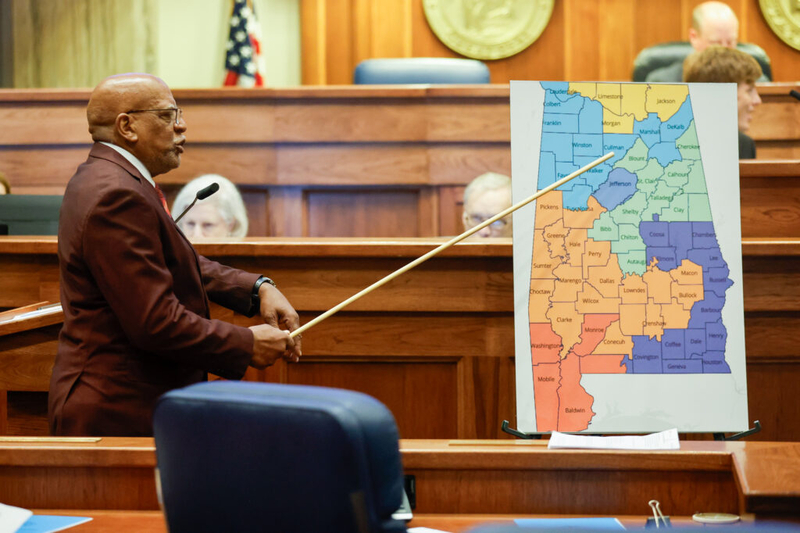
Sen. Rodger Smitherman, D-Birmingham, discusses a Democratic congressional map proposal during a special session on redistricting on Wednesday, July 19, 2023 in Montgomery, Ala. Gov. Kay Ivey Wednesday said she would not call a special session for redistricting following a U.S. Supreme Court ruling that will make it significantly harder for plaintiffs to challenge maps on the basis of racial discrimination. (Stew Milne for Alabama Reflector)
Wednesday’s Supreme Court ruling significantly limiting majority-minority districts should not have an immediate effect on Alabama’s legislative and congressional districts. But that could change in the future.
In a 6-3 decision, in a case called Louisiana v. Callais, Justice Samuel Alito held that a Louisiana congressional map was an unconstitutional racial gerrymander, and ruled that plaintiffs challenging legislative maps for racial discrimination under Section 2 of the 1965 Voting Rights Act had to show intent to discriminate by lawmakers. Under prior case law, plaintiffs had to show the effect of maps was discriminatory.
“The focus of (Section) 2 must be enforcement of the Fifteenth Amendment’s prohibition on intentional racial discrimination,” Alito wrote. “When (Section) 2 is properly interpreted in the way we have outlined, it is sufficiently congruent with and proportional to the Amendment’s prohibition. While that interpretation does not demand a finding of intentional discrimination, it imposes liability only when the circumstances give rise to a strong inference that intentional discrimination occurred.”
Section 2 of the Voting Rights Act limited states from using maps that would dilute the voting power of minority citizens.
Justice Elena Kagan, joined by justices Sonya Sotomayor and Ketanji Brown Jackson, dissented from the court’s opinion, Kagan cited Allen v. Milligan, the 2023 U.S. Supreme Court decision which resulted in Alabama drawing a near-majority Black congressional district due in part to polarized racial voting patterns.
Plaintiffs in Milligan argued that a congressional map drawn by the state illegally put Black voters into a single district while also breaking up clusters of other Black voters across the state to minimize the vote of marginalized communities.
“Given the state’s racially polarized voting, (marginalized residents) cannot hope—in the way the state’s white citizens can—to elect a person whom they think will well represent their interests,” Kagan wrote. “Their votes matter less than others’ do; they translate into less political voice. Or, as this court put it recently, the cracking makes a ‘minority vote unequal to a vote by a nonminority voter.’”
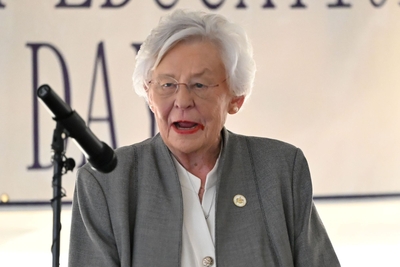
The maps drawn in the wake of Milligan will stay in place for now. Gov. Kay Ivey said in a statement Wednesday afternoon that she supports the Supreme Court’s decision but that the state is “not in position to have a special session at this time” to redraw congressional districts. A federal court last year ordered Alabama to maintain its current maps through 2030.
“While I am encouraged by this decision, it does not yet resolve our ongoing redistricting fight over Alabama’s congressional map,” she said. “For too long, federal courts forced states like Alabama into a no-win situation at the hands of activists who want us to draw maps that discriminate against our own citizens based on race.”
Alito wrote in his majority opinion Wednesday morning Allen v. Milligan would not be overturned.
“(Allen v. Milligan) did not address whether “race-based redistricting” under (Section 2) could ‘extend indefinitely into the future’ despite significant changes in conditions, … nor did it address whether (Section 2) plaintiffs must disentangle race from politics in proving their case,” Alito wrote.
Janai Nelson, president and director of counsel for the NAACP Legal Defense Fund, said her organization doesn’t think Alabama the court will overturn Milligan in the future.
“We are still assessing what the implications are in Alabama, but we, based on our reading of the decision, have no reason to believe that there should be any backtracking in Alabama, and we stand ready to challenge any maps that we feel discriminate against Black voters,” she said.
Reactions
Reaction to the court’s decision fell down party lines. Alabama Republicans praised the court’s opinion on Callais.
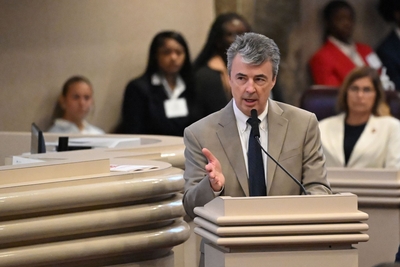
“The Court has shut the door on vote-dilution claims that use racial data to disguise what are really partisan disputes,” Alabama Attorney General Steve Marshall, a candidate for U.S. Senate, said in a statement. “Alabama has been fighting this battle for many years, and today the Supreme Court confirmed our long-held argument that States must not use race, either to help or to harm particular voters, when drawing voting districts.”
U.S. Rep. Barry Moore, R-Enterprise, who is also running for the Senate, called for the Alabama Legislature to redraw the state’s congressional map following the decision in a post on X Wednesday morning.
“I know what it’s like to have my district redrawn to dilute conservative voters’ voices and make way for a Democrat seat,” the post said. “We should be drawing districts based on communities, not race. The Constitution demands it, and the American people deserve it.”
Democratic leaders and organizations across the state condemned the decision.
“Three years ago, the Supreme Court used [the Voting Rights Act] to require Alabama to draw fairer congressional districts after the Court found the previous maps weren’t giving voters a real choice.” Birmingham Mayor Randall Woodfin said in a social media post Wednesday. “Today, that same Court walked it back … the bigger damage will be at the local level, where two-thirds of Section 2 cases are actually litigated. City councils. School boards. County commissions. The places where everyday democracy happens.”
Alabama House Minority Leader Anthony Daniels, D-Huntsville, called the decision a “slap in the face to Black voters in Alabama” in a statement released by the Alabama House Democratic Caucus.
“Rest assured that I, and my colleagues in the Alabama House Democratic Caucus, will continue to fight against all forms of gerrymandering. People should have the right to pick the politicians that they want to represent them, not the other way around. As we have said from the beginning, fair elections begin with fair maps,” he said
U.S. Rep. Terri Sewell, D-Birmingham, said the decision is a “death sentence” to Section 2 of the Voting Rights Act of 1965 in a statement posted to social media.
“The right-wing Supreme Court has not only turned its back on decades of precedent and ignored the will of the people, but it has weakened the foundational principle safeguarding fair representation for Black and minority voters,” she said.
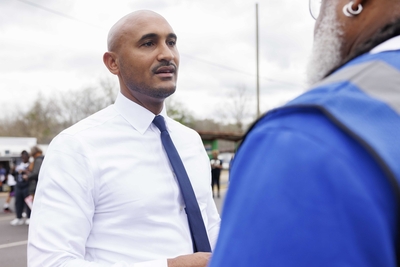
U.S. Rep. Shomari Figures, D-Mobile, whose seat was created as a result of Milligan, said in a statement that while his district will remain until 2030, some states will fight to have their maps redrawn.
“Although today’s decision does not make changes to Alabama’s current congressional districts, it has made proving future racial discrimination in redistricting cases significantly tougher,” the statement said. “It will lead to states, primarily in the South, launching immediate efforts to redraw districts in ways that will dilute the impact of Black voters and drastically reduce the number of realistic opportunities to elect Black members to Congress.”
Louisiana v. Callais was first argued last year, after a group of non-Black voters in Louisiana challenged a congressional map as being an unconstitutional racial gerrymander when a new district of mostly Black voters was added to the state.
Alanah Odoms, executive director of the American Civil Liberties Union in Louisiana said Wednesday afternoon the court’s decision will be used as a test case.
“There is a federal track that is happening to curtail the rights of Black voters, and there is a state track. It is the same playbook, and it is exactly the same goal,” she said. “What I assert to you today is Louisiana is the test case. It always has been what works here will be exported.”
Montgomery