Bugging out: New Mexico insects face significant declines
May 25, 2026 | 8:29 am ET

Description
Simon Doneski, a PhD candidate at the University of New Mexico studying butterflies, said he didn’t have an interest in insects before a summer internship documenting populations. “They’re really incredible creatures,” Doneski said. “The more you know about them, the harder it is to look away.” (Danielle Prokop/Source NM)
The chirrup of a cricket. The stark flash of orange and black wings fluttering around flowers. The drunken looping flight of grasshoppers. The familiar sights and sounds of New Mexico summer are less frequent as populations of insects dwindle due to hotter and drier weather, pesticide use and habitat loss.
New Mexico, like many other states, is experiencing what experts describe as a startling decline of bugs, a shift that poses critical threats to ecosystems.
While bugs are often seen as pests, entomologists told Source NM an estimated three-fourths of wild plants rely on them to help them reproduce, as do about one-third of food crops. Insects often serve as the main course for a host of mammals, birds, fish and reptiles; they act as nature’s cleanup crew and control other pests.
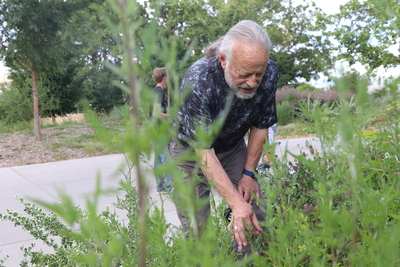
Insects are the “backbone of ecosystems,” said David Lightfoot, a research associate professor in the biology department at the University of New Mexico. Lightfoot has spent over three decades studying grasshopper populations in the state, and helped author policies to protect insects and other arthropods.
Globally, insects are becoming less abundant, he said, due to a variety of factors amounting to death by a thousand cuts.
He said the recent conservation survey results in New Mexico are similarly grim.
“More than half of the species we’re evaluating are threatened with extinction, endangered or critically endangered based on declines recently,” Lightfoot said. “What people are reporting globally is, in fact, happening right here in New Mexico. That surprised us because we don’t have the land development and human population seen in other parts of the country.”
The losses are not limited to rare bugs, said Kevin Burls, an endangered species conservation biologist with nonprofit research group Xerces Society for Invertebrate Conservation. He pointed to the cratering of the once-widespread Monarch butterfly population, which is 99% smaller now than populations in the 1980s.
“We’re losing common things in large numbers where they’re having cascading effects in other animal communities,” Burl said, noting it’s occurring across many states. “If you talk to any songbird person in the West, they’ll tell you the decline in insects is responsible for fewer birds.”
And while the scope of the problem has unfolded in the last few years, concerns for an extremely hot and dry summer, and continued uses of pesticides and herbicides could worsen the problems.
Bye bye butterflies?
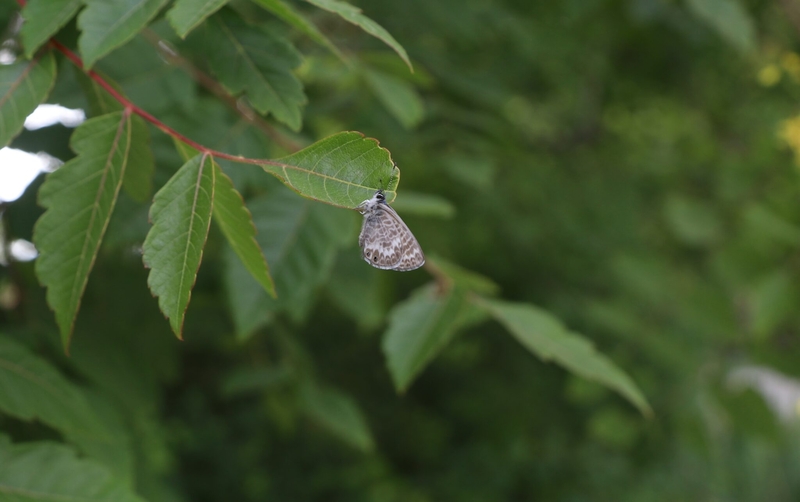
A Marine Blue butterfly, one of many New Mexico species that researchers say face threats from habitat loss, pesticide use and climate change. (Danielle Prokop/Source NM)
Butterflies are some of the best-studied insects around the world, with data on their populations extending back decades.
In 2025, researchers conducted a review of more than 76,000 butterfly studies and found between 2000 and 2020, butterfly abundance fell by 22% and that 13 times more butterfly populations shrunk than grew over that time period.
The fastest decline occurred in the southwestern states of New Mexico, Arizona, Texas and Oklahoma, which showed an overall drop in abundance by 36%. More than half of the species documented had shrinking populations.
The impacts of herbicides and pesticides, along with climate change, are harming the insects at all stages of their life cycle, said Simon Doneski, a PhD candidate at the University of New Mexico studying butterflies. Too high of heat can harm eggs or dry out vegetation for caterpillars to eat.
He said New Mexico’s recent heat wave and dry winter caused an unprecedented surge in butterflies. He’s recorded nearly two dozen species that emerged from their chrysalises a month earlier than they’ve ever been seen before in New Mexico. He said it’s concerning, because the flowering plants the butterflies feed on may not be blooming, or caterpillars born early could experience the summer’s most intense heat.
“We’re in an uncharted territory,” he said. “This hasn’t happened in at least 100 years, maybe further back than that.”
From planting to policy changes
State lawmakers’ 2025 overhaul of the New Mexico Department of Wildlife has moved the needle on conservation, Lightfoot said, but additional funding and attention to insect protections remain sorely needed.
‘Bees to bison’ wildlife agency overhaul ripples through State Wildlife Action Plan
“Before we protect them, we have to learn about them,” Lightfoot said.
Individuals can take action such as planting native pollinating species and lowering their reliance on herbicides and pesticides, said Kaitlin Haase, a pollinator conservation specialist based in Santa Fe for the Xerces Society.
Political pressure to change herbicide and pesticide policies or advocate for insects in local politics is another way to get involved, said Burls, also with the Xerces society.
“Involvement with local politics and state legislatures is hugely important and speaking on behalf of and advocating for insects is something everybody can do,” he said. “It really does matter because other interests have really good lobby support, lots of advocates, but insects don’t always have that — so every voice counts.”
Santa Fe, NM