Board of State Canvassers deadlocks on citizens-only voting measure, setting up court fight
Aug 24, 2026 | 6:21 pm ET
Description
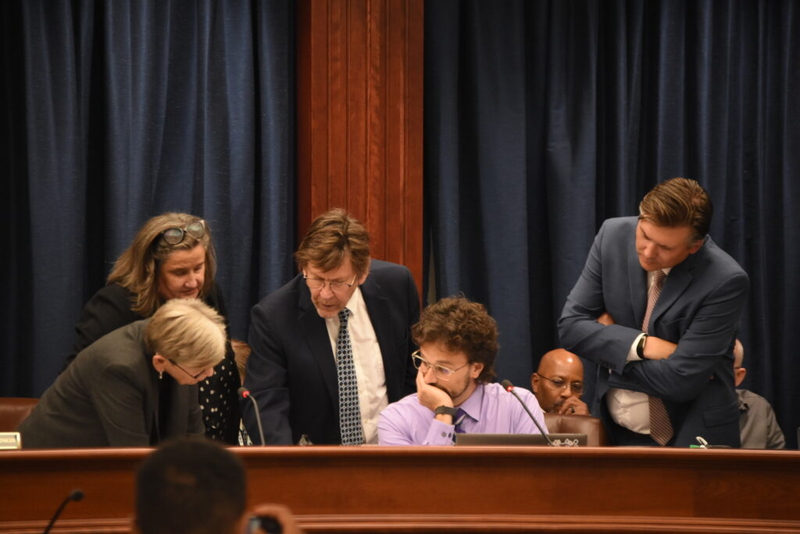
All four members of the Board of State Canvassers gather with Bureau of Elections staff to review signatures on the citizens-only ballot petition on Aug. 24, 2026. (Photo by Katherine Dailey/Michigan Advance)
After nearly seven hours of discussion, the Michigan Board of State Canvassers deadlocked 2-2 on a ballot measure that would enact strict voter ID laws, meaning the proposal was not certified for the November ballot. However, the measure is likely to go to the Michigan Supreme Court for a final decision.
The board’s four members, along with leadership and staff from the state Bureau of Elections, spent hours looking at specific affidavits of signatures that had been challenged by those opposed to the petition and analyzing handwriting on sheets of signatures to verify the validity of addresses and signatures. Among the issues examined were procedural questions about the timeliness of turning in those challenges and responses to the Bureau of Elections and the Board of State Canvassers.
Many of the decisions came to a deadlock — the board is made up of two Democrats and two Republicans, and many decisions split along those partisan lines. In the case of a 2-2 vote on a given signature, that signature is not counted as valid.
We’re aware of the gravity of this. We are aware of the seriousness of considering this one.
The Bureau of Elections staff had recommended against certifying the ballot measure based on a standard random sample of 1,000 signatures. Based on the more than 709,000 signatures submitted, compared with the required 446,198, at least 629 signatures in the sample needed to be valid.
“Practically speaking, the board’s view for decades is that it’s not really practical to review, in this case, over 700,000 signatures individually,” Jonathan Brater, director of the Bureau of Elections explained about the sampling process.
Based on the staff report from the bureau, which counted 612 valid signatures, lawyers for both the sponsors of the ballot measure and the opposition to it brought new challenges and additional information to try to make their respective cases about whether or not the measure should make the ballot.
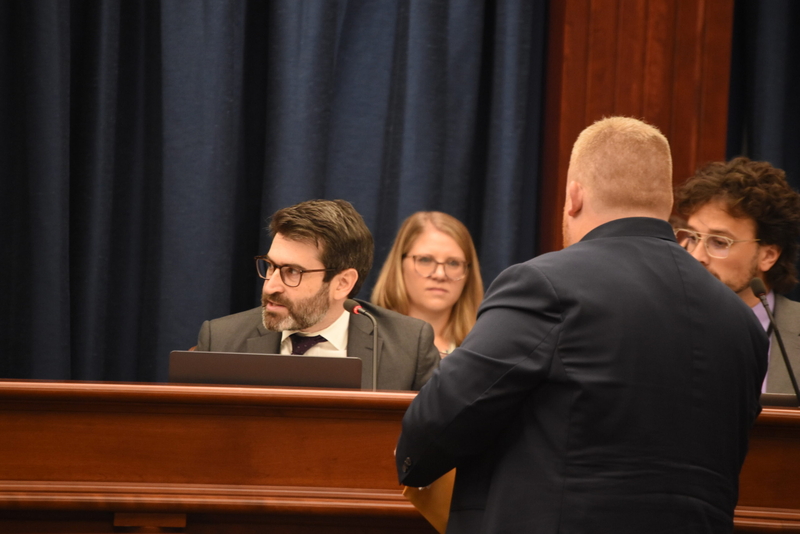
After reviewing information and voting on a number of individual signatures, the Board of State Canvassers had identified 626 valid signatures — just three signatures below the needed threshold. A number of those decisions were contentious, with Paul Cordes, a Republican on the board, saying just before the vote that he believed there were more than enough valid signatures to put the petition on the ballot.
Paul Jacob, chairman of Americans for Citizens Voting, the group behind the initiative, has indicated that the group will sue and would take the case to the Michigan Supreme Court and, if necessary, the U.S. Supreme Court.
Meanwhile, Mark Brewer, a lawyer for opponents of the measure, said that it had been a “very sloppy petition drive from the very beginning.”
“Sponsors and the challengers have had ample opportunity to make arguments and present evidence. There are hundreds, if not thousands, of pages of arguments and evidence before you that your staff has thoroughly reviewed and produced two reports, and they recommend that based on strict compliance with those legal requirements, that this petition drive is short of signatures,” Brewer said.
Cordes also compared the process of Monday’s meeting to last month’s approval of the Michiganders for Money Out of Politics ballot measure.
“My math says that we would have a greater buffer than on that one,” he said. “I’m not saying this was done well, obviously, but we would have more than that one did, and during that back and forth that we did a month ago, we went through bureau approved signatures and removed a fair amount of them, a very good amount of them.”
Eric Doster, a lawyer for petition’s sponsors, similarly said, “We’re just asking for the same treatment as MMOP,” referring to that measure, in early remarks to the board.
Richard Houskamp, the board chair and one of the Republicans on the board, opened the meeting by noting the level of interest and concern that the petition — which voting rights activists said could disenfranchise legal voters.
“This petition has generated an enormous amount of emotion, of concern. The fact that we have all of you folks here this morning indicates there’s a lot of interest in it,” Houskamp said. “We’re aware of the gravity of this. We are aware of the seriousness of considering this one.”
Throughout the hearing, both Republican members of the board and lawyers for the proposal emphasized the importance of allowing voters to put a measure on the ballot.
“Please remember what’s at stake and which way the law leans. This board must decide and must always lean towards counting the voter signature,” Doster told board members. “These are the signatures of real registered Michigan voters who have now come forward under oath to confirm their own participation. The settled policy of Michigan election law is to favor the participation of qualified voters, not to disenfranchise them on subjective technicalities.”
Meanwhile, opponents of the measure celebrated the outcome.
“Michiganders do not want out-of-state billionaires to take away their right to the ballot box, which is why these restrictive voting initiatives failed,” said Shannon Abbott, the Michigan program manager for Common Cause, which launched a “decline-to-sign” campaign against the initiative. “Our Michigan members told us that these initiatives would have prevented eligible U.S. citizens from voting by putting restrictive red tape in front of access to the ballot box.”
Lansing, MI