Ex-vendor sues Oklahoma ethics board over ethics system replacement, seeks $6M in damages
Aug 24, 2026 | 6:06 pm ET
Description
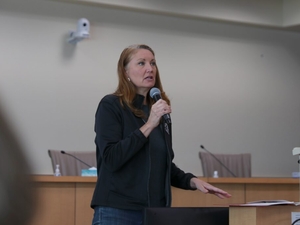
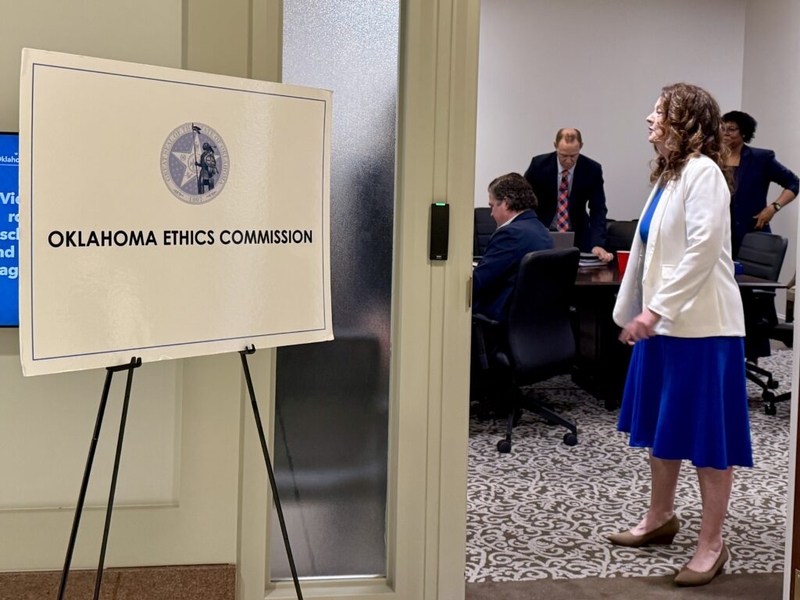
Lee Anne Bruce Boone, executive director of the Oklahoma Ethics Commission, speaks with a reporter following a meeting of the board at the state Capitol April 10, 2025. (Photo by Emma Murphy/Oklahoma Voice)
OKLAHOMA CITY — A Texas company countersued the state Ethics Commission on Tuesday, alleging it suffered $6 million in losses after the agency ended a contract to replace the state’s campaign finance system.
RFD and Associates filed a counterclaim against the Oklahoma Ethics Commission, claiming the agency unnecessarily terminated its contract and that delays in the project were due to issues with provided datasets and unclear and changing expectations.
The company delivered the project before the provided deadline despite problems they say were caused by the Ethics Commission, the “Guardian 2.0” system was delivered before the provided deadline, according to their filing in Oklahoma County District Court.
“You cannot separate the project timeline from incomplete data, delayed approvals and changing requirements,” said Scott Glover, chief operating officer of RFD, in a statement. “Despite those challenges, we worked through the issues, completed testing and delivered a system that was accurate and available for active filers by Dec. 12, 2025.”
The Ethics Commission voted to terminate its contract with RFD and Associates and pursue legal action against it in December, alleging it had failed to fulfill the terms of its contract and replace the system on schedule. The Oklahoma Ethics Commission, represented by Attorney General Gentner Drummond, sued RFD and Associates in January.
The state’s lawsuit asserts multiple claims, including breach of contract, fraud, unjust enrichment, negligent misrepresentation, breach of warranties and violations of the Oklahoma Deceptive Trade Practices Act. Drummond has said the failures have cost the state over $800,000.
The Guardian System was not fully functional for three months, leaving the public and those running for public office unable to access campaign filings. Among other things, the finance system allows the public to examine lobbyist and candidate expenditures and track campaign donations.
The Attorney General’s Office did not immediately respond to a request for comment.
Lee Anne Bruce Boone, executive director of the Ethics Commission, said the contract was appropriately terminated.
“We categorically disagree with these self-serving misrepresentations and unfounded allegations,” she said in a statement. “Make no mistake, RFD knew what this project required — it described the work in its proposal before it was ever awarded the contract.”
The expectations were outlined in writing that services would be timely and the delivered system would run uninterrupted and error-free, Bruce Boone said. The Ethics Commission paid over $800,000 based on these promises.
“By the end, RFD acknowledged it could not deliver on its promises, admitting it had overpromised and underdelivered,” she said.
The company’s lawsuit alleges that on Dec. 15, the Ethics Commission described the new system’s status as “good” but then ended the contract and immediately entered into a new one with the company that hosted the original Guardian System four days later at a board meeting.
“The Ethics Commission solicited a replacement for the Guardian system, induced RFD to build that replacement on a compressed timeline, and then exploited RFD’s performance as a bargaining chip to extract a drastically reduced price from its legacy vendor, Civix, while concealing its intent to return to the old system,” the lawsuit alleges.
Data provided by the Ethics Commission was also “riddled with defects,” including format changes, thousands of missing document files and troublesome formatting, and RFD had to correct datasets, according to the company’s counterclaim. The Ethics Commission was also sometimes months late in signing off on various deliverables.
RFD invested over 25,000 hours into the project in less than a year and is seeking more than $1 million in unpaid labor and $5.1 million in damages from “lost profits and business opportunities as a result of the Ethics Commission’s actions,” according to a news release.

Oklahoma City, OK