Bipartisan group of lawmakers look to curb southwest Virginia utility bill costs
Jan 21, 2026 | 5:24 am ET
Description
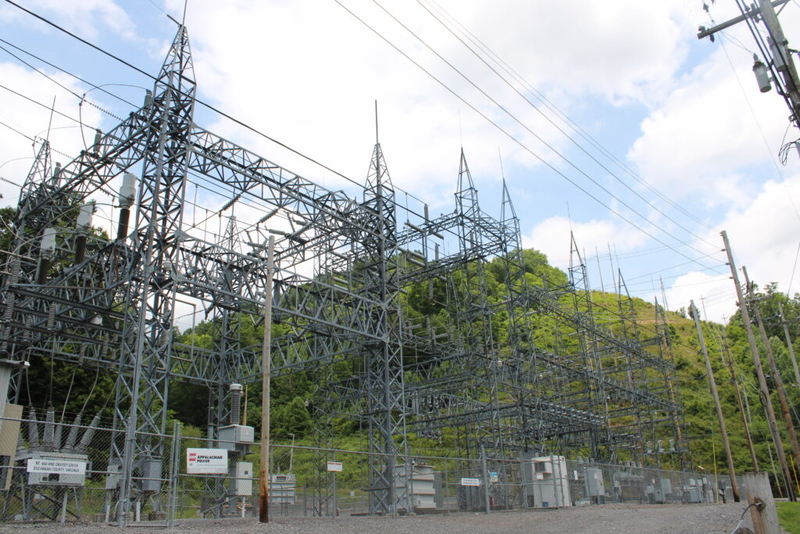
An Appalachian Power Company substation. (Photo by Charlie Paullin/Virginia Mercury)
As utility bills surge for ratepayers in Virginia, lawmakers from Southwest Virginia are pushing legislation that will urge the State Corporation Commission to review how to calculate profit levels and storm recovery costs for Appalachian Power Company.
“The utilities have found time and time again ways to game the system in order to maximize the amount of profitt they are getting called a return on equity,” said Del. Sam Rasoul, D-Roanoke. “In reality, the more expensive stuff that they have, the more profit they can make.”
Appalachian Power Company serves the southwestern portion of the state and some parts of Central Virginia. It is the second largest utility in the commonwealth, and like Dominion Energy, the cost of transmission, base rates, and fuel rates, among other costs, have led to customer bills significantly increasing in recent years.
House Bill 1075 and Senate Bill 961 have multiple goals that would give more power to the SCC to review how the utility calculates its profit margin, otherwise known as return on equity, and decide how much of the utility’s infrastructure expansion or repair costs are passed on to residential customers.
The bills aim to require the SCC to review Appalachian Power’s transmission planning. Transmission lines are what bring the power to the customers, but the cost of those lines is set by the Federal Energy Regulatory Commission. The legislation wants the SCC to evaluate how much transmission APCo needs to build so that excessive costs aren’t passed down to the rate payers by the utility.
“We believe that when you have an accounting system that is built on you get higher profit with having more expensive actual assets, then you’re not going to be incentivized to have cheaper assets,” Rasoul said.
The bill also looks to review how storm recovery costs are recouped from ratepayers. When power infrastructure is damaged in a storm, companies will petition the SCC to ask to recover funding from customers to rebuild. The legislation wants to find ways to reduce cost in those repairs.
If the bills pass, the Attorney General will be tasked with studying alternative ways for the utilities to calculate their profit levels. The SCC already has authority to review the profit margins laid out by Appalachian Power in the biannual rate cases and determine within a range what is fair and reasonable.
“The spirit of the regulated rate of return was meant to mirror what’s happening on the capital markets,”Rasoul said. “Now, if you look at a capital market rate of return, a higher one might be 6% today; they’re getting 9.75% so they’re far above where that spirit is.”
The utility is currently capped at 9.75% profit margins after the last rate case, which is less than the range the company offered to the SCC in the initial petition.
“Appalachian Power is the only major utility in Virginia whose rates have gone down thanks to smart policy supported by APCo and crafted in conjunction with lawmakers,” a spokesperson for Appalachian Power said in a statement. “The State Corporation Commission closely scrutinizes all of the company’s costs and rates to ensure they are reasonable and prudent.”
Power companies are also able to purchase power from outside sources when they are unable to generate enough for their customers. That can be done through PJM, the regional grid operator, or other subsidiaries. The legislation directs the SCC to make sure that Appalachian Power is buying the most affordable options.
“What an energy conglomerate can do is make deals essentially with itself to ensure that it is buying energy from its own subsidiaries, but that may not necessarily be in our best interest,” Rasoul said. “And we have seen that attorneys general, both Republican and Democrat, say that this is a concern.”
Appalachian Power is mandated under the Virginia Clean Economy Act to move to fully renewable energy sources by 2045. Despite the bipartisan group of legislators supporting the regulations legislation, they differ on if they support the VCEA. They all agree that the General Assembly needs to step in to try and find ways to ensure that utility rates are fair and equitable.
Richmond, VA