State Board of Education forms special education review committee
Jun 10, 2026 | 6:03 am ET
Description
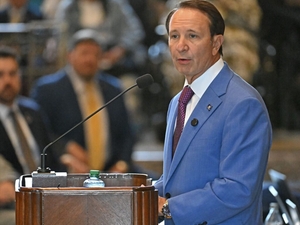
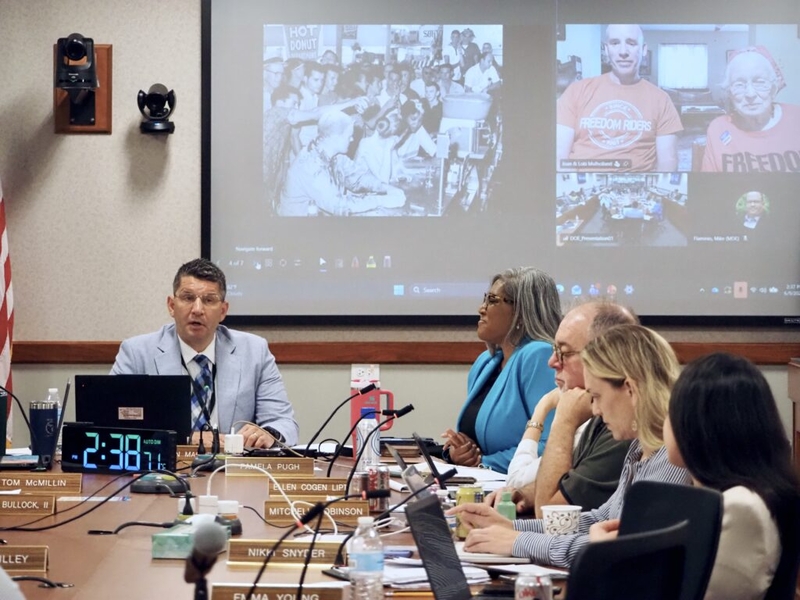
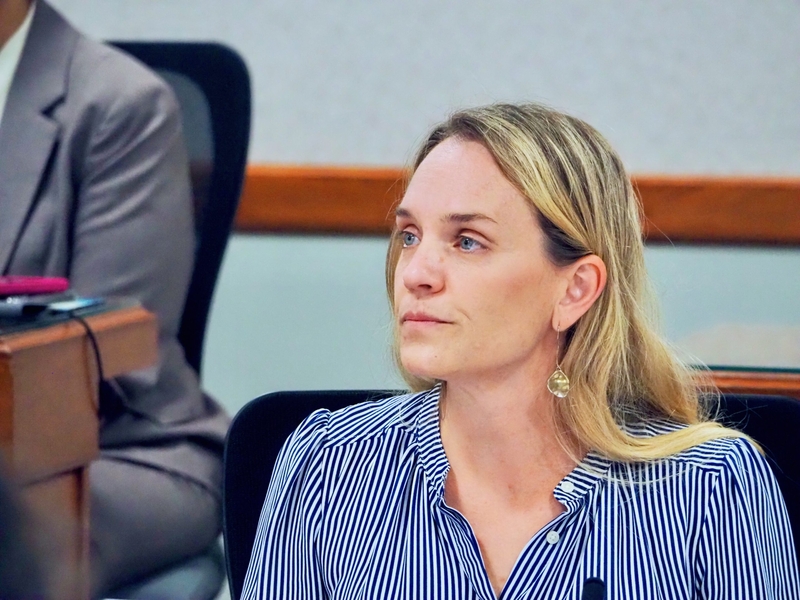
Michigan Superintendent of Public Instruction Glenn Maleyko speaks during a meeting of the Michigan Board of Education in Lansing, Mich. June 9, 2026 | Photo by Ben Solis/Michigan Advance
Members of the State Board of Education on Tuesday voted unanimously to convene a committee to examine special education programs in Michigan and to work with stakeholders to review statewide needs.
The committee was proposed by Board of Education President Pamela Pugh, who will serve as its chair, and was supported by members of the board during its June 9 meeting. The committee will focus on identifying best practices, promising potential outcomes, elevating stakeholder perspectives and, hopefully, support efforts to improve special education services across Michigan.
Tom McMillin, one of the senior Republican members of the board, will serve as its vice chair. The committee will also include Pugh’s fellow Democratic members Ellen Lipton and Judith Pritchett. Additional members will be considered by Pugh in consultation with board members, with the intent for the committee to have a bipartisan approach.
Pugh said the plan was to work closely with the Michigan Department of Education and Superintendent of Public Instruction Glenn Maleyko. The department will offer input and guidance to the committee for information-gathering purposes and meeting planning. Additionally, the board and the department plan to take the committee on the road, with an intended meeting schedule at schools to include students, but also families, educators, advocates and school district officials.
Advisory groups, education experts and organizations like the Special Education Advisory Committee and Autism Alliance Michigan will also be included in the effort to seek stakeholder input.
McMillin supported the creation of the committee and said he appreciated Pugh’s willingness to take a reexamination of the state’s special education programs seriously.
“I know that you’ve said that as you’ve gone around the state, it’s apparent that changes need to be made, and that it’s going to start off by listening and understanding what really is going on at the ground level here in Michigan, and what other states are doing,” McMillin said. “I think it’s a long time coming.”
McMillin added that when he served as a state legislator between 2009 and 2014, he was the chair of the House Oversight Committee, and that it was difficult during that time to get the House’s education committee to hold hearings on special education to hear parents out and dig deep into the problems they were facing with their respective districts.
He was allowed to move forward with special education oversight hearings in response, and McMillin said that input showed him that there was still much to be done to improve special education in Michigan.
That was more than 10 years ago, and McMillin said he was excited to address the issues again from his capacity as the new committee’s initial vice chair.
A presentation on how to improve graduation rates for students with disabilities and those involved in special education bolstered Pugh’s assertion that the board must dig in and enhance services. Leading the presentation were deputy superintendents Lohren Carter-Nzoma and Delsa Chapman, as well as Chantel Mozden, an education consultant manager with the state’s Office of Special Education.
According to information provided to the board, the reading and math proficiency scores of the general 11th-grade student population far outpaced 11th-grade students with disabilities by more than 30 percentage points over the last six years, based on Michigan Student Test of Educational Progress assessments.
Suspensions for students with disabilities in the 9th grade also had an outsized impact on their overall success, the presentation concluded, affecting everything from that population’s graduation rate, dropout rate and access to postsecondary education.
Students with disabilities also appeared to graduate in higher numbers when they were more involved in general education, the data showed.
Carter-Nzoma, Chapman and Mozden proposed that strengthening the engagement between the general education and special education populations could help improve graduation rates. Strengthening high-quality instruction with multiple layers of support could also help, as well as ensuring students with disabilities have access to positive behavioral interventions.
Improving individual evaluations, creating more meaningful individualized education programs, and increasing authentic parent engagement were also seen as necessary improvements for special education programs.
While the creation of the committee proposed by Pugh was not among the recommendations presented to the board, Carter-Nzoma, Chapman and Mozden did say that leveraging experts, research and facilitating discussions could be important next steps for the board. Pugh’s new committee will seek to check off each of those boxes.
Later in the meeting, Nikki Snyder, the only other Republican member of the board aside from McMillin, said she was committed to the board’s mission to improve special education, but believed the board did not have the constitutional authority to create a new committee to advise the full board that will ultimately supervise its work. She also quarreled with other structural issues of creating the new committee, noting that a state advisory panel required the governor to appoint its members.
“When I continue to say the tail is wagging the dog, it’s because it is,” Snyder said. “Under our current constitutional statutory framework, the governor has no meaningful appointment authority over Michigan Department of Education. What Michigan built was a structure where this board appoints a committee that advises the very agency of this board that is circular by design, and I would argue it has never truly satisfied the federal requirement under the Individuals with Disabilities Education Act.”
Snyder mentioned that Michigan was investigated by the U.S. Department of Education’s Office for Civil Rights in 2022, but board member Marshall Bullock noted that those circumstances were related to issues Michigan special education services faced during the COVID-19 pandemic.
Bridge Michigan reported in February that the federal government and the state have not come to terms on what needs to be fixed, but the state wanted the complaints dismissed. It was still unclear if the federal government would force the state to provide makeup services for lost instruction time, Bridge added.
That said, the U.S. Department of Justice in 2025 announced that it reached a settlement agreement with Montcalm Area Intermediate School District to end the use of seclusion, change its restraints policies, and improve special education for students with disabilities, showing that the state’s special education programs were already under federal scrutiny and across two different presidential administrations.
Snyder attempted to table the discussion for a later date, but she found no support from the board and her motion died on the floor.
The resolution to create the committee eventually passed unanimously after Snyder voted yes.
Lansing, MI