The bills lawmakers quietly killed during Maine’s latest legislative session
May 05, 2026 | 4:26 am ET
Description
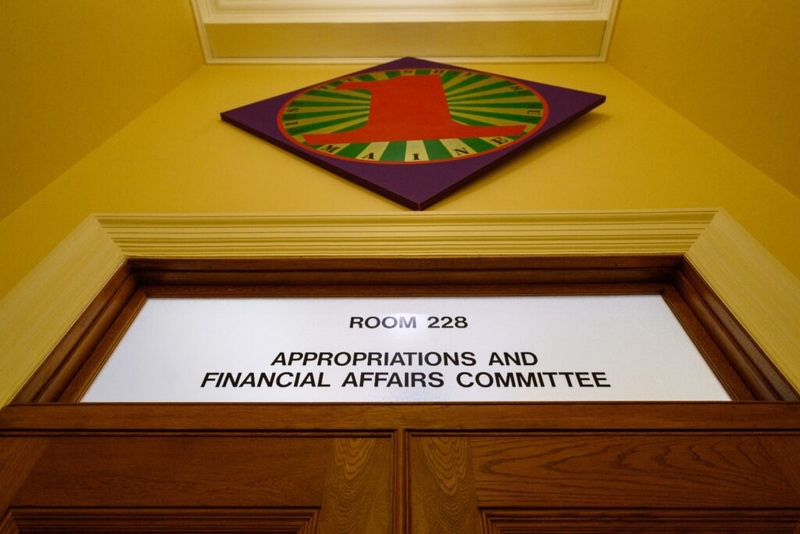
Entrance to the Appropriations and Financial Affairs Committee room in the Maine State House in Augusta. (Photo by Jim Neuger/Maine Morning Star)
A first-in-the-nation temporary data center ban, an agriculture bond, and a comprehensive data privacy policy were among the more high profile measures to fail this session in the Maine Legislature, in some cases drawing national attention.
But many of the bills that died did so quietly.
About 26% of bills that landed on what’s called the “appropriations table” during the 132nd Legislature ultimately became law. Well over 100 died when lawmakers adjourned.
That’s up from the prior Legislature, when less than 10% became law, though that was also in part because Gov. Janet Mills refused to sign any bills sent to her on the final day typically reserved for responding to vetoes.
Bills that land “on the table” have initially passed the Legislature. However, if they aren’t explicitly funded in the state budget, they need to be paid for using remaining unappropriated money. The Appropriations and Financial Affairs Committee is the group that gets to make those decisions.
There are exceptions to that path, as sometimes bills are put there even if they have no expected cost, known as a fiscal note. That was the case for legislation this year to prevent immigration agents from entering public schools, state libraries and hospitals without a judicial warrant, which ultimately made it off of the table and became law.
Out of the 264 bills on the appropriations table this year, 70 ultimately became law. The rest died a quiet death when the Legislature adjourned for the year on April 29, though the initiatives within several bills that languished were separately incorporated into the state budget.
For comparison, during the 131st Legislature, 21 of the at least 250 bills placed on the table ended up becoming law, again not including measures otherwise added to the budget.
Several of the bills left on the table that the committee instead funded through the supplemental budget this year were related to education, including expanding access to free school meals for preschoolers, incentivizing people to become early childhood educators, and increasing the minimum salary for teachers.
Others improved access to affordable prescription drugs in underserved areas and included community mental health workers and chief medical examiner employees under a retirement plan for certain public employees, among others.
During the previous Legislature, a proposal to create a statewide rape kit tracking system failed due to procedural scuffles. This year, the proposal returned but was placed on the table, where it remained upon adjournment — however it ultimately became law through the budget instead.
Still, most of the bills that made it onto the table died.
Those included proposals to create a refundable income tax credit for net energy billing costs and to exempt all residential electricity delivery from sales tax. Another sought to fund testing for forever chemicals in private drinking wells.
After winning bipartisan support, a measure to restore the right to possess firearms for people previously convicted of nonviolent felonies was placed on the table on the final day of session, after the budget committee had already made its funding decisions. Supporters unsuccessfully attempted to strip the bill of its cost, but it ultimately died on the table.
Republicans on the budget committee had also attempted to fund other bills, to no avail. Among those was a proposal carried over from last session that would’ve required health insurance coverage for biomarker testing, a tool for cancer diagnosis.
Rep. Amy Arata (R- New Gloucester), who sits on the budget committee, tried to fund it off the table in honor of the late Rep. Kathy Javner (R-Maine), who died from cancer but had called the testing a lifeline because it gave her more time with family.
“This is a bill sponsored by a Democrat — doesn’t matter,” Arata said during a committee meeting. “It’s a good bill.”
The American Cancer Society Cancer Action Network in Maine was also disappointed with the bill’s outcome.
“When patients use biomarker testing and learn how to most effectively treat their disease, they can avoid one-size-fits-all treatment plans that may ultimately be ineffective and expensive,” government relations director Julia MacDonald said. “We’re hopeful that lawmakers will extend access [to] this critical tool to more Mainers next session.”
Another piece of legislation Republicans on the committee unsuccessfully attempted to fund was a proposal to amend the state constitution to include the right to hunt and fish.
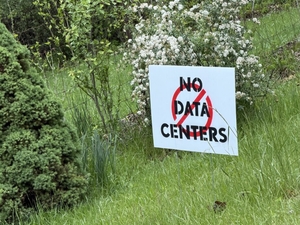
Some bills funded off the table still died. That was the case for the data center moratorium and a measure that would’ve automatically sealed certain criminal records. The governor vetoed both.
There’s also something called the “study table,” where legislation that requires a study of some kind is put to vie for legislative resources. The vast majority of bills that lawmakers put on the study table this year died.
And, other legislation didn’t receive final votes in the chambers — such as a much debated child welfare bill and added testing and tracking requirements for medical cannabis — so they died in limbo upon adjournment.
Augusta, ME