Anne Arundel ballot questions — to guide open meetings, county auditor and more — explained
Oct 19, 2024 | 10:49 pm ET
Description
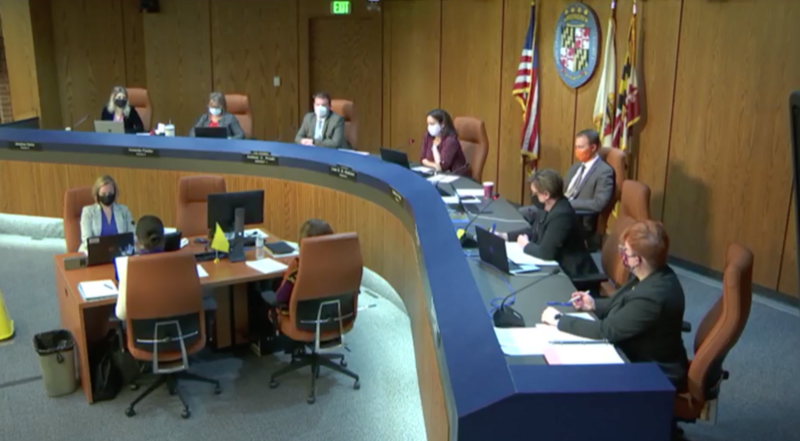
The Anne Arundel County Council in a file shot from a 2022 meeting. Some local ballot questions this fall will affect the way the council functions. Screenshot.
Voters in Anne Arundel County will consider four amendments to the County Charter in November, which could reshape county government to slight degrees.
Any changes to the charter must receive supermajority approval from the County Council before going to the voters.
Marylanders can register to vote during early voting and on Election Day.
If you want to find out where you can vote early, between Oct. 24 and Oct. 31, click here.
To find out where to drop off a mail ballot at a dropbox, click here. Ballot boxes are open until 8 p.m. on Nov. 5, Election Day.
Want to see a sample ballot for your county? The State Board of Elections has a list of every approved ballot for the November election on its website.
Here’s a quick breakdown of the ballot questions in Anne Arundel County:
Question A
This charter amendment would allow the county to increase the threshold for contracts that must go through a standard procurement process from $5,000 to $10,000.
If passed, county purchases below $10,000 would not be subject to the competitive procurement process and would not be published on the county’s website.
The change in charter language was recommended by the county executive’s office, with administration officials noting that inflation has recently raised costs and made the current program less effective.
During fiscal 2023, the county’s Purchasing Division had a total of 292 procurements that were each between $5,000 and $10,000. Those small procurements had a total value of $2 million and represented less than 1% of the county’s overall transaction value.
The proposal was approved for the ballot 7-0 by the county council.
Question B
At first blush, the county’s explanation for this proposed charter amendment can be confusing:
A vote FOR the charter amendment requires all meetings and legislative sessions of the County Council to comply with the Maryland Open Meetings Act.
A vote AGAINST the charter amendment would retain the current Charter provision that County Council meetings be open to the public.
So, let’s dig deeper.
The proposed amendment from Council Chair Allison M. Pickard would change the council’s open meeting rules to mirror those of the state Open Meetings Act, a law that has been in effect for more than four decades, though it has changed over the years.
The county’s current charter requires that “all” meetings of the county council “shall be open to the public.” The proposal would change the charter to say that all meetings of the council “shall comply with the Maryland Open Meetings Act.”
Pickard (D) noted at a council meeting in June that most other counties have rules that allow for closed executive sessions to address topics like personnel and legal issues. “This charter amendment would allow this council to do the same,” she said. Councilmember Nathan Volke (R) agreed that the current charter rule is “a limitation on our ability to function.”
The council passed a resolution in support of the ballot question 7-0.
Question C
This provision would increase the maximum term for members of the county’s Board of Appeals to three full consecutive four-year terms.
A vote against the question would retain the current two-term limit.
The county council supported the ballot question 6-1.
In 2022, voters approved a charter amendment that increased county council term limits from two four-year terms to three.
Question D
This charter amendment would clarify the duties of the County Auditor.
Specifically, it would expand the scope of records available to the auditor for inspection, and clarify which parts of county government are subject to audits and must cooperate with the auditor’s investigations.
The amendment is part of an ongoing effort by the county council to clarify the office’s role in county government and increase transparency.
However, the county executive’s office expressed some concern about some wording in the proposed change, which would specify that the auditor shall have access to “all records … including those that are confidential by law.” That provision could violate the executive’s attorney-client privilege or deliberative privilege, which are accepted reasons in Maryland law to avoid public disclosure of records.
Council staff said the language mirrors state guidelines for the state auditor and noted that the county auditor abides by a set of professional rules of conduct.
The council passed the proposed change by a 7-0 bipartisan vote.
Annapolis, MD