Alaska DOT plans new subsidy program to boost cargo flights at Fairbanks airport
Mar 10, 2026 | 7:35 pm ET
Description
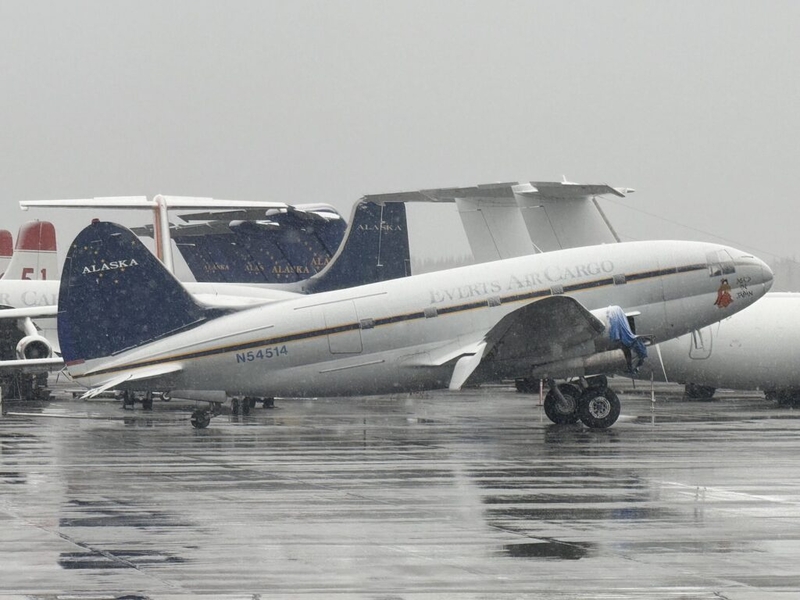
A snow-covered C-46 cargo plane sits on the tarmac at Fairbanks International Airport on Oct. 9, 2024. Airport officials are offering an increased incentive for new cargo airlines to fly from Fairbanks. (James Brooks photo/Alaska Beacon)
The Alaska Department of Transportation and Public Facilities is planning to relax the requirements for a subsidy program intended to attract cargo airlines to Fairbanks International Airport.
In a March 6 public notice, the department said it will waive landing and fuel fees for a year at Fairbanks for one or more airlines that provide at least three months of weekly cargo service between Fairbanks and a new destination city.
That’s down from a requirement that they provide six months of service.
Only newly added service is eligible on a first-come, first-served basis for airlines, and the program is expected to last until 2032, according to the notice.
Currently, the Alaska International Airport System Passenger and Cargo Airline Incentive Program requires an airline to provide six months of new weekly cargo service before receiving the waiver. The new change offers an extra incentive for Fairbanks air cargo.
The overall incentive program and the new change — formally known as “Class 6” — were created by staff at DOT and the Alaska International Airport System, said Shannon McCarthy, communications director for Alaska DOT.
“The Class 6 addition concept was created to incentivize cargo carriers to temporarily move some operations during the upcoming busy construction season at ANC to FAI,” she wrote by email, using shorthand for the airports at Anchorage and Fairbanks. “Costs in Fairbanks for short term operations can be higher than negotiated contractual rates in Anchorage (hotels, fuel, etc.) so this helps offset those increases while utilizing the system and keeping the activity within Alaska and AIAS.”
McCarthy said that while the waiver “reduces revenue on those specific flights for a limited period, the program is designed to stimulate incremental operations that would likely not occur without the incentive, thereby generating new economic activity and long-term airport revenue once the incentive period ends.”
The new subsidy program is scheduled to take effect April 6; public comments on the plan can be submitted through April 5.
Juneau