Alabama House bill would end popular election of Public Service Commission
Feb 10, 2026 | 7:01 am ET
Description
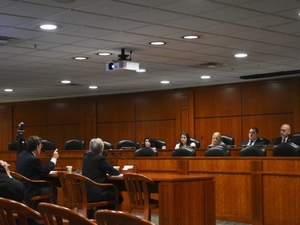
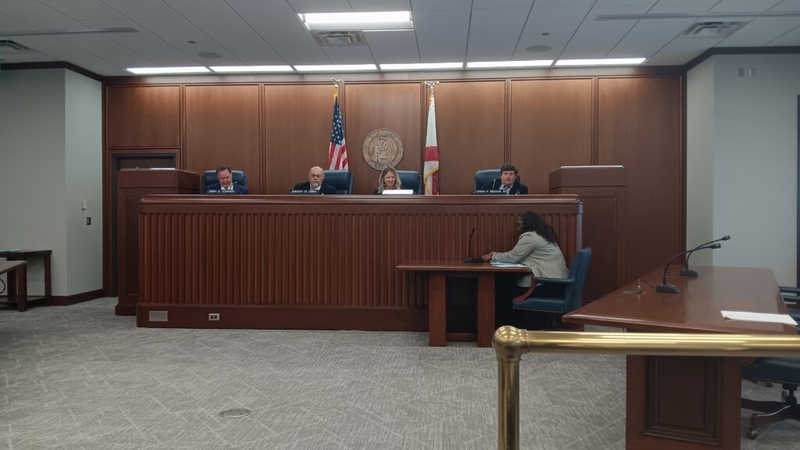
Members of the Alabama Public Service Commission prepare for the Tuesday, August 5, 2025 regular meeting. An Alabama House committee Tuesday is scheduled to consider legislation that would end popular election of the Alabama Public Service Commission. (Ralph Chapoco/Alabama Reflector)
An Alabama House committee Tuesday is scheduled to consider legislation ending the popular election of members of the state’s utility regulatory body.
The House Transportation, Utilities and Infrastructure Committee will discuss HB 392, sponsored by Rep. Chip Brown, R-Hollinger’s Island. The bill would end the election of members of the Alabama Public Service Commission upon the completion of the current members’ terms. In its place, the governor, the Alabama House speaker and the Alabama Senate president pro tempore would appoint members of the body.
A message was sent to Brown on Monday seeking additional comment. The bill itself says the current regulatory model “was established over 100 years ago and is not the best model for ensuring that Alabamians are best-served and well-positioned for future challenges.”
“There are dozens of regulatory bodies and agencies in Alabama and none of them are elected,” the bill says. “These include offices regulating complex and critical industries including banking, insurance, and many others.”
The move comes a few months after Georgia voters elected two Democrats to the Public Service Commission, the first such victory for Democrats in a statewide constitutional race in nearly 20 years. Peter Hubbard and Alicia Johnson, the winning candidates, both ran on a platform of lowering utility rates.
Alabama has some of the highest residential utility bills in the South. According to the Energy Information Administration, Alabama’s average residential electricity price was 16.08 cents per kilowatt hour in November, the highest of any southern state. While the PSC is supposed to regulate electricity, its longtime use of a process called rate stabilization and equalization (RSE) has drawn criticism for limiting public input and failing to make the decisions behind rate approval clear.
John Dodd, policy manager for Energy Alabama, a nonprofit that advocates for renewable energy in the state, said Monday that Brown’s bill would take away Alabamians ability to hold electricity regulators accountable.
“If regulators approve of bad decisions or higher bills, voters have recourse through the appointments, but this eliminates that completely,” he said.
According to language in the bill, the president of PSC Board will be appointed by the Governor’s Office in 2028, while the two remaining associate board members will be decided by the House speaker and Senate president pro tempore in 2030.
Eleven people have qualified to run for the PSC in the November election.
“There has been a great awakening in the state of Alabama and nationwide around the issue of affordability, especially energy affordability,” Dodd said.
Under Brown’s bill, each person appointed to the PSC Board would serve for four years upon Senate confirmation. If senators fail to confirm the nominees, the appointing authority will select a different candidate for the post and go through the confirmation process.
“The respective appointing authorities shall select individuals with experience relevant to the duties of the commission including, but not limited to, experience with utility regulation, energy or infrastructure policy or issues, regulatory issues, economics, law, engineering, finance, accounting, business, or economic growth issues,” the bill states.
However, following the Democrats’ victory in Georgia, the PSC approved a request from Alabama Power in December to freeze the electricity rates it charges to customers for two years.
Members of the House Transportation, Utilities and Infrastructure Committee will also consider bills for the PSC to further regulate data centers while a second bill will end tax incentives that state offers for constructing data centers in the state.
HB 403, sponsored by Rep. Neil Rafferty, D-Birmingham, would ensure that data centers pay for the additional electricity that the data center would use as part of its operations.
The bill states that the PSC must review the contract agreements that utility companies make with data centers. It would also require a provision in the contracts that the company that operates the data center pays the additional cost of using electricity instead of having the cost be borne by the utility’s other rate payers.
“People do not want to pay for these data centers to be coming in and increasing their utility prices,” Rafferty said in an interview on Monday. “This is a guarantee that all the costs associated with building that data center, as well as providing the electricity that data center is going to need, that it is not spread out.”
According to the bill, the PSC is authorized to consider the “recovery of the incremental costs of retail electric service.”
Lawmakers on the committee will also consider HB 399, sponsored by Rep. Leigh Hulsey, R-Helena, that limits the maximum amount of time that data centers would be exempt from paying property taxes to 20 years. It would also require data centers to pay state sales tax and use taxes for data centers that use at least 100 MW of power.
A message was sent to Hulsey on Monday seeking comment.
The Bessemer City Council approved a zoning change to accommodate a planned data center in a meeting in November over the objections of residents who said during the meeting they were worried about the water and power that the data center would consume.
Montgomery