Michigan election officials say there is room for improvement in signature petition review process
Oct 14, 2026 | 4:02 pm ET
Description
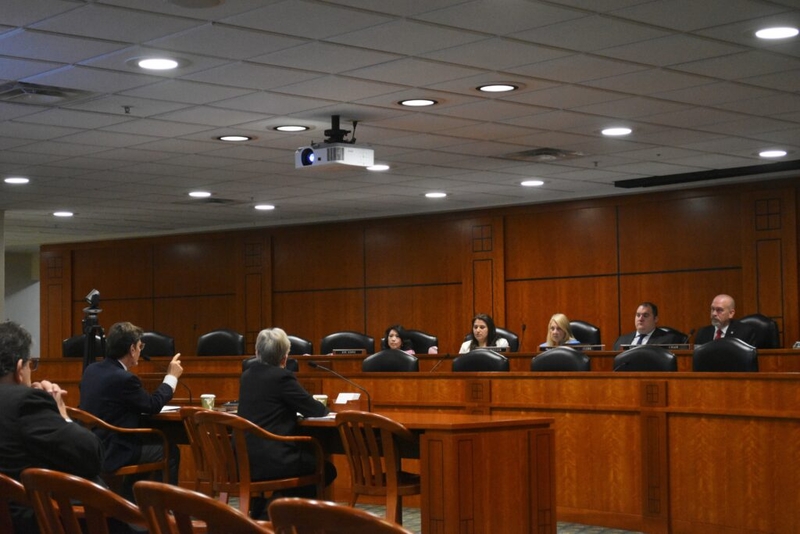
Members of the the House Select Committee on the Rules and Procedures of the State Board of Canvassers and the Bureau of Elections hear testimony from Canvassers Chair Richard Houskamp, middle left, and Mary Ellen Gurewitz, the board’s vice-chair, center left, on the morning of Wednesday, Oct. 14, 2026. (Photo by Ben Solis/Michigan Advance)
Michigan election officials defended the state’s previous review of ballot petitions and its decision-making processes during a special House committee meeting held Wednesday, but they also agreed with the committee’s Republican majority that some changes needed to be made to give petitioners more time in collecting and reviewing valid signature counts.
The conversation before the House Select Committee on the Rules and Procedures of the State Board of Canvassers and the Bureau of Elections focused mostly on the board’s rules and rule-making process, which is handled by the Michigan Bureau of Elections, and how the body handles a random sampling process to check the validity of petition signatures collected by circulators — a process that has been in place since the 1970s.
But there was some discussion on the potential for the state to adopt and use advanced technologies, including artificial intelligence, to do that work in the future, drawing some concerns from lawmakers on both sides of the political aisle.
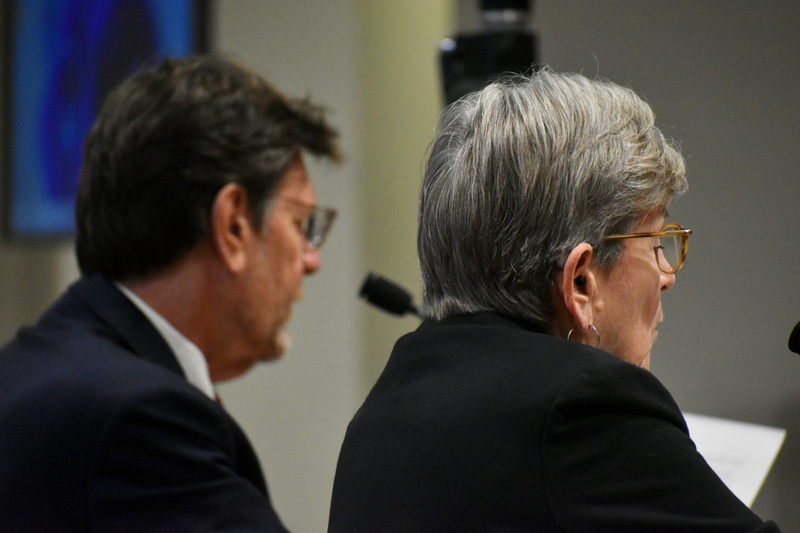
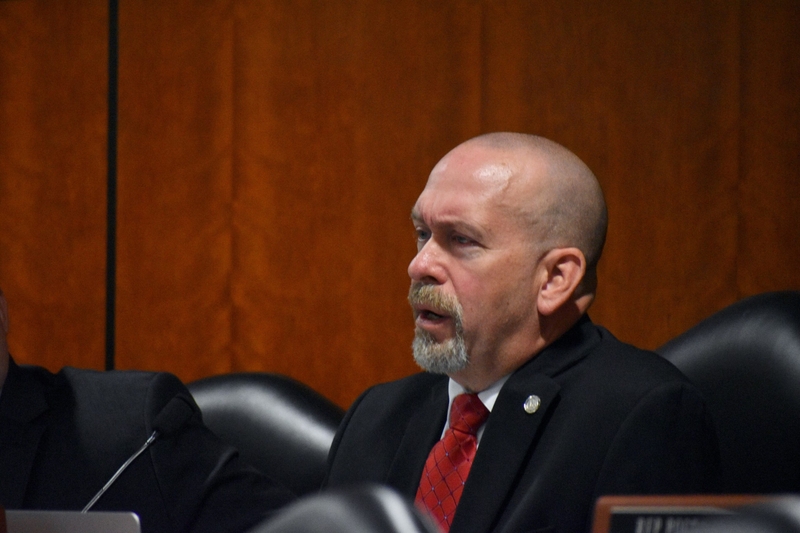
Appearing before the committee were Richard Houskamp, the Republican chair of the Board of State Canvassers, Mary Ellen Gurewitz, the board’s Democratic vice-chair, and Jonathan Brater, the executive director of the Bureau of Elections.
The committee was formed after the American for Citizens Voting ballot measure, which would have required proof of citizenship before a person could cast a ballot, failed before the Board of State Canvassers earlier this year.
The Bureau of Elections had determined that its random sample showed the measure did not turn in a sufficient number of valid signatures to make the ballot, and the board deadlocked 2-2 on a decision to move it forward. The deadlocked vote meant that the petition could not be placed on the Nov. 3 general election ballot.
The move was controversial in part because of the partisan interests involved. Support for the proof-of-citizenship measure came mostly from the state’s Republicans, who felt slighted when an issue they cared deeply about in the 2026 cycle was rejected. Compounding the controversy was an earlier approval by the board of a ballot measure that seeks to eliminate the state’s regulated utilities from making political donations, a so-called progressive “money out of politics” initiative.
Organizers have said that they are now eyeing the 2028 cycle to revive the proof-of-citizenship measure.
Houskamp, Gurewitz and Brater each said that the processes they have in place work, and that sometimes popular petitions fail even though it appears that they have momentum from their respective political bases.
In the case of the Americans for Citizens Voting, Houskamp said that the board “didn’t just do a block” of the measure that was highly coveted by the GOP; rather, the board listened to the attorneys involved with the petition and made a decision based in part on the bureau’s recommendations.
Gurewitz noted, too, that the mechanism the canvassers use to determine whether a petition has valid signatures is guided by past judicial decision. She brought up the 2012 “Stand Up For Democracy” decision from the Michigan Supreme Court, which called for strict compliance of the rules set out in statute on everything from the typeface of the petition to its heading, down to the sufficiency of valid signature questions the canvassers and the bureau examine each election cycle.
Gurewitz said the strict compliance standard leads to decisions on petitions “which seem kind of harsh, possibly even irrational,” but the courts have ruled. While there have been attempts to switch to a substantial compliance standard, allowing more wiggle room on the rules in statute, Gurewitz said that law, which was passed during the 2024 lame duck session, was ultimately vetoed by Gov. Gretchen Whitmer.
Officials acknowledge room for improvement
Fallout from another decision, Neilson v. Board of State Canvassers, a decision from 2024, further limited the number of days a person or a group has to issue affidavits or evidence that would help them keep signatures deemed invalid. The board, in the wake of the decision, adopted a rule that only gives those individuals or groups 48 hours before a hearing to submit evidence, and not after.
That said, each of the officials noted areas where there was room to improve.
Gurewitz noted the sampling procedure has been in effect for decades, and it’s the only way they have to evaluate signatures that come before the board. That procedure was changed recently to draw 1,000 signatures and evaluate a certain threshold of that separate universe of signatures. Gurewitz said she and Houskamp hope, as they are term limited, that the next group of leaders on the canvassers takes a look at that procedure and makes changes.
She also said that the strict compliance of the timelines and rules has given the canvassers a time-consuming and difficult task when it makes these decisions.
“Had substantial rather than strict compliance been in effect, I’m quite confident that this petition would be on the ballot, and we wouldn’t have had so much difficulty with MIMOP either,” Gurewitz said.
Brater also said there were changes to be made — including going back to a two-stage signature validation process, which Brater said would have been advantageous for Americans for Citizens Voting. The issue is, state law would need to be changed to give petitioners more time.
State Rep. Mike Harris (R-Waterford Township), the committee’s chair, agreed that those trying to change state law or the constitution through the ballot initiative process needed more time, whether that was in terms of deadlines or the 48-hour rule, out of fairness.
“I’m not blaming you, but I think there’s a problem when we disenfranchise 700-plus to 1,000 signatures over an argument over a handful, and it very easily could have been that way with MIMOP, too,” Harris said.
AI proposal raises concerns about accuracy and oversight
Another solution that Houskamp and Gurewitz floated — letting AI do the verification and sampling work for the board — was met with some pushback from both a Democratic and a Republican member of the select committee, the latter a top member of the GOP caucus.
Gurewitz said the canvassers had talked “extensively” about the future intention to “use AI more effectively to review signatures and to further examine, as we have done in the past, what other states are doing with regard to ballot questions.”
She also noted that Houskamp has been urging, ever since he was placed on the board, to incorporate AI into the evaluation process for petitions. In response to a question from state Rep. Jason Woolford (R-Howell), Houskamp said an AI program could be devised to scan submitted petition sheets and evaluate them for validity and form.
There are no states currently using AI in this fashion, Houskamp said, and if Michigan considers it, the Great Lakes state would be there first.
“It would also look at every signature on that page, and it would have a backdoor to the state Qualified Voter File,” Houskamp said. “The application, the software I’m describing, would be an employee of the bureau to protect the QVF, and it would look at the QVF file, and it would evaluate that signature, and it would evaluate the address and the voter, and it would have all that information.”
When asked if it would eliminate the human in the equation, Houskamp said no.
“We still have a thing that we have to work on there,” he said. “What it would get to is … that run could be done in literally a day, it could process massive, massive petitions in less than a week.”
The job of making a decision on whether those signatures pass muster would still be the job of the canvassers, he said.
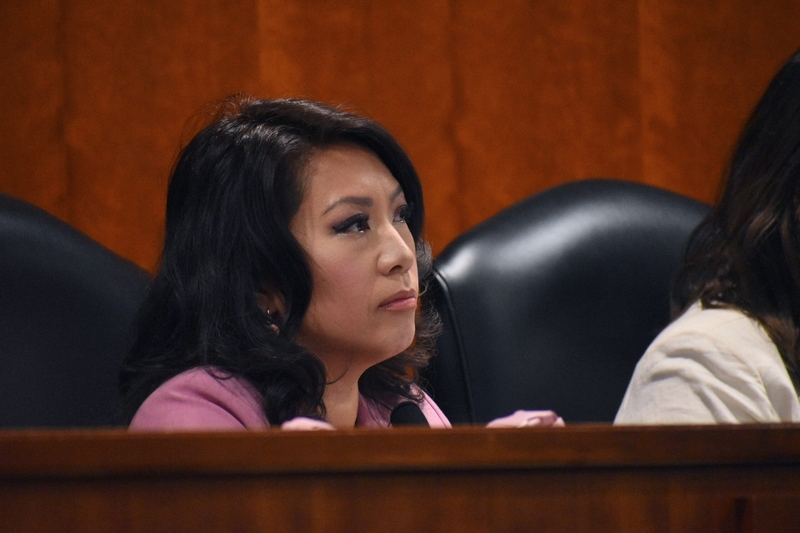
State Rep. Mai Xiong (D-Warren) had some immediate concerns over AI being involved.
“I don’t think it’s 100% accurate,” Xiong said. “Even technology requires humans to be properly trained to utilize it.”
State Rep. Ann Bollin (R-Brighton Township), a former township clerk and the chair of the House Appropriations Committee, echoed Xiong’s concern.
“AI is only as good as, really, the human confirmation of that information,” Bollin said.
Lansing, MI