Alabama Democrats to choose party chair at potentially contentious meeting
Aug 07, 2026 | 6:01 am ET
Description
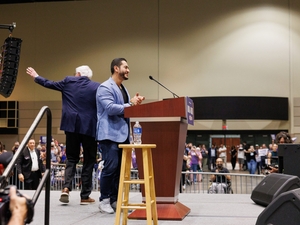
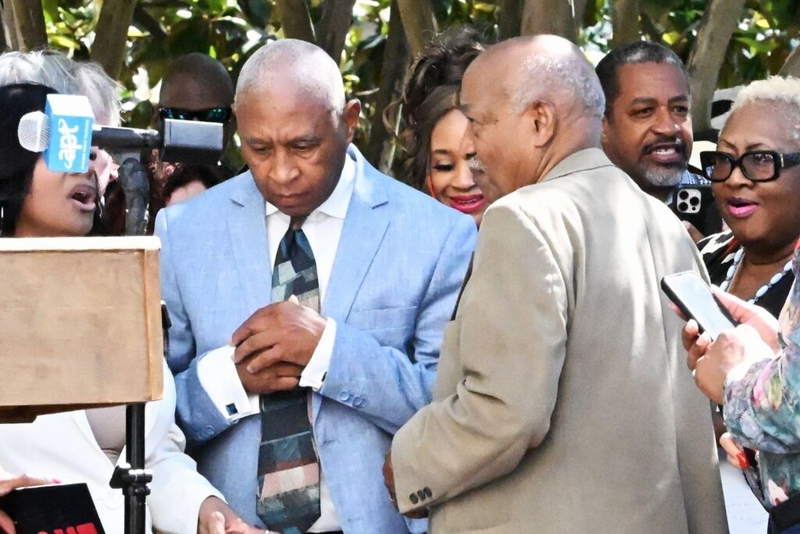
Alabama Democratic Party Chair Randy Kelley (left, in light blue jacket) listens to Alabama Democratic Party Vice Chair for Minority Affairs Joe Reed (right, in beige jacket) during a rally against redistricting at the Alabama Statehouse on May 4, 2026 in Montgomery, Alabama. The State Democratic Executive Committee will meet on Saturday in Montgomery to elect a leader for the next four years. (Brian Lyman/Alabama Reflector)
Alabama Democrats will gather in Montgomery Saturday to pick party leadership for the next four years.
Current Alabama Democratic Party Chair Randy Kelley; Senate Minority Leader Bobby Singleton of Greensboro and Robert Hunter, the party’s nominee for a Gadsden-area House seat, were declared candidates for the position as of Thursday.
Republicans maintain control of Alabama politics, but Democrats in the state are carrying momentum into November. The minority party had higher turnout than Republicans in the May 19 primary election, and has the largest slate of midterm candidates since 2018. Some of those candidates are in competitive races in and around Huntsville, but other statewide candidates remain underdogs.
In the middle of an election year, the party is also dealing with internal discord. Many members of the State Democratic Executive Committee (SDEC) have expressed their displeasure with the party on social media ahead of the committee’s meeting on Saturday. The posts range from complaints of a lack of election education to accusations of illegal campaign finance practices from former candidates.
A new direction?
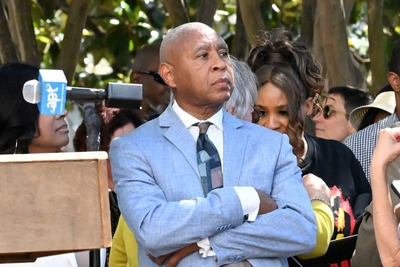
Kelley, long aligned with Vice-Chair of Minority Affairs Joe Reed, a major power in the party, said in a phone interview Thursday that he inherited a “poor administration” from his predecessor Rep. Chris England of Tuscaloosa, but the party has had some “great victories” under his leadership. England declined to comment in a phone interview Thursday afternoon.
“If we’re gonna give the people of Alabama the best that politics has to offer for them, then we’re going to have to pull together and organize around our common issues and values,” he said. “If you look at much of what is affecting the people most in Alabama, the Democratic Party has fought for them.”
He touted the flipping of a Huntsville-area House seat by Rep. Marilyn Lands in a 2024 special election, and the election of U.S. Rep. Shomari Figures, D-Mobile, later that year after a federal court approved a new redistricting plan for the state. The U.S. Supreme Court in June allowed the Republican-controlled Legislature to use a map it previously deemed racially discriminatory.
“We’ve got to unite the party. The party hasn’t been united, and we have much more in common than we have differences. And we have to put aside these superficial differences in order to focus on what we ought to be about, so we can best serve the people of the state of Alabama,” Kelley said.
Hunter said in a phone interview Thursday morning that he is generally frustrated with the party and its lack of action outside of SDEC meetings, like the one on Saturday.
Alabama House Democrats’ bill to end straight-ticket voting draws ire of Democratic leader
“I don’t like the fact that the party is not very useful when it comes to material action, both for the candidates, but also specifically for general community members,” Hunter said. “What I worry is, it got better in the last year and a half in part because we had this upcoming meeting where it’s report card time and you have to show improvement if you want to keep your job for the chair and the vice chair of minority affairs.”
Should Hunter be elected, he wants to “change everything.”
“I want to make sure that we actually are reaching out to every single person possible, and we are trying to bring people into the fold that are not currently there. That includes showing that the party is the state party, not the Montgomery party,” he said.
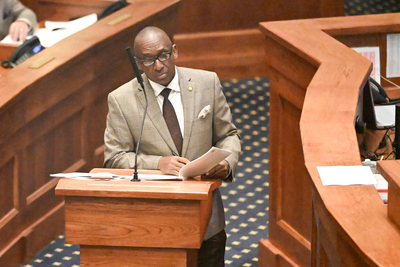
A message seeking comment from Singleton was left Thursday. Singleton said in an interview on Capitol Journal last week that he has “never felt supported by the party” during his time in the Senate. Singleton was elected in 2005.
“All those things that Democrats support, but we just never got that support from the party,” he said. “If I can’t get someone else to get the job done, I don’t mind stepping up and doing the job myself. I can’t criticize someone else for something I’m not willing to do.”
Tabitha Isner, vice chair of the party, said in a phone interview that having a legislator as party chair could be very helpful, and it would be difficult for other members to argue that Singleton is not qualified.
“We should be talking about policies that we’re passing, so it’s healthy to have a closer relationship between the policymakers and the folks who are recruiting candidates,” Isner said. “They’ve run elections and won elections. Granted, in safely Democratic districts generally, but those are folks who know the game, and we should be taking advantage of their expertise.”
Just because Singleton has policymaking experience, does not guarantee him as a viable candidate, she said.
Isner has been active on social media recently, posting about her experience as vice chair under Kelley. Her posts have largely claimed that Kelley and Reed do not follow the party’s bylaws and there needs to be change. She said Thursday that she will not be running for chair.
“Joe L. Reed will be the downfall of the Alabama Democratic Party if we don’t do something about it,” she said on a recent episode of “He’s Not Wrong,” a podcast hosted by Chad DuBois.
A message seeking comment was left with Reed Thursday morning.
Kelley said that social media posts from Isner and other members of the party come from people who have lost against him.
“I do know that we have a lot of toxicity from some of our people, and some of that dissonance has to do with some people who lost the election last round,” Kelley said.
Isner said the contest “still comes down to issues of loyalty.”
Alabama Democrats restore most diversity caucuses after DNC order
“The folks who are loyal to Joe Reed will likely vote for whoever Joe Reed tells them to vote for, even if that’s someone who you know has not done a good job,” she said. “The coach usually gets replaced when the team doesn’t win any games.”
Prior to the main business meeting, each minority caucus will meet. The Black Caucus, which is chaired by Reed, is the largest and is loyal to him, Isner said. In 2023, the SDEC passed bylaws that eliminated youth, LGBTQ+ and disabled caucuses and reduced the powers of affirmative action; Asian and Pacific Islander; Hispanic; and Native American caucuses “to monitor the affairs of the groups listed.”
Most of the minority caucuses were restored in 2024 by order of the Democratic National Committee (DNC).
Isner said she expects the meeting to be long and contentious.
“I expect that Dr. Reed will make a motion to limit debate on everything, and that will be a fight,” Isner said. “People want to be heard. This is their only opportunity to be heard and to talk about these big important decisions.”
DNC delegates under supervision
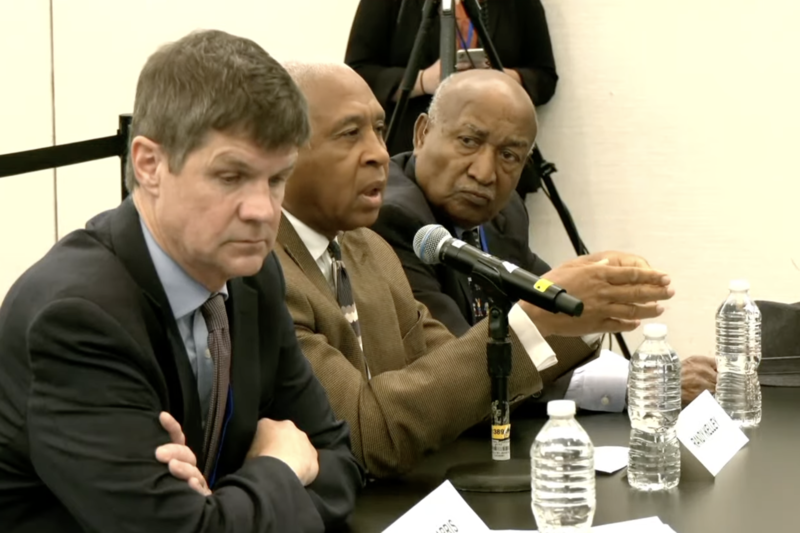
The SDEC will also elect three delegates for the DNC, an overdue vote from 2024. Reed in 2024 accused then-President Joe Biden’s campaign of “handpicking” delegates.
A representative from the DNC will be at the meeting to observe, according to Isner, but not to intervene. Kelley said the delegate vote would be “typical” but did not expand.
“The DNC will not intervene; they’ll only observe. I think that will frustrate people to know that there isn’t any intervention,” Isner said.
The DNC instructed the SDEC to do the delegate election via paper ballot, Isner said, but she is not aware of any nominees or processes in place to allow that to happen.
The main question for SDEC members, she said, is deciding whether the current leadership has done a good job and what steps the party needs to take.
“I do think it falls largely on generational lines, also racial lines. But younger folks are saying we’ve got to do something different,” she said.
This story was updated at 11:19 a.m. to remove an inaccurate description of caucus meetings.
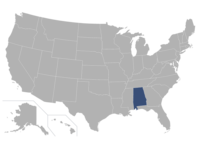
Montgomery