Alabama budget officials urge caution with state’s two budgets
Feb 06, 2024 | 4:44 pm ET
Description
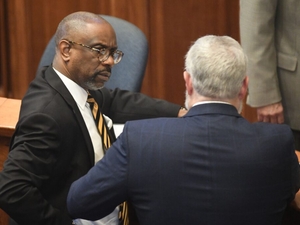
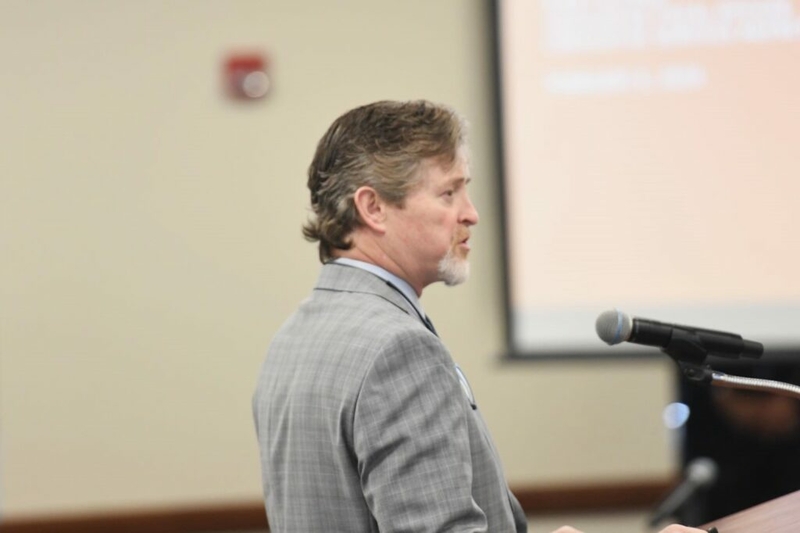
Kirk Fulford, director of the Fiscal Division of the Legislative Services Agency, makes a presentation on the Alabama's two state budgets on Feb. 6, 2024 in Montgomery, Alabama. (Brian Lyman/Alabama Reflector)
Officials told Alabama lawmakers Tuesday that the state’s two budgets were in good shape. And that they needed to exercise caution in the coming years.
“The situation can change,” said Kirk Fulford, director of the Fiscal Division of the Alabama Legislative Services Agency, after the presentation. “We know the situation can change quickly.”
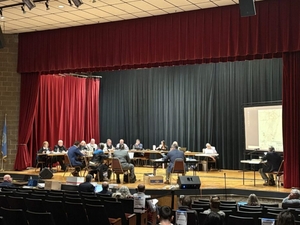
The budget presentations took place on the first day of the Alabama Legislature’s 2024 regular session.
Fulford estimated that the Education Trust Fund budget (ETF), which pays for most K-12 schools in the state, would grow from about $8.8 billion in the current year to about $9.3 billion in fiscal year 2025, an increase of about $550 million.
Fulford estimated that appropriations for the General Fund, which pays for most non-education funding in the state, would grow from $3.015 billion to $3.361 billion in 2025, an increase of about $346 million. The 2025 fiscal year starts on Oct. 1.
Finance Director Bill Poole told legislators that Gov. Kay Ivey’s General Fund budget request would be about $3.3 billion, an 8.16% increase over the current year’s budget. Poole said Ivey would propose an ETF of $9.3 billion, a 6.25% increase over the current year.
“It’s a complete anomaly, and the sugar high maybe is about to end,” he said, referencing an earlier comment from a lawmaker.
Poole said that in the ETF, Ivey planned to prioritize education savings accounts, a program where public money can be used by parents directly for education-related expenses. The finance director also said the governor would call for more money for turnaround schools; targeted K-12 funding such as the Literacy Act which aims to have students on grade level by the end of 3rd grade, and additional funding for the Alabama Public Charter School Commission.
Ivey’s General Fund priorities, he said, are one-time capital needs and Medicaid and Corrections, the agencies which receive the largest share of General Fund money. Corrections Monday said it would request $820 million from the General Fund. Medicaid is seeking $955 million.
The Legislature will have the final word on the size and shape of the state’s two budgets.
Fulford said that a concern for the General Fund were the state deposit funds. According to his presentation Tuesday, revenue from the funds grew from $40 million in 2023 to $404.6 million.
Fulford said after the meeting that the jump came from federal funds tied to COVID relief. Interest collected on those federal funds, but came down as the money was spent.
Potential cuts to interest rates could also affect the budget, Fulford said. The Federal Reserve raised interest rates over the past several years to battle inflation, but have paused as inflation has fallen. Fulford said they had indicated that interest rates were not going to start coming down until around June.
Federal COVID money caused years of unprecedented growth, but Fulford said the budgets were returning to normal.
“21 and 22 are anomalies,” Fulford said to reporters. “They’re not real.”
Fulford told reporters that they are in great shape this year, but they know the situation can change, particularly in the education budget. The ETF is reliant on income and sales taxes, both of which are sensitive to economic trends.
“On a month-to-month basis, it can change in the ETF,” he said.
Senate Finance and Taxation General Fund Chair Greg Albritton, R-Atmore, said after the presentations that the big takeaway from the presentation was caution.
“As always, danger in the woods,” he said.
He said they have done well, but their obligations exceed expectations, particularly with construction costs. He said the budget has increased, and they cannot continue at the rate they have been.
“We got to figure a way to meet those obligations,” he said. “That’s going to be a problem.”
Montgomery