Advocates ask NJ to enforce state moratorium on horseshoe crab harvesting
Jul 30, 2026 | 6:37 am ET
Description
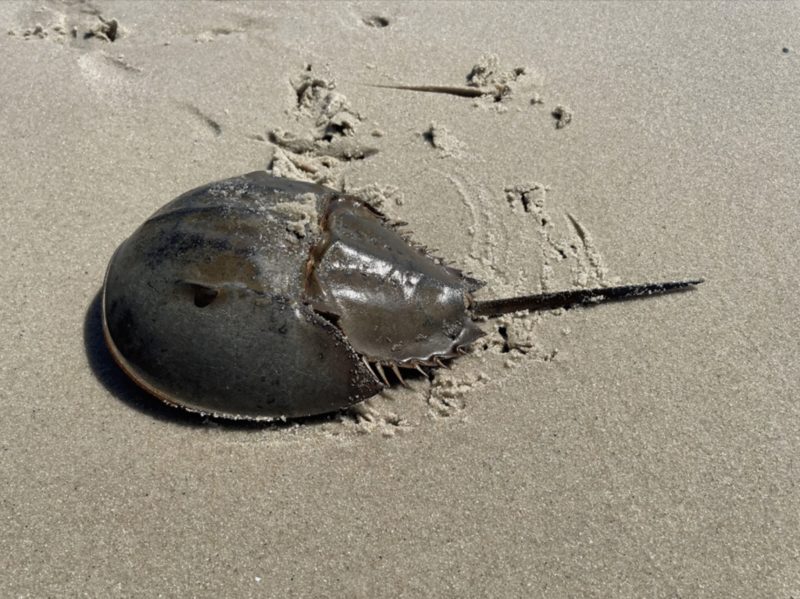
Limuli Laboratories of Cape May County harvests thousands of horseshoe crabs a year for biomedical testing. Environmentalists demand a review. (Photo courtesy of New Jersey Department of Environmental Protection)
A nonprofit that advocates for endangered species wants New Jersey environmental officials to declare a Cape May County biomedical company in violation of a longstanding moratorium on harvesting horseshoe crabs.
In a petition filed Tuesday, the Center for Biological Diversity accuses Limuli Laboratories of flouting a 2008 state law that generally prohibits all collection of horseshoe crabs, except for those captured for the purpose of blood-harvesting for biomedical purposes. Horseshoe crabs’ blue blood contains an extract called Limulus amebocyte lysate that detects bacterial and fungal contamination and is used to test whether vaccines and other injectables are safe for humans.
The law requires biomedical collectors to release the creatures after harvesting their blood “otherwise unharmed to the same waters from which they were collected.” But the petition says Limuli ignores that requirement by injuring or killing thousands of the horseshoe crabs it plucks out of the Atlantic Ocean each year and returning the survivors to the Delaware Bay instead of the stretch of the sea between Ocean City and Cape May where trawlers got them.
The petition comes as the population of horseshoe crabs, a hardy, prehistoric species considered living fossils because they predate dinosaurs, has plummeted globally partly due to overharvesting. A million get harvested each year for biomedical research even though a synthetic alternative to the test has been available about 20 years, the nonprofit environmental news outlet Sentient recently reported.
New Jersey lawmakers enacted the state moratorium to protect migrating shorebirds that feed on horseshoe crab eggs, especially the federally protected red knot. That has helped horseshoe crabs recover at least in this region, but Limuli Labs’ practices threaten that progress, said Danny Waltz, a senior attorney at the Arizona-based center.
“A law is only as good as its enforcement, and we have some serious questions about the public records we received that show that a biomedical company is harvesting horseshoe crabs in New Jersey waters and killing and injuring the horseshoe crabs, which interferes with their ability to rebound,” Waltz said.
The New Jersey Monitor couldn’t reach Limuli Labs or owner Benjie Swan for comment. The company’s website is down and one phone number listed on its state permit documents is no longer in service, while a second number rings to an automated message that says: “The machine is off.”
State Department of Environmental Protection spokespeople did not answer questions the New Jersey Monitor sent Tuesday and Wednesday, and an automated email reply said they were in a staff retreat Wednesday.
The center has pushed for protections for horseshoe crabs federally, asking the Secretary of Commerce and National Oceanographic and Atmospheric Administration in 2024 to declare them an endangered or threatened species. But NOAA’s National Marine Fisheries Service rejected the request in February, and the center sued in May to challenge the denial as unlawful. The case remains pending.
Most horseshoe crab harvesting in the U.S. is done by four companies: Charles River Laboratories and Associates of Cape Cod that both are based in Massachusetts, the Swiss company Lonza Bioscience, and FujiFilm Wako Chemicals of Japan, Waltz said.
Limuli might be capturing about 100,000 horseshoe crabs annually, Waltz said.
“When there are all sorts of regulatory schemes that are trying to minimize the depletion of horseshoe crabs and actually rebound the horseshoe crabs, removing 100,000 of them really is impactful. And that’s just one company,” Waltz said.
Limuli also reports to the state how many horseshoe crabs it catches but rejects for testing due to injury or death, and those numbers averaged 315 dead and 4,270 injured horseshoe crabs a year over the past three years, according to the center’s petition.
The Atlantic States Marine Fisheries Commission estimates 15% of horseshoe crabs die during bleeding, although some researchers put that figure closer to 30%. Adding those in, Waltz’s group estimates 15,000 to 30,000 horseshoe crabs die a year as a result of Limuli’s operations.
The center wants state environmental officials to review Limuli’s activity and issue a declaratory ruling on whether the company is violating the 2008 law. Violators face permit revocation, denial of future permit applications, and prosecution under state law.
More than a dozen advocacy groups signed on as supporters of the center’s petition, including the Delaware Riverkeeper Network, NY/NJ Baykeeper, New Jersey Audubon Society, and New Jersey Conservation Foundation.
Trenton, NJ