East Tennessee cities are gearing up to fight data centers
Jul 30, 2026 | 6:01 am ET
Description
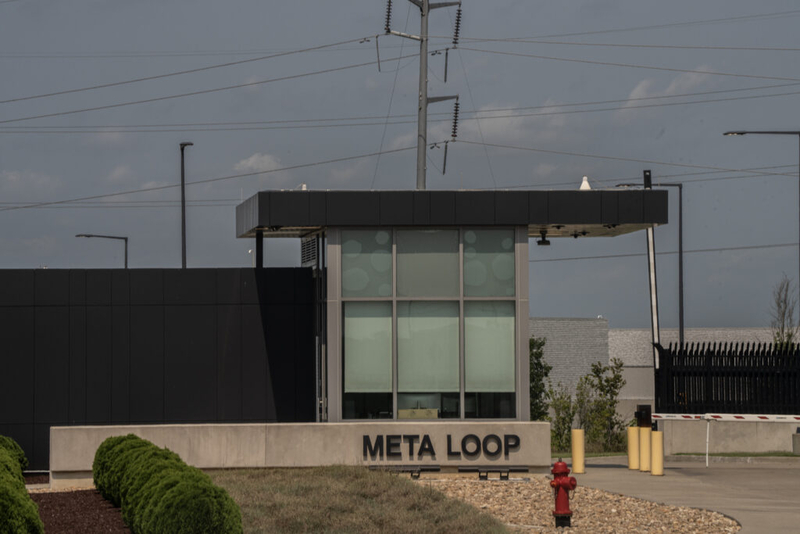
A Meta data center in Gallatin, Tennessee is one of about 60 data centers in Tennessee, while another 15 are proposed. Officials in East Tennessee cities are passing moratoriums on the centers. (Photo: John Partipilo/Tennessee Lookout)
Data centers, which store and facilitate data for computer applications, have become more ubiquitous in public discourse over the past few years as artificial intelligence, AI, tools have risen in prominence.
In areas where the data centers have located, residents have reported constant low humming noises that disrupt everyday life. They’ve seen higher energy costs and in some cases companies plan to cut off whole regions’ power supply to better service AI data centers. And people worry about the environmental cost of the data centers as emissions continue to pollute the air the longer the centers operate.
Crypto or bitcoin mines, meaning facilities used to manufacture digital currency, are also a worry. While they’re separate entities from data centers, they are often grouped together by those opposing them.
The City of Johnson City, in its efforts to regulate such facilities, classifies both as buildings “primarily designed or used for the storage, management, processing, validation, or transmission of digital information” while using “specialized mechanical, electrical, cooling, and standby power systems intended to support continuous or large-scale digital operations.”
Data centers are proliferating in Tennessee, with several planned in Virginia and Kentucky, all less than 200 miles from the Tri-Cities area.
In East Tennessee’s backyard, crypto company ExoticRidge sued Hawkins County in March, after the county banned crypto mines. The case has become a cautionary tale for others in the region as it makes its way through the courts.
The company claimed that the ban was unjust, saying it wouldn’t be causing harm.
“Our on-grid projects are designed to maximize energy efficiency and uptime, while our field deployments are focused on utilizing unconventional energy sources to provide sustainable, low-cost power. Leveraging our founders’ experience, we are committed to delivering high-quality results from our projects,” the company’s website states.
Libertarian think tank The Beacon Center, which defends public property rights and companies which it views as unfairly maligned by government action, has taken up the case to fight in court. Attorney Ben Stormes with the Beacon Center told Tennessee Lookout that he thought it was mostly a misunderstanding on the county’s part.
Visual: Mapping Tennessee’s current and proposed data centers
“It’s an unpopular business, and the government reacted without thinking too much,” he said, calling the idea of banning entire businesses “anti-American.”
In its response document filed with the court, Hawkins County states it is trying to do right by its citizens, who “made clear to their elected representatives that they do not want to live alongside a gas-burning computer farm that pumps out dirty air and noise pollution at all hours of the night and day.”
Being proactive
Even where no data centers have filed applications for permits, cities in the region are trying to cut them off at the knees before they even start a plan.
Bristol passed a two-year moratorium on the centers, while Kingsport has passed regulations stating that the centers can only come to heavy industrial zones 500 feet from homes, with a noise cap of 60 decibels. Jonesborough ruled that data centers couldn’t come within 1,500 feet of residential structures.
Washington County approved a moratorium on data centers through June 30, 2027.
In Monroe County, resident Amber Bright leads a Facebook group titled NO DATA CENTERS TENNESSEEE – MONROE COUNTY CHAPTER.of Members have been petitioning municipalities to ban or regulate the data centers before any take root in the area.
Bright told Lookout that while no data centers have attempted to come to the area, she wants to get ahead of the issue: “I do not want Monroe County — or any rural community — to suffer lasting local damage for the benefit of corporations that will not have to live with the consequences.”
Local Tennessee officials are putting data center plans on ice to consider regulations
Johnson City ruled in 2025 that data centers could only apply to locate in the I-2 Heavy Industrial zone.
Public concern
In a recent survey by the City of Johnson City, over 5,000 of the 6,000 respondents said they were “extremely concerned” by the prospect of a data center coming to the city.
Several residents spoke at a June 9 meeting of the Johnson City Regional Planning Commission in which the city’s regulations against data centers were discussed.
Rebecca Tolley worried about how little AI has been regulated so far, including the way it steals peoples’ art and writing and how it can generate explicit images.
“There are several minors who have become victims of child sexual assault material generated by AI,” she said. “I’d like to encourage you all, to continue to very heavily scrutinize these industries as they come in and propose to come in.”
“We have no need for a data center,” said fellow resident Brad Parker. “We do have a need for clear water running, nice air above Buffalo Mountain and good ground that will grow our fruits and vegetables.”
A third resident, Rachel Holly, worried that if a data center came to town, residents would lose any recourse: “We’re not gonna matter, we’re just going to be rerouted until we’re not heard.”
A years-long effort
The Johnson City Commission has extended a moratorium on data centers until December, while a special board including city personnel and concerned residents is trying to hammer out the details.
Johnson City Planning Manager Whitney Hodges said the project to craft regulations against data centers has been going on for the last couple of years, and spans a massive endeavor to tweak the noise and zoning rules in the city to evolve them for more modern technology.
At a city commission work session on July 16, Hodges said the proposal so far states data centers would have to remain an as-yet undetermined distance away from residential properties and will have to cap their noise levels .The city is looking into what are acceptable noise levels for industrial-size businesses. Hodges said it’s been tricky because they have to make sure proposed rules wouldn’t infringe on other businesses’ work or create other, new problems.
We have no need for a data center. We do have a need for clear water running, nice air above Buffalo Mountain and good ground that will grow our fruits and vegetables.
Data centers would have to conduct environmental impact studies and have contingency plans for what would happen to the massive buildings if the data center companies end up abandoning the projects and leaving town. They will also have to make public websites detailing their actions.
Finally, any data centers coming to town would have to undergo annual reviews to make sure they’re compliant with all the rules, with the city reserving the right to reject them for shortcomings.
The ordinances and rules are still in draft form and Hodges said they likely won’t become official until October or November this year.
Hodges wants to correct the perception that Johnson City was or is getting ready to welcome a data center to the area. Every city is “trying to walk a line” with data centers, she said, regulating them while not outright banning them, as cities can’t legally ban legal businesses from operating.
She called data centers a “moving target” and said it was important to keep abreast of any new developments so they could make regulations.
Johnson City resident Sylvain Bruni has been a vocal critic of data centers and has spoken up against them at local government meetings for years now. He has been working with city officials on their plans.
While he knows some of his neighbors want a total ban on data centers, Bruni frames his goals as practical and said the idea was to have enough regulations to protect the community.
“A lot of people want to go very fast and very strong,” he said. “I’m trying to be in the middle of what the community wants with what the city can do.”
Nashville, TN