Tennessee named finalist for federal partnership involving nuclear energy sites
Jul 30, 2026 | 6:02 am ET
Description
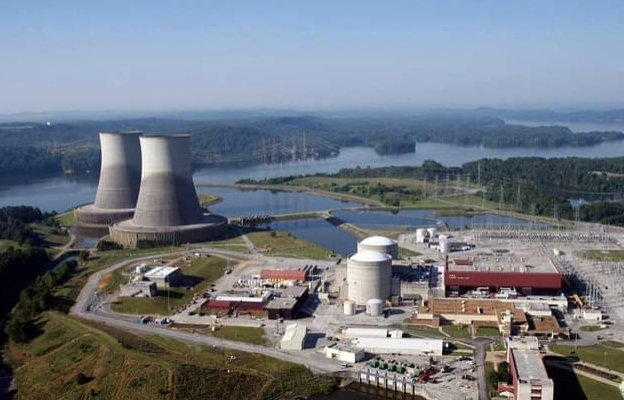
The Tennessee Valley Authority's Sequoyah Nuclear Plant in Chattanooga, one of three nuclear facilities the energy giant operates. Tennessee is under consideration for a U.S. Department of Energy program to increase the state's nuclear capacity. (Photo: Facebook)
The United States Department of Energy announced Tuesday that Tennessee was one of the five states under consideration for a federal partnership as part of the Trump administration’s attempt to boost nuclear energy production.
The program, called the Nuclear Lifecycle Innovation Campuses, would allow Tennessee to build an industrial-like zone that could support “the full nuclear fuel lifecycle, including fuel fabrication, enrichment, reprocessing used nuclear fuel, and disposition of waste.”
“Depending on state priorities and regional capabilities, the sites could also host advanced reactor deployment, power generation, advanced manufacturing, and co-located data centers,” the department’s news release said.
Tennessee has long been at the forefront of nuclear energy because Oak Ridge served as a federal research site for the atomic bomb during World War 2. The Tennessee Valley Authority, TVA, then steadily grew its nuclear energy production starting in 1966, and today operates three plants, two of which are in Tennessee.
The state also was approved to take in low levels of nuclear waste, but tracking how much of it makes its way to Tennessee has been shrouded in secrecy.
In 2000, the last year the federal government reported on collections, Tennessee took in 75% of the nation’s low-level radioactive waste, according to a report from Nuclear Information and Resource Service, a nonprofit that opposes nuclear energy production.
Then in 2017, the state Department of Environment and Conservation abruptly stopped reporting on where the low-level nuclear waste was ending up.
In recent years, Gov. Bill Lee has been a strong advocate for revitalizing Tennessee’s nuclear energy. He created a state investment fund that, as of 2025, was offering $70 million in incentives.
Part of the reason for the lifecycle campus program is that currently there is no place approved that can store high levels of radioactive waste.
This isn’t just about today’s waste. It’s about committing Tennessee to an energy future that includes more reactors, more spent fuel, and more radioactive waste.
The Trump administration has been trying to find a way around the ban on states taking in nuclear waste by enticing them with incentives, Politico reported after obtaining an internal White House memo.
Sen. Heidi Campbell, a Nashville Democrat, said in a social media post that she had concerns about the program.
“This isn’t just about today’s waste,” Campbell said. “It’s about committing Tennessee to an energy future that includes more reactors, more spent fuel, and more radioactive waste. We deserve transparency before irreversible decisions are made.”
Lee said in a news release he was “honored” that Tennessee was selected as a finalist.
“Our state answered the call during the Manhattan Project and helped shape the course of history, and Tennessee stands ready once again to advance the safe, reliable energy solutions our nation depends on,” Lee said.
Nashville, TN