Idaho to submit ‘Opportunity Zone’ proposals seeking tax breaks for economic development
Jul 30, 2026 | 6:15 am ET
Description
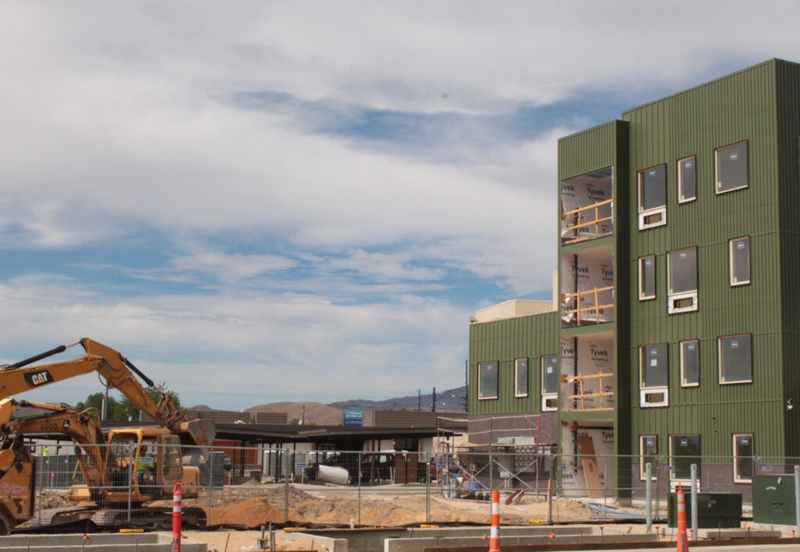
A construction crew works outside a new development in Boise. A recommendation to the governor's office for areas in Idaho to receive a federal designation that allows for tax breaks on certain developments included multiple in Boise. (Photo by Abigail Gerstein/Idaho Capital Sun)
A state advisory council has submitted its top recommendations for Idaho communities to be considered for a revamped federal tax incentive program meant to drive development.
The Idaho Economic Advisory Council submitted to Idaho Gov. Brad Little’s Office its 25 recommended areas to be designated as federal Opportunity Zones. Once an area receives that designation, certain investments in housing and projects to spur economic growth there would be eligible for tax breaks.
Idaho leads the nation in housing growth. The data shows it’s still not enough.
Little will make a final decision on recommended areas for the program, which must be submitted to the U.S. Department of Treasury by Sept. 28.
The Opportunity Zone program was created under the first Trump administration through the 2017 Tax Cuts and Jobs Act. Congress last year made the program permanent through the One Big Beautiful Bill Act. There were 36 tracts submitted to the advisory council by Idaho cities and counties, state Department of Commerce Rural Services Manager Jerry Miller told members July 23.
The council’s recommendations were largely ranked by likelihood to see investment with the incentives based on data from the Urban Institute.
The top three recommendations are all in Boise.
“A number of the nominations mentioned downtown and Main Street revitalization as one of their goals for having an Opportunity Zone,” Miller said at the meeting. “… A few others mention housing as their primary goal or hope for having an opportunity zone nomination, and then third priority listed by the nominations were commercial and industrial growth corridors.”
What areas are included in the top recommendations?
Boise:
- West Main Street and downtown: The top recommendation includes much of west downtown Boise and the city’s downtown urban center. The city’s application summary said the position would put the zone “at the heart of the city’s economic activity and future growth.” The area includes Fairview Park, the Idaho State Capitol and Boise City Hall.
- West Boise corridor: This tract includes Boise Towne Square mall, Milwaukee Street, and Fairview Avenue. This area is Idaho’s largest employment center, according to the application. The area also includes “significant capacity for additional housing growth.”
-
- South Broadway Avenue: This proposal would focus on “incremental housing growth.” The area includes Manitou Park, the Federal Way Bikeway and sits along Valley Regional Transit’s Broadway bus line.
- Boise State University and West University Drive: The state university anchors this tract with its generation of $2.2 billion annually of economic impact, according to the application summary.
- South of downtown Boise and Shoreline Drive: Listed lower on the council’s recommendation is the southside of Boise’s urban center, which includes Ann Morrison Park, Julia Davis Park, Rhodes Skate Park, the zoo, Boise Art Museum and Idaho State Museum.
Burley:
- Overland Avenue and Main Street corridor: This tract includes Burley City Hall, the courthouse, jail, fairgrounds, airport, schools and parks. The tract is “largely undeveloped or underdeveloped,” according to the summary.
Caldwell:
- The city of Caldwell: Much of the city is included in this tract, which includes Indian Creek Plaza, the College of Idaho, and the Canyon County Fairgrounds. The city isn’t “landlocked,” according to the summary, “enabling purposeful future development in employment, housing, commercial, industrial and mixed-use sectors.”
Emmett:
- The city of Emmett and parts of Gem County: The city includes the Gem County courthouse and is served by the county’s only K-12 school district. Highway expansion projects position the city “to absorb investment priced out of Ada County,” the summary said.
Garden City:
- The city of Garden City: The city is adjacent to downtown Boise and within biking distance of Boise State University and the new College of Western Idaho campus, the application summary said. “It contains significant urban infill and redevelopment opportunities, ready to provide supportive housing and relieve commuter routes,” the summary said.
Kootenai County:
- City of Coeur d’Alene: The county and Coeur d’Alene Tribe both submitted an application for this tract, which includes parts of the city, to be designated as an opportunity zone. “Significant vacant land owned by the Coeur d’Alene Tribe within the tract offers a rare opportunity for partnership, catalyzing projects that generate employment, diversify the economy, increase the tax base, and strengthen collaboration between the Tribe, Kootenai County, Coeur d’Alene, and private investors,” the summary said.
- City of Post Falls: The city submitted the application for Post Falls along the North Pleasant View Road and West Seltice Way corridor. The tract is located at the intersection of Interstate 90 and Highway 53.
Nampa:
- Downtown, 12th Avenue South and First Street South: This area includes City Hall, the public library, Canyon County government buildings and parks. “Home values and rental rates have increased sharply, supporting the viability of new residential investment,” the summary said.
- 11th Avenue North corridor: This tract serves as the “primary gateway” to downtown, the summary said. The area includes infrastructure such as sidewalks, parks and “and numerous underutilized commercial and industrial properties, presenting exceptional opportunities for adaptive reuse, mixed-use development, workforce housing, neighborhood-serving retail, and employment-generating investment,” the application summary said.
Pocatello:
- Downtown, Main Street corridor, Portneuf River area: This area includes the historic downtown, river greenway, public schools, parks, and the Marshall Public Library. “The area is seen as a future hub for economic development,” the application said.
- Yellowstone Avenue, Pole Line Road, Garrett Way, West Quinn Road: This area includes public schools, the mall, and major retailers such as Fred Meyers, Winco and Costco.
Shoshone County:
- I-90 corridor, Silver Valley: The tract includes a medical center, Kellogg public schools, Silver Mountain Resort, Bunker Hill Mine, and the Downtown Kellogg commercial district. The application summary said that “years of cleanup” from the mine “have now made redevelopment fundable, feasible, and lower-risk.”
Twin Falls:
- Downtown, Main Avenue and Shoshone Street: The city is the county seat and “primary urban center” for the Magic Valley. The area is also home to Idaho’s first Opportunity Zone project, a food hall.
There are other communities, including Rexburg, Moscow, Blanchard, Jerome and Power County that were included in recommendations but ranked lower based on lower likelihood of attracting Opportunity Zone investments.
Opportunity zones have been sold as a housing solution. Results have been mixed.
Last year, U.S. Housing and Urban Development Secretary Scott Turner traveled to Idaho with U.S. Sen. Mike Crapo, R-Idaho, to discuss housing issues in the state, the Idaho Capital Sun previously reported. Turner, who led the first iteration of the program, said it would be a continued focus for developing more housing to meet the needs.
He said at the time 700 new housing units had been built inside Idaho Opportunity Zones and 4,000 new jobs had been created.
A 2021 Brookings Institution analysis of the program nationally found some increased economic activity in urban areas, but not in rural areas, Stateline reported. However, that study’s data was limited by the effects of the COVID-19 pandemic.
Data is also limited from the first version of the program, because there was no reporting requirement associated with it, Miller of the Idaho Department of Commerce, told council members last week.
The updated program, called Opportunity Zones 2.0, provides larger incentives for rural investments compared to urban ones and has a reporting requirement.
Boise, ID