Advanced electricity transmission tech could cut costs for consumers, advocates say
Jul 01, 2026 | 1:57 pm ET
Description
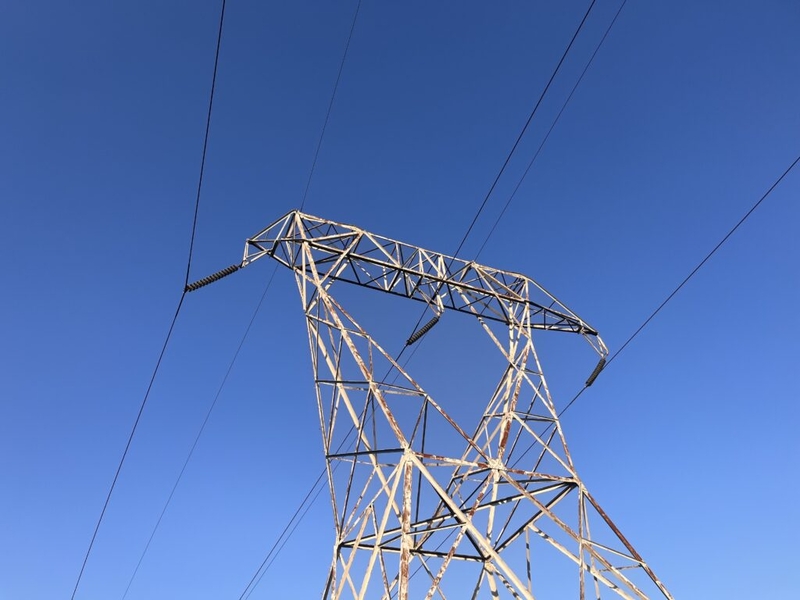
Power lines run across the ChesLen Nature Preserve in Chester County, Pa. (Photo by Peter Hall/Pennsylvania Capital-Star)
Technology that maximizes the efficiency of power lines could chip away at rising electricity bills, advocates of legislation promoting innovation by utility companies say.
About 5% of the electricity produced in the United States is lost as a result of inefficiencies in the transmission and distribution grid, according to the U.S. Energy Information Administration.
Advanced transmission technologies (ATT), including software and hardware, can provide long-term savings by reducing the amount of energy lost. They can also help utilities wring the most life out of existing infrastructure, the tech’s promoters say.
“ATTs make your grid much stronger and smarter, and it gives you a lot more visibility into your grid, so you can see problems kind of before they happen,” Jenny Netherton, an energy modernization advocate at The Pew Charitable Trusts, said.
State House Energy Committee Chairperson Elizabeth Fiedler (D-Philadelphia) said her bill would give state regulators power to require utilities to assess whether the technologies can be deployed when applying for approval to build new power lines.
“It simply says that utility companies need to take a look at all this technology … and see if there’s a way to adapt them to prolong the life of the existing infrastructure before they decide to go forward with one of these huge, very expensive new build outs of transmission infrastructure,” Fiedler said Wednesday at an event highlighting innovation in electricity transmission.
Doug Pietrucha of the renewable energy industry group Advanced Energy United said there is a perception that ATTs are pilot technologies and while that is changing, the electric power industry needs a culture shift.
“These are technologies that have been deployed for 30 years plus in some cases,” Pietrucha said. “There is always a hesitancy to adaptation, but we need to … be out here touting the fact that these are proven technologies when deployed appropriately, and they deserve due consideration.”
House Bill 2223, sponsored by Fiedler, passed the House unanimously in May and is now in the Senate Consumer Protection and Professional Licensure Committee for consideration.
The legislation comes as policymakers at the state and national level are working to control a surge in the cost of electricity, largely driven by planned data center construction, but also by the increased electrification of transportation and industry.
PJM Interconnection, the regional transmission operator (RTO) that manages the grid Pennsylvania shares with 12 other states and Washington D.C., earlier this year approved $11.8 billion worth of new baseline transmission projects. They’re designed to increase reliability and accommodate new power plants being built or planned within its territory, which stretches from New Jersey to Indiana and the New York border to North Carolina.
Last month, the Federal Energy Regulatory Commission (FERC), which oversees the six RTOs in the United States, issued directives directing them to justify or reform the rules for how data centers and other large electricity users connect to the grid.
The adoption of new transmission technologies is among the areas of reform FERC has ordered the RTOs to address.
While some of the technical innovations center on computer software, the structural layout of the grid and devices to better control the flow of power, one major advance is in the material used to make the power lines themselves, Netherton said.
Traditional power lines consist of aluminium, which conducts the electricity, wrapped around a steel core for strength. Those lines have a limit on their electrical efficiency because the steel core gets hot, which increases electrical resistance.
Advanced Composite Conductors are made with aluminium cable wrapped around a fiber core, which provides the structural strength of the line without the decrease in efficiency because it doesn’t get hot like steel, Netherton said.
While the composite power lines are more expensive than traditional steel cables, increases in efficiency will save money over the long-term, she said. They can also be used to increase the capacity of existing transmission lines without building new towers, which saves the time and expense of obtaining approvals and acquiring land.
Fiedler noted that a California project to deploy composite conductors on a major transmission line reduced line losses by 30% and is expected to save consumers about $85 million.
Two major Pennsylvania utilities, PPL Electric and Duquesne Light, have already deployed ATTs on their distribution grids, but Fiedler said the legislation is intended to ensure the technologies are used whenever they can improve efficiency and reduce costs.
“Utilities are one of our most conservative businesses, for a good reason, right?” Netherton added. “They are there to protect consumers. They do not like change, because that is hard to account for, and their ultimate mandate is reliability.”
Harrisburg, PA