About 1,100 potential victims of illegal health plan swapping referred to SC agency
May 27, 2025 | 7:21 pm ET
Description
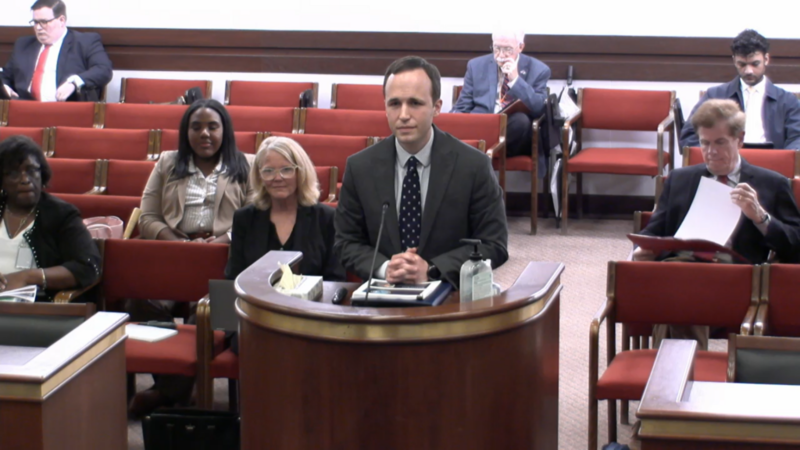
Director of Insurance Michael Wise testified in front of a House subcommittee on Tuesday, May 27, 2025, about people's health insurance plans being fraudulently switched without their permission. (Screenshot of SCETV legislative livestream)
Insurance middlemen who switched people’s health care plans without telling them accounted for more than 20% of fraud cases reported to the South Carolina Department of Insurance last year, the agency director told legislators Tuesday.
Of the 5,000 complaints of fraud reported throughout 2024, 1,100 came from people who signed up for insurance through the online marketplace Healthcare.gov — created by the Affordable Health Care Act also known as Obamacare — and said their health care plan was changed without permission.
That’s illegal, but the scam was relatively easy. A licensed broker needed only the insured’s name, date of birth and home state, said Michael Wise, director of the state Department of Insurance since 2023.
The agent pockets the commission, while patients usually have no idea they’ve been had until they try to use their insurance card at a doctor’s office or pharmacy, Wise told a House oversight panel.
“They might switch these policy orders a good many times,” he said, adding he’s heard of plans being switched up to 16 times.
It’s a national problem, with agents often scamming people from multiple states. Victims not only discover suddenly that their insurance card is no good, but they could also owe taxes to the federal government for the subsidized private plan they were fraudulently enrolled in.
The Center for Medicare Services and Medicaid Services, the federal agency that oversees the online marketplace, received 73,884 complaints of unauthorized policy switching in the first six months of last year.
That led to the agency announcing last July that it would no longer authorize changes from agents or brokers unless they were already associated with the person’s enrollment.
Any unassociated or new broker now has to do a three-way call with the customer and a federal call center.
“That has become a trend that we’re looking out for. The federal government is too, and some things have been put in place to try to curb that,” Wise told the House subcommittee.
In April 2024, KFF Health News reported that CMS emailed a plan to industry representatives on how to handle complaints from people who’d had their insurance switched. The scam became common enough to get its own acronym: UPS, for unauthorized plan switch.
The slideshow says CMS found a “large number of 2024 UPS cases” involving plans that were auto-renewed because the person was unaware.
In South Carolina, cases are under investigation, but no one has been charged yet with a crime related to the scam, said Joshua Underwood, a prosecutor for the Department of Insurance.
He did not specify how many cases remain open. And the agency does not know how many of the 1,100 complaints it received involved South Carolinians, as the victims could live in other states. The lists are still being sorted through, an agency spokeswoman said.
Underwood added that Florida seems to be a hotbed for agents doing this and he’s in regular contact with that state’s Department of Insurance.
The scam involving health plans subsidized through the federal marketplace started popping up in 2022 and were initially sparse, Underwood told the SC Daily Gazette.
By 2023, it had become a trend. Then in 2024, the complaints skyrocketed, he said, though he didn’t have the exact numbers.
“It took a steep jump very quickly,” he said.
Brokers typically make $20 to $25 for every person they enroll and can make that commission multiple times from the same person, according to KFF Health News.
South Carolina is among the 32 states that use the federal exchange. CMS made it easy to sign people up online, but that also gave fraudulent brokers easy access to accounts, KFF Health News reported.
“They could sign that same person up for another plan again, and that was how they were just continuing to churn commissions,” Underwood said.
He explained that the scammer and victim often never talk to each other. Licensed brokers can get information about enrollees from the federal database. But sometimes the rogue agents will call their victims, claiming they’re signing people up for a survey, saying they could win a potential prize, when they are actually gathering information to switch their insurance policies.
“They would be in contact with somebody that’s advertising discount cards or gift cards — ‘Oh, just sign up for this survey’ — and they don’t really pay attention to what they are signing up for,” Underwood said.
“The person who’s actually supposed to be insured doesn’t have any idea any of this is going on until they go to their doctor, and their doctor’s like, ‘Oh, well, where’s your copay?’” Underwood said.
Underwood’s recommendation for avoiding the surprise: Read your mail, especially if it’s from an insurance company.
“If you get something in the mail that looks like it’s from some insurance company that you’re like ‘Oh, I don’t have any business with them,’ don’t just assume it’s junk mail and throw it away,” he said. “Read that and make sure that you didn’t accidentally get signed up for something.”
More than 600,000 South Carolinians are enrolled in an insurance policy through Healthcare.gov, where they can get subsidies to help cover the cost of private health insurance. How much the subsidies cover depends on their income. Six companies offer policies to South Carolinians through the exchange, though only two write policies for people living in all 46 counties, according to the state Department of Insurance.
Editor’s note: This article has been updated to reflect that the state Department of Insurance does not know how many of the 1,100 complaints involve South Carolinians. Some of the potential victims may live in other states. Referrals remain under investigation, a spokesperson said.
Columbia