$10 million settlement over online gaming child exploitation will fund safety, after-school efforts
Jul 13, 2026 | 4:29 pm ET
Description
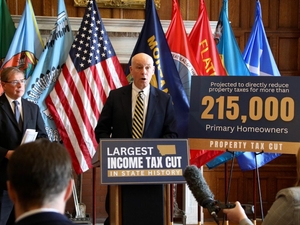
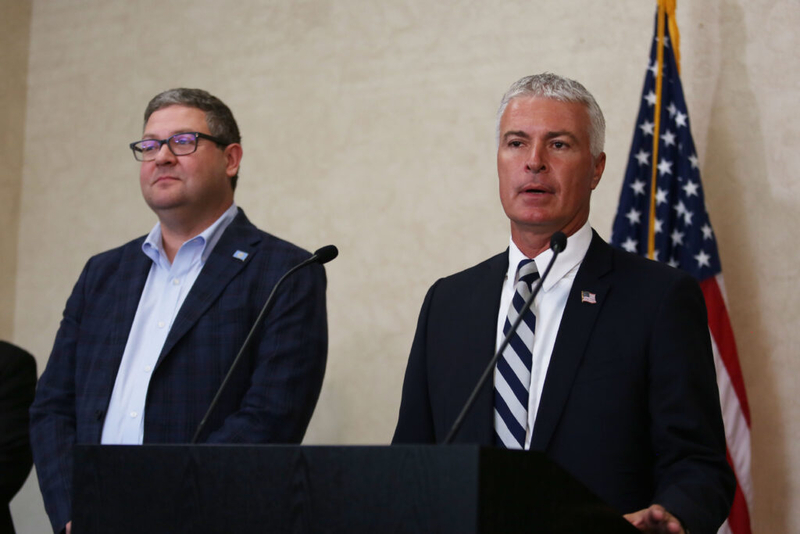
South Dakota Attorney General Marty Jackley, right, and Lt. Gov. Tony Venhuizen participate in a press conference on July 13, 2026, in Sioux Falls. Jackley announced a settlement with the Roblox gaming platform. (Photo by Makenzie Huber/South Dakota Searchlight)
SIOUX FALLS — Roblox, a gaming platform popular with children, will pay South Dakota nearly $10 million over four years and implement new protections for young users under a settlement announced Monday by state Attorney General Marty Jackley.
The settlement also requires Roblox to implement age verification. The company plans to use facial age estimation software and government-issued IDs to confirm users’ ages.
Jackley said the parameters are necessary as child exploitation cases grow in South Dakota and nationwide, particularly on a platform where adults have allegedly posed as children to communicate with children and lure them into dangerous or criminal activity.
“If someone wants to participate in this, then there needs to be protections there,” Jackley said.
State joins lawsuit accusing Meta of fueling children’s social media addiction
The settlement is preventative, he said, since no cases have been filed concerning Roblox and child endangerment in South Dakota.
“I hope with this settlement we never have to,” Jackley said.
South Dakota is the fifth state to settle with Roblox; combined, the agreements have cost the company about $54 million. The other settlements are $12 million with Nevada, $9 million with Mississippi, $12.2 million with Alabama and $11 million with Virginia. Nine other states are suing the company.
Of the settlement funds, $3.6 million will go to the Attorney General’s Office — $1 million for the state’s consumer protection fund and $2.6 million for the Internet Crimes Against Children Task Force.
The task force responds to tips about potential child exploitation cases, including online offenses and human trafficking investigations like those conducted during the annual Sturgis Motorcycle Rally.
Jackley said the program is expensive and one of the office’s busiest divisions.
“That will relieve a burden that’s been building up,” Jackley said.
Another $5 million will go to the state Education Department, with $1 million earmarked for governmental and nonprofit after-school programs. The remaining funds will be spent at the department’s discretion.
Education Secretary Joe Graves spoke at a press conference Monday where state officials announced the settlement.
“The after-school program is exactly where this needs to go because that’s the time of the day when kids who are without frequent parental supervision are going home and then they have kind of free rein,” Graves said. “After-school programs really kind of address that.”
Roblox will spend another $1 million on educational advertisements about children’s online safety for South Dakota families.
In addition to the age verification requirement, the settlement mandates the company make other changes to protect minors, including:
- Expanded parental controls allowing caregivers to restrict who users talk to, and restrict the transfer of in-game currency from adults.
- Restricted chat features to block adult users from chatting with users under 16 unless they’re identified as “trusted friends” on the platform.
- Accessible — rather than encrypted — communications involving minors, allowing law enforcement to better track and disband child exploitation networks.
Jackley said he hopes the provisions, especially the reporting requirements and partnership with law enforcement, will serve as a model for other social media and gaming companies to use. The company will release an annual report regarding its child exploitation prevention efforts in South Dakota.
South Dakota could receive an additional $5.4 million if Roblox fails to meet the settlement’s requirements. The terms allow South Dakota to change to “any improved terms” that Roblox and another state might reach later on.
Ultimately, the burden rests on parents and caregivers to educate children about online safety, said Lt. Gov. Tony Venhuizen.
“This really starts with having conversations at home, with schools teaching kids responsible online habits and with law enforcement protecting kids from these bad actors,” Venhuizen said.
South Dakota is also part of a pending lawsuit against Meta, the parent company of Facebook, over youth mental health and social media addiction.

Pierre, SD