Elissa Slotkin understands the Democratic mandate. Does the rest of her party?
Nov 24, 2026 | 6:00 am ET
Description
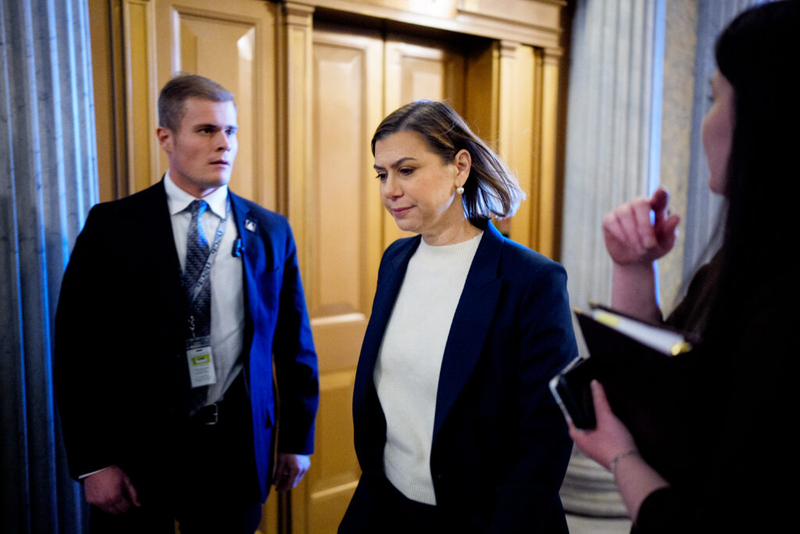
WASHINGTON, DC - DECEMBER 11: Sen. Elissa Slotkin (D-MI) walks into the Senate Chamber on December 11, 2025 in Washington, DC. Two opposing health care bills intended to avert rising health care premiums have failed. (Photo by Andrew Harnik/Getty Images)
U.S. Sen. Elissa Slotkin gets it.
Slotkin appears to understand that the “blue tsunami” that swept through the country on Nov. 3 is, in many ways, like an actual tsunami. Its initial force can be devastating, but eventually, the water recedes. What remains is what those who rode the wave to power intend to do with the opportunities it has created.
Having built her political reputation by eking out victories in a politically competitive mid-Michigan congressional district, Slotkin was not necessarily someone many observers expected to emerge as a leading voice for systemic change in the hidebound U.S. Senate. She has often been characterized as a centrist whose political instincts were shaped by the need to win over voters who don’t necessarily even identify as Democrats.
Yet she has increasingly been out front in demonstrating that pragmatism does not have to mean endless rounds of trying to build a consensus with those who view compromise as a dirty word.
Facing new DOJ threats, Slotkin uses anniversary of illegal orders video to decry intimidation
When Slotkin announced last week that she would support Maryland Sen. Chris Van Hollen’s challenge to longtime Democratic leader Chuck Schumer for Senate majority leader, she did more than just add her name to a growing call for a new generation of party leadership. She took the extra step of challenging Democratic leaders to explain what they intend to accomplish during the first 100 days of the new Congress.
As she put it, voters aren’t looking for “small nibbling at the edges.” They want bold policies that put more money in people’s pockets, and they want it fast.
That is a significant and long overdue departure from the political playbook Democrats have followed for much of the past three decades.
For too long, the Democratic Party has occupied a carefully calibrated political center, making incremental changes designed not to inspire those who voted them in, but instead to avoid scaring away voters who might otherwise lean Republican. This so-called Third Way politics popularized during Bill Clinton’s presidency got its name by Democrats triangulating against their political opponents but also what were viewed as the extreme members of their own party.
But the wave that swept Democrats into power didn’t just wreak havoc on the Republican Party and the MAGA movement. It also swept away, whether its leaders care to admit it or not, the assumption that Democrats must continue to be guided by a political framework developed in the 1990s, before most of the 18 to 29-year-olds that powered the blue tsunami were even born.
The threat matrix facing Democrats now isn’t that they will overreach by pursuing an ambitious legislative agenda. It is that they will fail to respond to the clear mandate for change that voters gave them.
And this is where Slotkin’s background in the intelligence field is particularly useful.
Intelligence analysis is, at its core, about assessing threats and recognizing patterns. By anticipating what comes next and distinguishing between the immediate crisis and the larger strategic picture, that analysis, if used properly, can be used as a map of where the pitfalls are and how to most effectively achieve the objective.
And the objective for Democrats must be to demonstrate that democratic government can actually deliver meaningful improvements in people’s lives.
So instead of looking back 30 years for inspiration, the party might best look back nearly a century to the first 100 days of Franklin D. Roosevelt’s presidency in 1933.
FDR inherited a country in the depths of the Great Depression, with failing financial institutions and mass unemployment. But more importantly, the country had serious doubts about the future of democratic self-government. Whether we want to admit it or not, that is largely where we find ourselves today. But faced with that doubt, FDR didn’t cautiously advance modest reforms, but instead moved with unprecedented urgency, pushing through a series of sweeping legislative and executive actions that fundamentally reshaped the federal government’s relationship to its citizens.
What we know now as The New Deal was not a single legislative achievement, nor was it perfectly executed. Many of its programs were challenged and later had to be revised or even curtailed. But the lesson of those first 100 days was that Roosevelt wasn’t interested in preserving the political status quo. He understood that the mandate from voters was to change it.
Slotkin ‘seriously’ considering presidential bid, says decision could come soon
That is the kind of ambition Democrats should be discussing now, not modest adjustments designed primarily to avoid offending the opposition. And while President Trump will hold the veto pen, making it unlikely much legislation will actually become law, Democrats need to make him use it.
Ending the undeclared war with Iran, rolling back the incomprehensibly stupid tariff regime, raising the federal minimum wage and unwinding the termination of ACA tax credits should only be the beginning. Making a concrete case for Medicare for All and putting it to a vote has to be a priority. If the votes aren’t there to pass it, then let its opponents, including Sen. Slotkin, be on the record and explain why. But in each of these cases, the excuse that Trump will just veto it can’t be a reason not to try.
Slotkin’s support for Van Hollen is significant not because the Senate leadership contest will determine the future of the Democratic Party, but because it reflects a larger debate about what the party intends to do with its newfound political power. Her insistence that prospective leaders present a concrete plan for their first 100 days is exactly the kind of demand for accountability that Democrats should be championing.
The political waters will eventually recede. The question is whether Democrats will have built something durable on the ground they gained, or whether they will simply watch the tide go out and wonder where their opportunity went.
Slotkin seems to understand the difference. The rest of her party would be wise to catch up.

Lansing, MI