Rolling the dice on prediction markets: North Carolina’s warning for Indiana
Nov 24, 2026 | 5:00 am ET
Description
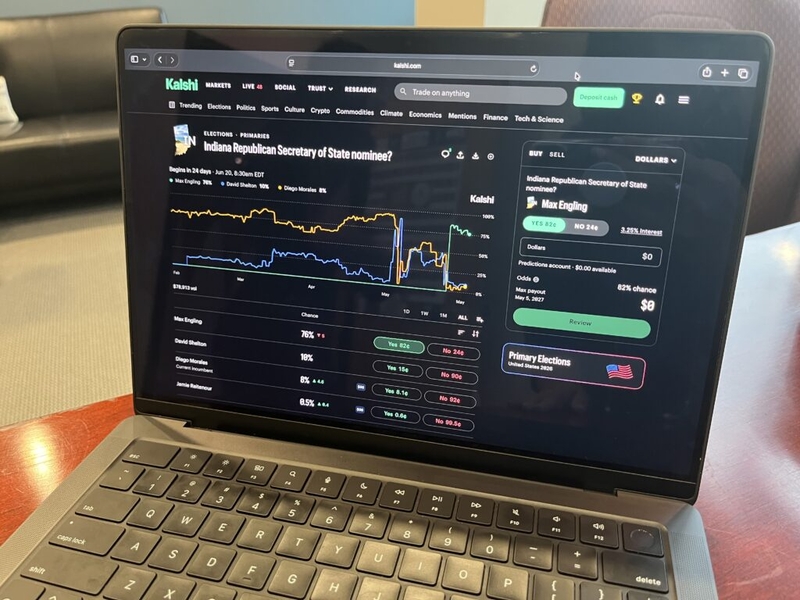
Will Indiana lawmakers regulate prediction markets that allow trading on sports, politics and more? It's a key question for the 2027 General Assembly. (Photo by Niki Kelly/Indiana Capital Chronicle)
Are prediction markets financial forecasting tools, or simply gambling by another name?
For Indiana lawmakers, the answer carries significant consequences. As prediction markets expand into sports wagering, they threaten to undermine the gaming laws, consumer protections, and regulatory framework established by the Indiana General Assembly.
Indiana need only look to North Carolina to understand why this issue deserves attention.
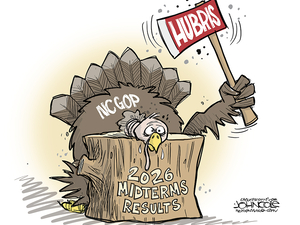
Earlier this year, North Carolina lawmakers handed prediction markets a regulatory free pass. Through legislation signed into law by Gov. Josh Stein in July, the state expressly recognized federally regulated prediction markets as lawful without requiring state gaming licenses or compliance with the regulatory framework governing traditional sportsbooks.
The legislation imposed a modest 6% tax on prediction markets’ net trading fee revenue. Meanwhile, North Carolina increased the tax on licensed sportsbooks from 18% to 23% of gross wagering revenue.
Although the taxes apply to different revenue bases, the disparity is striking. North Carolina welcomed a new class of sports wagering competitors under a separate, less restrictive regulatory structure while increasing the burden on sportsbooks already operating under state law.
Rather than protecting its existing gaming framework, North Carolina created an alternative pathway for gambling-like products to reach consumers.
Indiana should pay attention, because much is at stake when it comes to protecting vulnerable residents.
Consider the most glaring inconsistency: age restrictions.
Election betting is booming as the midterms near. Do states have the power to curb it?
Indiana law requires individuals to be at least 21 years old to legally place a sports wager. Licensed sportsbooks must verify customers’ ages and comply with requirements enforced by the Indiana Gaming Commission.
Prediction market platforms such as Kalshi allow individuals as young as 18 to participate, including in sports-related contracts. That means an 18-, 19-, or 20-year-old Hoosier who cannot legally wager on a Colts game through an Indiana-licensed sportsbook can purchase a contract predicting the outcome of that same game through a prediction market.
The consumer risks money on the same sporting event, hoping for the same financial return. The only meaningful difference is what the company calls the transaction. In 2025 alone, individuals under the age of 21 exploited this loophole to wager an estimated $3.9 billion on sports and parlay-type “contracts,” as Kalshi calls them, on that platform.
The problem extends beyond age restrictions.
Indiana’s licensed sportsbooks operate under a regulatory system requiring state licensure, gaming taxes, responsible gaming safeguards, and ongoing oversight.
Prediction market operators, meanwhile, contend their products are federally regulated financial contracts under the jurisdiction of the Commodity Futures Trading Commission, rather than state-regulated gambling.
Under that interpretation, companies offer sports-related contracts to Indiana residents without obtaining Indiana sports wagering licenses or complying with the same requirements imposed on licensed operators.
Even more concerning, established sports betting companies are entering the prediction market business themselves, creating the possibility of offering substantially similar products through two entirely different regulatory systems.
Why should one company follow Indiana’s gaming laws while another offers essentially the same product without doing so?
Indiana lawmakers have repeatedly considered, but declined to authorize, internet casino gaming, commonly known as iGaming. Whether one supports or opposes iGaming, that decision belongs to Indiana’s elected lawmakers.
But if companies can use federal commodities regulation to offer products functioning like sports wagers outside Indiana’s gaming laws, what prevents that same approach from eventually extending to casino-style gambling products?
Don’t just take our word for it. BetMGM CEO Adam Greenblatt recently warned that if prediction markets survive, “it’s a matter of time before casino-like products emerge in some other form.” In other words, the prospect of prediction markets becoming a backdoor to iGaming isn’t merely hypothetical — it’s a concern being actively raised by the gaming industry itself.
Prediction markets are not currently equivalent to full-scale online casinos. Nevertheless, their expansion raises the possibility of opening a back door to iGaming, allowing gambling-like products to enter Indiana without legislative authorization or the safeguards that would ordinarily accompany it.
That should concern anyone who believes Indiana, not private companies operating under a disputed interpretation of federal law, should determine the future of gambling within its borders.
The legal questions surrounding prediction markets remain unresolved. Courts are weighing competing claims of federal commodities regulators and state gaming authorities.
But Indiana lawmakers need not ignore the practical consequences while those disputes unfold.
North Carolina’s decision to grant prediction markets favorable treatment demonstrates the risks of creating exceptions to established gaming frameworks. Indiana has an opportunity to examine those consequences before following a similar path.
Indianapolis, IN