Lung cancer screening deserves attention for asbestos-exposed veterans in Idaho
Nov 24, 2026 | 6:00 am ET
Description
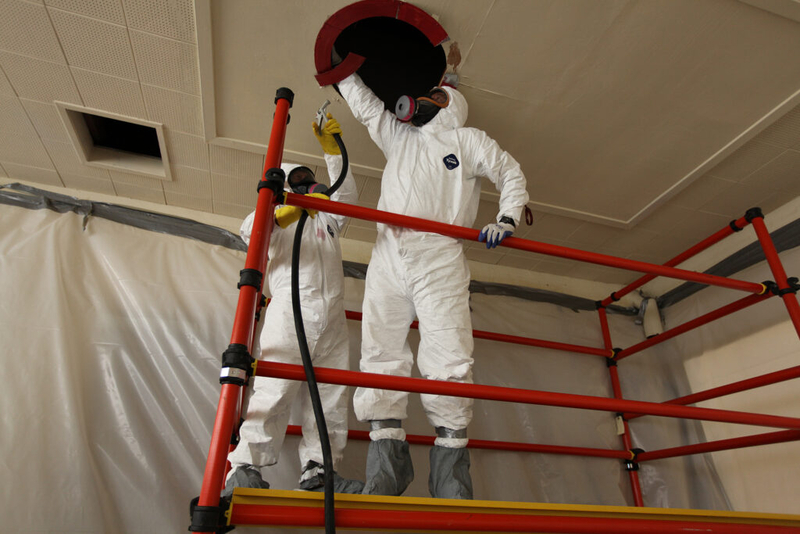
Naval Facilities Engineering Command Southwest public works employees inspect containment on a 2013 asbestos abatement project at Naval Base Coronado in California. (Photo by Mario T. Icari/U.S. Navy)
Without a doubt, the strength of the nation’s security is significantly rooted in the courage of citizens who endured the rigors of war zones and the vastness of the sea while fulfilling their commitment to fighting for liberty.
In that spirit, the Navy’s birthday offers Idaho and the rest of the country a fitting opportunity to honor those who answered the call to serve. Yet beyond tribute, this occasion is also an opportunity to remember that some of the profession’s consequences can last long after their retirement, especially for those previously stationed aboard older ships built with asbestos.
Valued for its heat and corrosion resistance, asbestos became widely used in military applications. It is now known to be a lung cancer risk decades after exposure, raising questions about whether they have adequate access to screening and information about their options.
Idaho’s asbestos past reaches into military service
Idaho’s connection to military service is embodied in its roughly 121,300 veterans representing generations of Americans whose careers brought them into a range of branches, assignments and workplaces. For many of these retirees, however, their dedication may have also placed them in environments that heavily depended on asbestos.
Valued for its insulating and fireproofing properties, this natural mineral was extensively incorporated into countless structures and products the Navy relied on, especially in building ships prior to 1983, as well as in shipyards operating from the 1930s to the 1990s.
With this, it is not surprising that facilities such as the Naval Surface Warfare Center Detachment in Bayview contained asbestos materials. This pervasive presence has cost many lives before science revealed the toxicity of asbestos. Those exposed have become susceptible to lung cancer and other debilitating diseases even decades later.
Consistent with this, an interactive map indicates that just between 1999 and 2017, nearly 1,500 Idahoans have already succumbed to asbestos-associated illnesses, with 1,068 residents impacted by lung cancer and 267 and 161 more individuals lost to mesothelioma and asbestosis, respectively.
The reality is stark. The toll of this crisis is profound, and lung cancer accounts for the largest share of the deaths — surpassing both mesothelioma and asbestosis.
Veterans’ lung cancer screening must consider more than smoking history
In practice, smoking has long been recognized as the leading cause of lung cancer — making this history a critical part of determining who may benefit from routine tests.
Yet it is not the only established root of the disease, as asbestos is also a notorious carcinogen that can increase malignancy risk. And that distinction is particularly relevant for veterans whose military service typically involved exposure to such a harmful mineral.
Even so, the current screening framework continues to place its emphasis on tobacco use, with the U.S. Preventive Services Task Force only recommending annual low-dose CT screening for adults ages 50 to 80. The guidelines also underscored that patients must have accumulated 20 pack-years of smoking and still smoke or have quit within the past 15 years to receive an A or B grade — categories that may facilitate preventive measures without compelling out-of-pocket payments.
By these same criteria, a veteran with prolonged asbestos contact but no qualifying smoking record may not be eligible for the screening despite the fact of asbestos toxicity.
Acknowledging this doesn’t mean that smoking should be disregarded, but it changes perspective about how a veteran’s complete service and health history is understood when lung cancer risk is assessed.
Simply put, a sailor who spent years around asbestos, for example, may carry an alarming occupational exposure even without ever having smoked.
Conversely, those who both smoked and encountered asbestos may face an even greater combined risk — bringing both narratives together as part of a broader conversation about veterans’ health and well-being.
That said, as we honor the men and women who devoted part of their lives to safeguarding the country, it is also an appropriate moment to remember the environments where they have lived and worked for an extended period.
For Idaho veterans who may have endured serious contamination, that history should not disappear simply because this happened decades ago.
Honoring their sacrifices must also mean keeping sight of the health risks that their service may have carried — and ensuring that significant asbestos exposure remains part of the conversation when considering who may benefit from earlier lung cancer screening.

Boise, ID