Believe it or not, there are things to be thankful for in Arkansas politics
Nov 22, 2026 | 6:00 am ET
Description
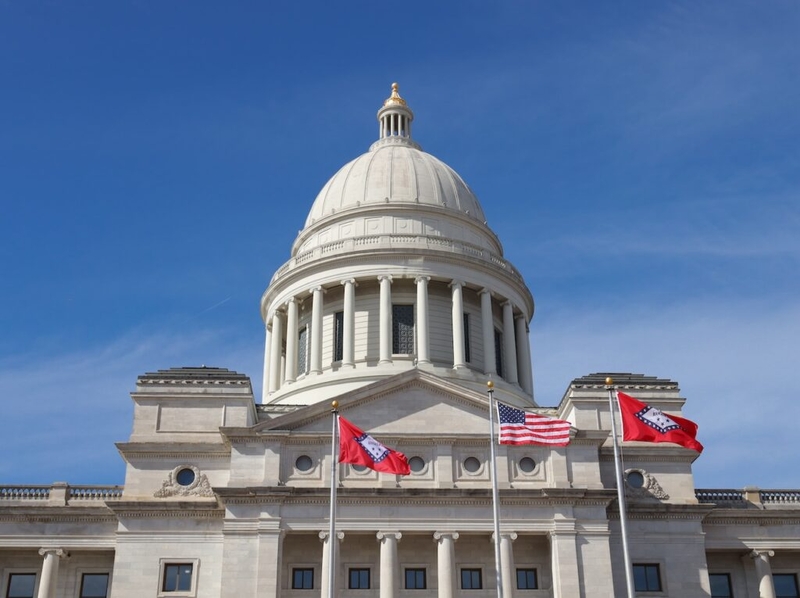
(Photo by John Sykes/Arkansas Advocate)
Political journalists are the worst people to ask for hopeful news. It’s hard to find optimism among a group of people whose job is covering the latest political fight or crisis.
That’s especially the case over the past couple weeks, when a wayward router in El Dorado can ground thousands of planes and online glitches affect banking, email and other critical systems on a near-daily basis.
But in honor of the approaching Thanksgiving holiday, it feels fitting to highlight some trends in Arkansas politics that offer some hope as the year comes to an end:
A chance for bipartisanship on healthcare
The Trump administration’s decision to not renew Arkansas’ hybrid Medicaid expansion threatens coverage for thousands of low-income residents and could destabilize an already shaky healthcare system.
That’s the bad news.
The good news is that Democrats’ gains in the Legislature mean both parties are going to have to work together to come up with a solution. With Republicans losing the 75-vote supermajority needed to pass most budget bills strictly on party lines, working across the aisle will be crucial.
If recent history is any guide, Arkansas has come up with some of its best health solutions under divided government. The state’s hybrid approach to Medicaid expansion was crafted as a compromise between Republicans who controlled the Legislature and then-Democratic Gov. Mike Beebe.
That kind of cooperation can also be seen under former Gov. Mike Huckabee, a Republican who championed and signed legislation creating the ARKids First children’s health insurance program and an indoor smoking ban with the help of a majority-Democrat Legislature.
Coming up with a solution that wins support in the Legislature and the federal government’s approval — under a tight 6-month timeline — is a long haul. But such cooperation isn’t unheard of in Arkansas.
A growing consensus on reining in AI
Another potential area for bipartisanship in the Legislature could come next year on the need to address growing concerns about the impact of artificial intelligence.
Polling conducted during the midterms showed the widespread concerns Arkansans have about the impacts of AI as well as data centers.
With President Donald Trump dismissing calls for guardrails at the federal level, it’s increasingly likely the state will have to step in.
Republican Gov. Sarah Huckabee Sanders has indicated a willingness to break from Trump on the issue, writing in her new book about the need to protect children and the workforce from AI’s consequences. And Republican Attorney General Tim Griffin has also sued OpenAI, saying the company has misled consumers about the safety of ChatGPT.
The moves don’t guarantee consensus on every issue surrounding AI and technology, especially over what additional restrictions data centers should face in the state.
But it at least signals there’s more common ground on finding a way to protect Arkansans from the technology.
Hope for protecting civic institutions
The state public television commission’s decision to reverse course and not break ties with PBS was a victory for supporters of programs ranging from Sesame Street to Ken Burns’ documentaries.
It also demonstrated that there’s support for civic institutions like public television and libraries that have faced Republican-led attacks over their content and programming.
That support was also on display in this month’s midterm elections in Saline County, where voters rejected an attempt to cut funding for the library system that’s been the focus of book-banning efforts.
Challenges still remain, as Arkansas public television’s decision to drop two PBS programs from its lineup. And the state’s libraries still face an attempt to tie their funding to restricting minors’ access to materials, though a state board’s decision to revise that proposal indicates second thoughts.
Little Rock