South Dakota can’t recruit its way out of a workforce problem
Nov 21, 2026 | 7:00 am ET
Description
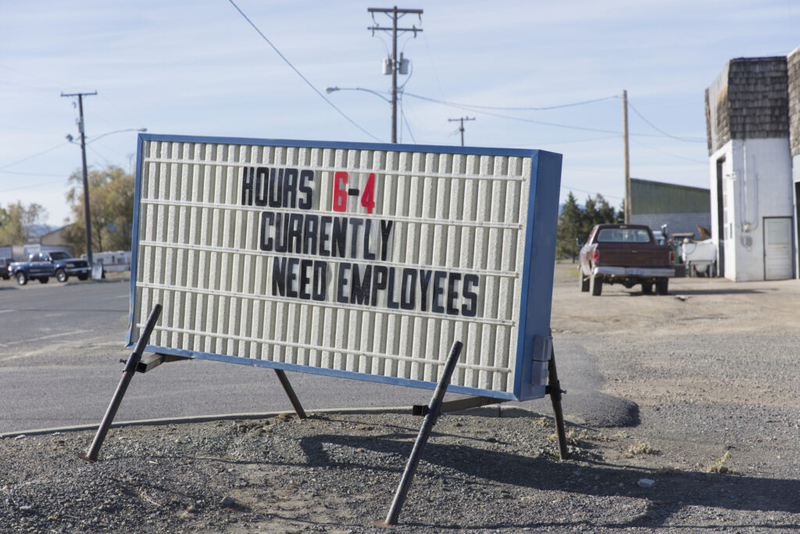
A sign advertises for potential employees. South Dakota's workforce challenges include a declining labor force participation rate. (Photo by Mint Images/via Getty Images)
South Dakota is facing a workforce challenge that won’t be solved by filling more job openings. And I wonder whether we’re spending enough time talking about why.
Recent reporting by South Dakota Searchlight highlighted a troubling trend: the state’s labor force participation rate fell from 68.2% in September 2025 to 66.3% in September 2026. Meanwhile, South Dakota has approximately three job openings for every unemployed person.
Those numbers deserve attention. So does the question of what we intend to do about them.
Much of the workforce conversation understandably centers on attracting workers, expanding training programs, improving wages, and addressing barriers such as housing and childcare. These are legitimate concerns, and they require serious attention.
But there’s another dimension to this challenge that receives far less discussion.
Are we preparing our organizations for the workforce we’ll actually have, or are we still planning around the workforce we wish we had?
Discussion of economic ‘headwinds’ in South Dakota includes falling labor force participation
For decades, many organizations have operated on a familiar assumption: When demand increases, add employees. When vacancies occur, recruit replacements. When skills become scarce, invest in training or compete harder for talent.
That approach becomes increasingly difficult when the available workforce isn’t growing fast enough to meet demand.
And it raises an uncomfortable question. What happens when everyone is competing for workers who simply aren’t available?
We can recruit employees from neighboring communities or other states, but that doesn’t necessarily increase the overall supply of labor. Sometimes we’re simply moving the same limited workforce from one employer to another.
We need to expand the conversation from workforce availability to organizational capacity.
Workforce availability tells us something about the people who can participate in the labor market. Organizational capacity asks a different question: How effectively can an organization deliver its products, services, and mission with the resources available?
A healthcare organization may struggle to recruit nurses while overlooking workflows that consume valuable clinical time. A manufacturer may face hiring challenges while continuing to rely on outdated processes. A nonprofit may pursue additional funding and programs without examining whether its operating structure can sustain the work.
In each case, recruiting more people may help. But it may not address the underlying constraints.
I’ve spent much of my career working with organizations confronting workforce shortages, financial pressures and operational challenges. One lesson has remained remarkably consistent: Adding people to an inefficient system doesn’t automatically make the system more effective.
Sometimes the better question isn’t how many additional employees we need. It’s what prevents the people we already have from doing their best work.
That requires looking beyond job vacancies and headcount.
It means examining how work is organized, whether responsibilities are appropriately distributed, where processes create unnecessary demands, and whether technology genuinely improves productivity.
It also means considering different staffing models, stronger partnerships, better workforce forecasting and opportunities to redesign jobs around changing needs.
Importantly, organizational redesign shouldn’t become an excuse to demand more from already exhausted employees. The objective is to remove unnecessary work, strengthen performance, improve the employee experience, and create sustainable capacity.
South Dakota’s economic development leaders are already discussing automation and productivity as part of the state’s response to demographic changes. That’s an encouraging direction.
But technology alone isn’t an organizational strategy. Neither is recruitment.
The next challenge is translating workforce and economic development efforts into sustainable organizational performance. That means understanding not only which skills employers need, but how changing workforce realities affect their ability to deliver services, maintain quality, remain financially viable and grow.
We need to know whether our workforce investments are actually improving organizational performance, not simply whether vacancies are being filled. That requires understanding where capacity is being lost, what’s getting in the way of productivity, and whether our operating models are keeping pace with economic and demographic change.
South Dakota has an opportunity to approach its workforce challenges differently. We can continue investing in people while also helping organizations adapt to changing workforce realities.
That isn’t an either-or choice. It’s how we build a more sustainable economic future.
The question is no longer simply where South Dakota will find more workers. It’s whether we’re preparing our organizations to succeed with the workforce we have and the workforce we’ll have tomorrow.

Pierre, SD