Missouri livestock farmers face environmental regulations. The CAFO debate should reflect that.
Nov 21, 2026 | 6:45 am ET
Description
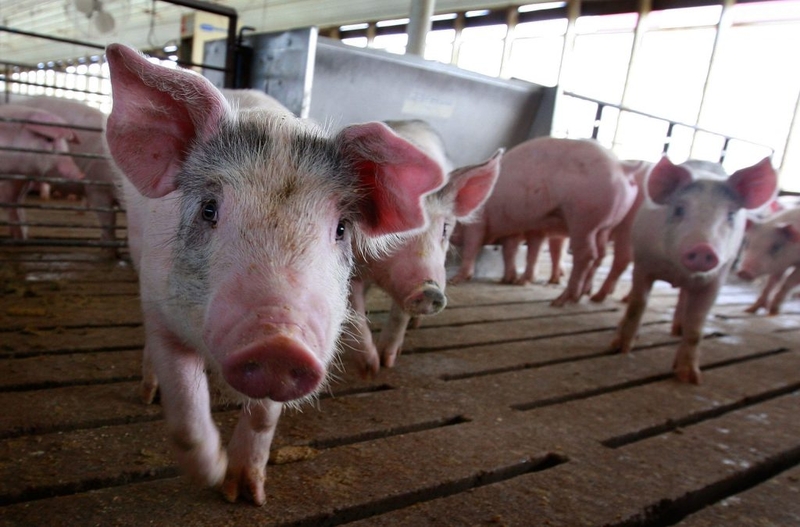
(Scott Olson/Getty Images)
A recent commentary in the Missouri Independent by Rural Crisis Center member Darvin Bentlage paints a misleading picture of Missouri’s livestock industry and the environmental safeguards that govern it.
Missouri’s livestock producers supply affordable, domestically produced protein while operating under state and federal environmental regulations designed to protect our natural resources. Those safeguards deserve to be part of the discussion.
The suggestion that Missouri livestock producers operate with virtually no environmental oversight overlooks important requirements already in place. Concentrated animal feeding operations (CAFOs) are subject to extensive state and federal environmental requirements governing facility construction, manure storage, nutrient management, land application and water quality. Requirements vary by the size and type of operation.
Missouri’s CAFO policy is built to multiply pollution, not prevent it
These are not voluntary suggestions. They are enforceable regulations, and producers must comply or face penalties.
Start with the numbers. The commentary claims Missouri’s impaired waters list grew from 24 in 2002 to 549 today.But those figures do not provide a straightforward comparison of water quality over time. The state’s current list includes 24 impairments first identified in 2002, not a total of just 24 impairments that year.
The commentary also points to 215 listings added since 2020. An important part of the explanation is a change in how Missouri evaluates water quality. Missouri adopted numeric nutrient criteria for lakes in 2018, and the 2020 list was the first to be measured against those criteria.The new standards led to additional lakes being identified as impaired.
That is not evidence that livestock farms are driving a surge in pollution. Rather, as standards become more protective, more waters may be added to the impaired waters list. In fact, none of the 549 listings identifies a CAFO or livestock farm as its source.
The commentary also suggests that Missouri has no meaningful setback requirements. While Missouri does not require minimum spacing between separate CAFOs, other siting protections exist. Missouri regulations establish minimum separation distances. For example, CAFOs must be more than facilities generally must be at least 100 feet from human water supply lakes, losing streams or sinkholes. Larger operations are also subject to substantial buffer distances (in some cases, more than half a mile) from neighboring residences and public buildings, along with advance neighbor notification requirements. These safeguards exist for a reason: to protect neighboring landowners and natural resources while allowing responsible agricultural operations to continue.
Missouri’s approach to CAFO regulation recognizes that responsible facility siting involves far more than the distance between neighboring operations. Livestock operations must account for their surroundings, comply with established applicable engineering standards and meet environmental requirements.
Missouri’s regulatory framework includes setbacks from waterways and residences, though it does not establish minimum distances between separate CAFOs. Those existing safeguards are an important part of evaluating whether additional requirements are warranted.
The commentary also misleads you about manure storage and handling. Modern livestock facilities are engineered with environmental protection in mind. All Missouri CAFOs must be designed and operated to prevent discharges. This means they must be designed, constructed, operated and maintained to prevent the discharge of manure, litter and process wastewater into state waters, subject to limited regulatory exceptions. Even smaller animal feeding operations that do not require permits are prohibited from polluting state waters.
For example, swine operations commonly use enclosed barns with manure stored in pits beneath the buildings. These pits are designed to prevent leakage. Poultry operations likewise often house animals indoors, with litter managed within the production facility and protected from the elements until it is applied to farmland as fertilizer. These systems are fundamentally different from the open, uncontrolled waste operations the commentary suggests exist. No one in Missouri, including farmers and ranchers, is permitted to pollute state or federal waters.
Manure management also is subject to strict regulations governing how and where waste may be applied. Permitted operations must follow nutrient management requirements for land under their control, and manure and litter must be applied at rates that account for appropriate agricultural use of nutrients. Setback distances also apply to manure and litter applications. For example, manure application must maintain a 300-foot setback from a public or private drinking water structure, sinkhole or losing stream.
There is another important fact missing from the discussion: Farmers are economical people. Manure is a valuable, natural source of nutrients that can reduce the need for commercial fertilizer and improve soil productivity. No responsible farmer has an economic incentive to oversaturate fields with manure. Proper manure application is both good environmental stewardship and good business.
None of this means agricultural operations are incapable of making mistakes or that environmental violations never occur. If violations happen, they should be addressed and producers should be held accountable. But using isolated concerns and broad generalizations to suggest that Missouri’s entire livestock industry is inherently irresponsible does a disservice to the thousands of farm families who take their environmental responsibilities seriously.
Animal agriculture is essential to Missouri’s economy. It supports our communities and puts protein on our plates. It also provides livestock production opportunities for young and beginning farmers to enter agriculture, build equity and establish viable farming operations without having to acquire thousands of acres of land.
Missouri farmers deserve a discussion grounded in facts, not one that unfairly characterizes an entire industry. Debates about environmental protections should recognize both the need to safeguard our water and the regulations farmers already follow.
Scott Hays, executive director of the Missouri Pork Association; Alfred Brandt, executive director of Missouri Dairy; Blake Rollins, president of the Poultry Federation; Mike Deering, executive vice president of Missouri Cattlemen’s Association; Bradley Schad, CEO ofthe Missouri Corn Growers Association; and Casey Waster, CEO of Missouri Soybean Association, contributed to this commentary.
Jefferson City, MO