Indigenous land stewards at Haskell embrace cultural and ecological benefit of controlled burns
Nov 20, 2026 | 9:22 am ET
Description
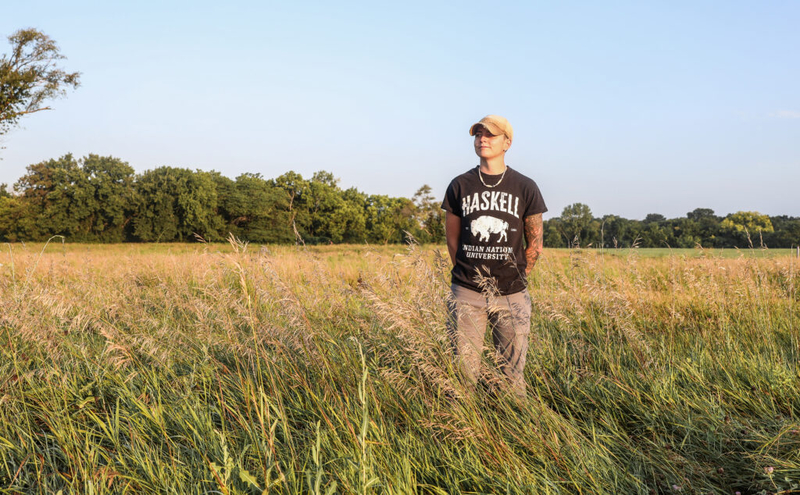
Courtney King stands July 26, 2026, on Haskell Indian Nations University land in south Lawrence. (Photo by Baya Burgess/Kansas Reflector)
LAWRENCE — The leader of a group of Indigenous land stewards at Haskell Indian Nations University says colonization stole the tradition of cultural fire from her, and she wants to reignite it.
Courtney King, a Haskell masters student, is one of five members of the Advisory Fire Council, a team of academics reintroducing fire to Haskell’s land for the community’s cultural, ecological and educational benefit.
The council planned a six-years-long series of controlled cultural burns in parts of the 143 acres of woodland, wetland and prairie on campus south of Lawrence. They held the first burn on Nov. 13.
Reviving a tradition
Native Americans tended to land with controlled fire thousands of years ago. The practice became cultural knowledge and tradition passed down through generations across North America, King said. She is a citizen of the Peoria Tribe of Indians of Oklahoma and her ancestors originally lived in the Great Lakes region.
But colonial settlers suppressed, removed, forcefully assimilated and terminated Native Americans, extinguishing cultural fire practices King might have otherwise inherited.
She said working on the burn plan has brought her closer to her family roots.
“Most of all these knowledges have been stripped away from my people through colonization,” she said. “So reconnecting in that way is really healing.”
The members of the council — King, Nana Allison-Brewer, Melinda Adams, Joseph Brewer II and Daniel Wildcat — work together to restore cultural fire as a tradition.
But they are not the only ones. Nations in other states and in Kansas continue the practice, including the Iowa (or Ioway) Tribe of Kansas and Nebraska and the Prairie Band Potawatomi Nation.
However, the council doesn’t know how long it has been since Haskell’s land has burned, apart from two areas 16 years ago.
The burn won’t look like the agricultural burns many Kansans are familiar with. Unlike a rancher burning a pasture, the council is not concerned with working efficiently.
Rather, they plan to avoid machines and backpack water sprayers. Instead, they will spread the flames with natural materials such as cattail tufts or native grasses. But they will have drip torches, a handheld canister of liquid fuel and a spout with a burning wick on the end, in case they need them.
The council has included nearby nations and Indigenous communities to participate. King anticipates a ceremony and prayers to occur.
The council will notify the city, but will not allow the public to join them. They plan to invite indigenous communities including original nations of the region and the four federally recognized nations in Kansas.
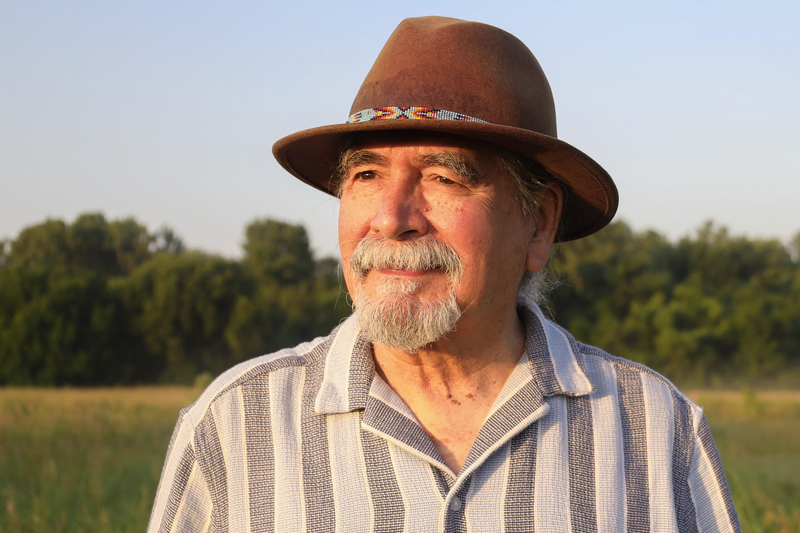
Wildcat, a Haskell professor of 40 years and a scholar in environment and Indigenous knowledge, said the practice is based on a mutual relationship between people and nature.
“When Indigenous people look at a forest, they see relatives. We see ourselves as literally kin with the land, with the trees, with the plants, with the animals,” he said. “That’s not Indigenous romanticism, that’s kind of modern science, isn’t it? And doesn’t evolutionary theory now for over 200 years teach that all life on this planet is related?”
King said her work encourages such harmony.
“Every day I go out on the land. It just reminds me why I’m doing what I’m doing,” she said. “And that’s to care for the many various species we still share these lands with. And they want to be here, and they want to thrive with us.”
Healing the environment
Over time and with great effort, cultural fire can revitalize native Kansas ecosystems, restore bat and other animal populations and improve public health, King said.
The fire on Haskell’s land can heal damage done by the lack of fire by slowing invasive species encroachment and opening up canopies of trees blocking sunlight from the floor of prairies and woodlands. After the burn, they will plant seeds of native species.
Still, the land will take decades to respond, King said, and become “who she’s meant to be. Who she has been for thousands of years.”
While the council’s initial impact on the land will be small, Wildcat hopes the burn will inspire others.
“So, that’s really, I think, what a lot of the work now is about, is just trying to embody ancient knowledge, ancient wisdom,” Wildcat said. “And then people will see that, and they’ll go like, oh, wow, maybe we ought to all be trying those kinds of things.”
Creating research opportunities
Haskell students will study the results of the burns, said Nana Allison-Brewer, a Haskell mathematics faculty member and the director of the federal grant that funds Haskell’s land stewardship program. She is a citizen of the Navajo Nation and a descendant of the Colorado River Indian Tribes.
The U.S. Department of Agriculture funds the greenhouse through a grant program for tribal colleges and universities. The grant supports four kinds of opportunities: research, leadership, community partnership and land stewardship.
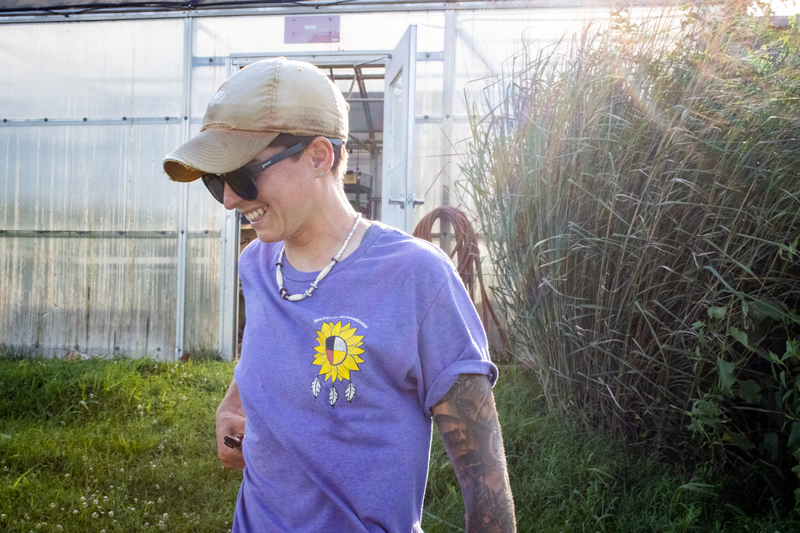
The land stewardship opportunity is the Haskell Greenhouse. King manages the on-campus land, plant nursery and a small group of student researchers and Allison-Brewer manages the federal funding.
Greenhouse student researchers will collect data from current species, the burns, soil samples and new growth, Allison-Brewer said.
She hopes their efforts will reach students elsewhere.
“We’ve been having discussions with other tribal colleges and universities, TCUs, who are also trying to bring back their traditional burning practices and cultural practices,” she said. “This could be that model to help them.”
She also said this research will help future Haskell students as the land slowly responds to their stewardship over many years.
“It’s really exciting,” she said, “to know that these practices will continue to carry on for more generations to come.”
Topeka, KS