‘Please help us’: BGE customers plead for denial of rate increase
Nov 19, 2026 | 5:35 pm ET
Description
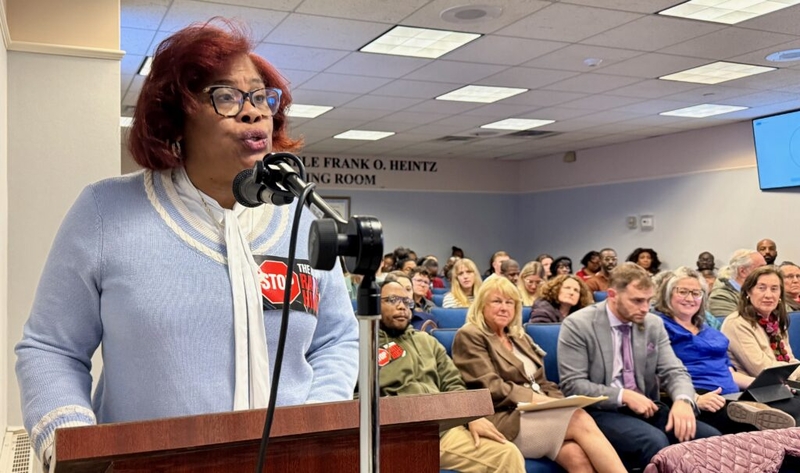
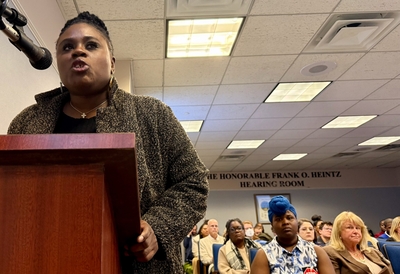
Sheron Thornton, a resident who said she has been overwhelmed by her BGE bills, spoke against the utility's request to increase electricity rates during a public hearing Wednesday in Baltimore. (Photo by Christine Condon/Maryland Matters)
At 60-years-old, Sheron Thornton never expected to be in this position. She earned a college degree, she worked hard and she purchased a home in Baltimore’s Hamilton neighborhood.
But still, her utility bills became unmanageable. In October, she received a shutoff notice from Baltimore Gas & Electric, she said.
“I was taught that if you work hard, get an education and manage your finances responsibly, you should be able to maintain a comfortable and stable life,” Thornton said. “However, despite doing all of those things, I have found myself in a position I would have never imagined.”
On Saturdays, the working grandmother said she lines up at three different food pantries in the city, where she’s found other residents going through similar struggles.

Hers was one of many emotional pleas to the Maryland Public Service Commission Wednesday night, as the panel considers BGE’s latest request to increase electricity rates.
“Please help us,” Thornton told the commission, adding that she owes more than $5,000 to the utility, and is paying installments of up to $800 each month.
Frustrated residents flocked to the commission’s headquarters in downtown Baltimore Wednesday for the roughly three-hour hearing. Speakers were asked to leave the hearing room as soon as they were finished saying their piece, so that new attendees could be escorted inside to the packed room.
For the average residential customer in the Baltimore metro area, BGE’s proposal would increase bills by about $8 per month, or $96 per year.
If BGE’s request is approved, the company’s electricity distribution rates would have increased 58% since 2020, and 129% since Exelon took over in 2012, significantly outpacing inflation, according to the Maryland Office of People’s Counsel.
The utility is owned by publicly traded Fortune 500 company Exelon, which has seen its profits continue to rise amid growing concerns about affordability. Last year, the utility took home a record $578 million, up $50 million from 2024, according to Maryland PIRG.
The utility, meanwhile, says it has taken affordability worries into account, and its request is the “minimum level of investment the company believes is necessary to maintain safe and reliable electric service.”
The requested increase is being driven by higher labor and materials costs, higher financing costs and significant storm activity, said BGE spokesperson Nick Alexopulos.
BGE says new payment program is a benefit to customers. Advocates disagree.
“Deferring work for too long would have consequences including more outages and higher future costs,” Alexopulos said in a statement. “It’s our responsibility to strike this difficult balance between keeping bills as low as possible and maintaining the electric system our customers depend on every day.”
The Public Service Commission, a five-member panel chosen by the governor, has denied portions of rate increase requests before. Last December, the panel denied a $152.3 million request from BGE, reducing it to $77.2 million.
That came under the commission’s previous Chairman Fred Hoover, who stepped down from his post after pressure from Gov. Wes Moore (D). Hoover still sits on the commission, which is now led by former Democratic state legislator Kumar Barve.
Denials of entire rate increase requests, however, are far less common. In this case, a decision is expected in early 2027.
“Make history,” said commenter David Neun of the Baltimore Public Power campaign. “Say no to this request.”
Profit rate draws pushback
The Office of People’s Counsel, which represents Maryland’s utility customers during rate proceedings, has recommended that regulators actually lower BGE’s rates — not increase them.
BGE’s request to charge customers an extra $156.1 million is based on “inflated profit margins” and “imprudent capital projects,” said People’s Counsel David Lapp in a statement from late September.
For one thing, the company is requesting an increase in its profit margin — which it reaps from customers — from 9.5% to 10.4%.
“BGE wants to guarantee investors a 10.4% return on investment, even if it bankrupts the people of Baltimore,” said commenter Elliott Kurtz, who was also representing the Public Power campaign.
Regulators would do better to lower the profit margin to 7.3%, “much closer to the returns earned by competitive firms,” read a news release from Lapp’s office.
That change alone would save the average residential customers about $110 per year on their BGE bills, said Lapp, an attorney general appointee.
But BGE points to a national average “return on equity” of 9.84%, according to a 2026 analysis from S&P Global.
Struggling to pay the bills
Cassandra Ceballos, a nonprofit worker renting an aging rowhouse in Baltimore’s Remington neighborhood, said she has yet to turn on her heat this autumn, though temperatures have plunged. It’s all because of her unaffordable BGE bills, which can approach $400 even when she monitors the thermostat closely.
“I have consumed more hot tea in the last three years than my entire life combined, in a desperate attempt to warm up,” Ceballos said. “I wear gloves inside, and I sleep with three blankets on my bed.”
Commenter Rita Watts introduced herself to the commission as “an ordinary citizen paying exorbitant amounts of money to BGE.”
“I live in a little one-bedroom apartment, paying penthouse gas and electric,” Watts said.
Investor-owned utilities such as the Exelon companies, which include BGE, Delmarva Power and Pepco, have drawn increased scrutiny from Maryland lawmakers recently.
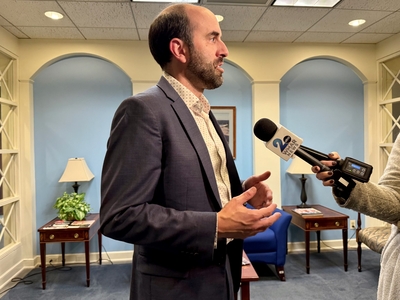
During this year’s legislative session, lawmakers set a cap on the amount of supervisor’s salaries that can come from ratepayer dollars at investor-owned utilities. They also temporarily barred a rate-setting practice that let utilities lock in rate increases over several years at a time, based on utilities’ forecasting their costs.
Lawmakers slashed energy efficiency programs and made a host of other adjustments in the name of lowering bills by at least $150 a year.
But after all was said and done, BGE asked for a rate increase over the summer, anyway.
The increase could do real damage to vulnerable people in the region, said Jamila Blake, a geriatric social worker at the Economic Action Maryland Fund.
Blake said she feels anxious conducting home visits in the colder months — fearful that she may discover elderly clients who froze to death, who were injured by their space heater or oven, just trying to keep warm.
“These are real concerns. I see it every day, with a caseload of over 50 clients, clients that have applied for the Fuel Fund, that have applied for energy assistance — and still can’t pay their damn bill,” Blake said.
Annapolis, MD