Proposed restrictions on ‘sexually explicit’ library materials revised, reopened for feedback
Nov 13, 2026 | 7:38 pm ET
Description
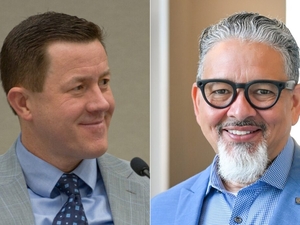
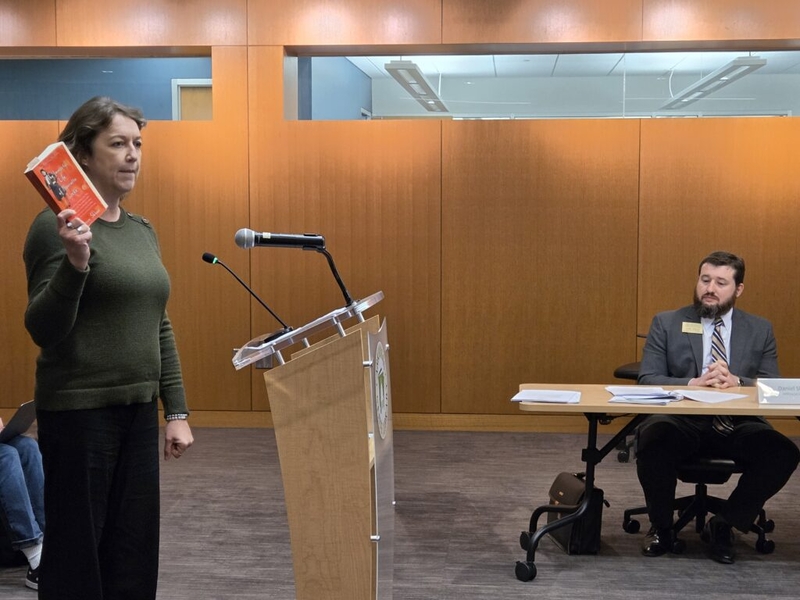
Abbigail Getty (left) of Cabot holds up a copy of "The Immortal Life of Henrietta Lacks" by Rebecca Skloot, a book she said proposed library funding rules would keep away from children under 16 without parental consent, at the Arkansas State Library Board meeting on Nov. 13, 2026. At right is Arkansas Education Department attorney Daniel Shults. (Photo by Tess Vrbin/Arkansas Advocate)
The Arkansas State Library Board has again revised proposed rules hingeing public library funding on children’s access to “sexually explicit” materials after librarians and parents on Friday said the rules could restrict educational materials.
The new draft rules will be available for a third round of public feedback on the Arkansas Department of Education website until Dec. 13.
The proposed restrictions come as librarians have raised questions about how to enforce a 2023 law that would impose criminal penalties for providing “harmful” materials to minors. A federal appeals court lifted the injunction on the law in July.
Arkansas librarians grapple with enforcing book restriction law after court ruling
Early in the board’s quarterly meeting Friday, members voted to approve the draft they proposed in August. The proposal would have required libraries to “take all reasonable steps” for the “appropriate placement” of materials that depict or describe sexual contact and behavior, and to prevent patrons under 16 years old from checking them out.
The board later expunged the vote by a 3-2 margin and agreed to add language specifying that libraries don’t need to keep “encyclopedias and fine art” away from patrons under 16.
Board member Jack Fortner, a former state lawmaker from Yellville, opposed expunging the vote, changing the proposed rules and reopening them for public comment. He said the changes will be “too vague to enforce,” and that public comment on the broad proposal “will be unbelievably interesting.”
A previous draft of the rules drew opposition from dozens of Arkansans who opposed limiting minors’ access to books.
Allie Gosselink, executive director of the Calhoun County Library, reiterated Friday that her library system does not have the space to segregate books some adults might consider inappropriate for children.
PEN America, a national freedom-to-read advocacy group, issued a statement Friday after the board meeting, expressing concern about the amended rules.
“This policy sends a fundamental message to children and teens that it does not trust them to be curious or interested in reading freely, and could discourage them from reading at all,” Freedom to Read program coordinator Madison Markham said. “At a time when reading rates by children and youth are plummeting, this is a terrible message for this board to be sending.”
Obscenity discussion
Library directors, including Gosselink, said selection criteria for library materials include the Miller test, a three-pronged standard for obscenity created by a 1973 U.S. Supreme Court ruling.
An item must meet all three criteria to be considered legally obscene:
- If the entire work “appeals to the prurient interest” based on “contemporary community standards,” as judged by the average person;
- If it depicts or describes sexual behavior “in a patently offensive way”;
- If the entire work “lacks serious literary, artistic, political, or scientific value.”
Encyclopedias, sex education books and depictions of nudity in art are not obscene by these standards, library directors told the State Library Board.
Board Chairman Clay Goff said he had never heard of the Miller test before Friday and was reluctant to incorporate it into the proposed rules because it would mean “no books are moved” to different library sections.
John McGraw, director of the Faulkner and Van Buren county libraries, said the Miller test ensures that “we do not have pornography in the library.” McGraw also said he appreciated that the proposed rules require libraries to ensure patrons under 16 are accompanied by adults.
“Everything that we do with minors in the library entails [and] presumes parental consent, but is that going to hold up in court if somebody wants to say Johnny checked out ‘The Diary of Anne Frank’?” McGraw said, noting that the book includes the teenage author’s curiosity about sex. “I don’t know, and that makes me nervous.”
This policy sends a fundamental message to children and teens that it does not trust them to be curious or interested in reading freely, and could discourage them from reading at all.
Board member Emmaline Pilkington, wife of Republican state Rep. Aaron Pilkington, said she supported the proposed rules before Friday’s amendment because they are not aimed at “kids with great parental oversight.”
“We’re talking about maybe those kids that are kind of on the fringes, that are not going to have excellent parenting,” Pilkington said.
The rules include an exception for children 11 and older to access “age-appropriate information designed to prepare minors for the sociology of puberty” with parental consent.
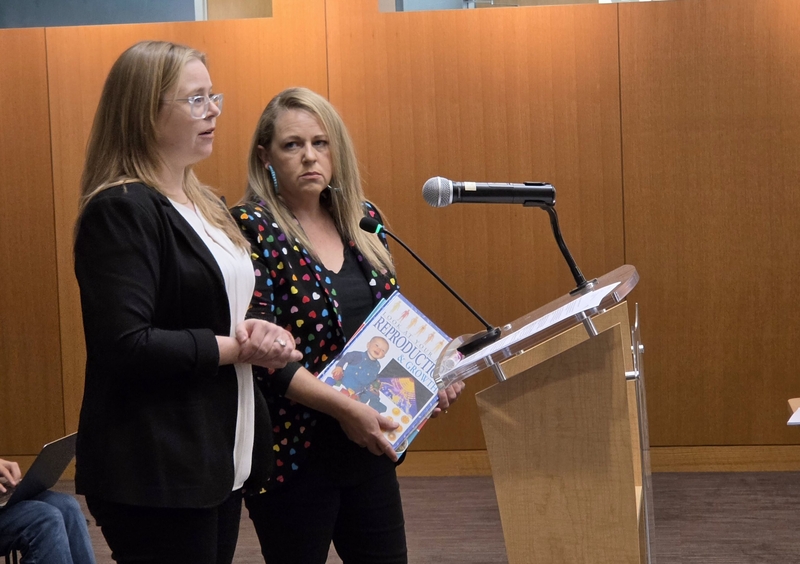
This provision would block many girls’ access to books about menstruation until they are already experiencing it, said Abbigail Getty, a mother from Cabot who opposed the rules.
“That’s like saying you’re going to get a book about planning your wedding a year after you get married,” Getty said.
Parallel policies
The State Library Board questioned if the proposed rules would interact or clash with Act 372 of 2023, which would allow anyone who “furnishes, presents, provides, [or] makes available” an item that is “harmful to minors” to be charged with a Class A misdemeanor, punishable by a maximum prison sentence of one year.
Act 372 would also give city and county governments the final say on the placement of a library book a community member seeks to relocate.
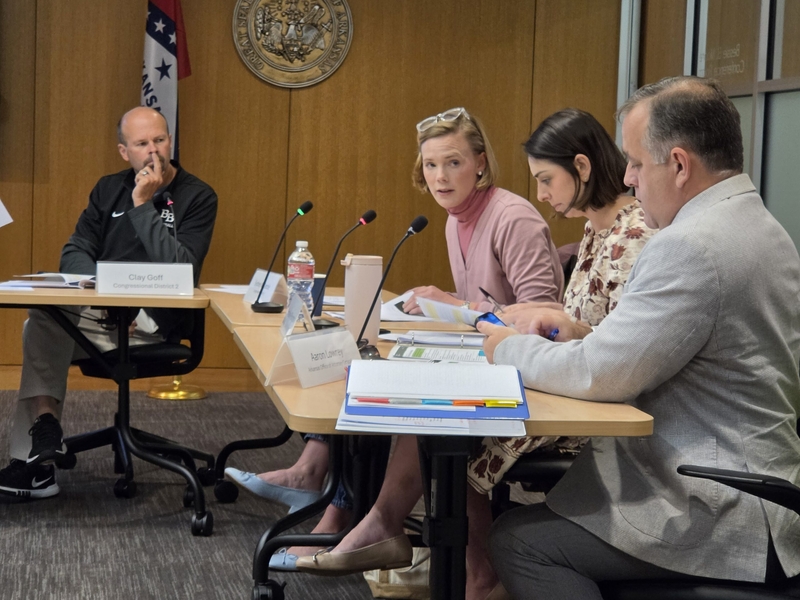
Vice Chair Sydney McKenzie, wife of Republican state Rep. Brit McKenzie, asked if the board could “provide direction to local libraries just so there is some sense of uniformity in challenge cases.”
Assistant Attorney General Aaron Lowrey said a local dispute or court case regarding Act 372 would be outside the board’s purview.
Act 372 defines “harmful to minors” as “any description, exhibition, presentation, or representation, in whatever form, of nudity, sexual conduct, sexual excitement, or sadomasochistic abuse” if the content “appeals to the prurient interest,” is “patently offensive” or lacks literary or political value.
The proposed library funding rules instead use the federal definition of sexual content: a variety of physical contact “with an intent to abuse, humiliate, harass, degrade, or arouse or gratify the sexual desire of any person.”
Misty Hawkins, executive director of the four-county Arkansas River Valley Regional Library System, told the board it should spend its time and resources on other safety issues regarding libraries.
“Where’s the urgency to help libraries address practical needs, like safety training, for patrons and our staff who [might be] about to be arrested for something they didn’t do?” Hawkins said.
Little Rock