‘What’s Next’ for Democrats? A 2028 supermajority, party leaders say in Denver.
Nov 13, 2026 | 6:40 pm ET

Description
Clockwise from top left: Texas Sen.-elect James Talarico; House Minority Leader Hakeem Jeffries; Maryland Sen. Chris Van Hollen; and Michigan Sen. Elissa Slotkin spoke at the What's Next conference hosted by Majority Democrats in Denver on Nov. 12 and 13, 2026. (Photo by Chase Woodruff/Colorado Newsline)
Riding high from their success in the midterms, a constellation of rising stars in the Democratic Party gathered in Denver this week for a splashy summit seeking to set the terms of how the party can achieve an encore performance in 2028.
The “What’s Next” conference brought together party leaders, consultants, influencers and media to rub elbows in a festival-like atmosphere at one of Denver’s top music venues, complete with concert-themed posters — “Cory Booker and The Revolution; Special Guests Democracy, Opportunity, Justice,” read one — and a busy merch booth.
The three-day event is a production of Majority Democrats, an influential new political action committee with deep-pocketed funders and a roster full of up-and-coming party favorites, most of whom took to the main stage inside Denver’s Mission Ballroom for speeches and panel discussions on the party’s next steps.
Sen. Elissa Slotkin of Michigan, one of the many What’s Next speakers considered a potential 2028 presidential candidate, said the recent Senate election in her home state, won by progressive Sen.-elect Abdul El-Sayed, “gave a really clear demonstration” of the importance of party unity.
“Whatever side of the Democrats you feel like you’re on, that is not what is important right now,” Slotkin said. “Teamwork is what is important, and if you have elected officials who are spending all their time fighting progressive vs. moderate, then they have missed the plot of the election.”
But amid the sense of triumph, the conference put a spotlight on lingering disagreements within the party about how, exactly, to deliver on the promises it made to the swing voters who powered last week’s “blue tsunami.”
Sen. Chris Van Hollen of Maryland, fresh off announcing he would challenge Sen. Chuck Schumer of New York for leadership of the Democrats’ incoming Senate majority, told the crowd that following through on those promises meant “shaking things up.” At times, tensions boiled over, with a handful of protesters escorted from the venue during an appearance by House Minority Leader, and likely incoming House Speaker, Hakeem Jeffries, whom one demonstrator accused of being a “traitor” and “lapdog” for billionaires.
Majority Democrats bills itself as a group that champions “a different kind of Democrat,” with a focus on candidates who can compete in traditionally Republican-leaning states and districts. Iowa Gov.-elect Rob Sand, Texas Sen.-elect James Talarico and North Carolina Rep.-elect Jamie Ager were among the endorsees of the group who celebrated their midterm victories at the What’s Next conference.

Rep. Jake Auchincloss of Massachusetts, chair of Majority Democrats, sought to set the tone in a speech Friday morning that combined broadsides against the “bad ideas” some in his party have embraced — he named rent control, banning fossil fuels, “open borders” and a lack of attention to the national debt — with calls to “swing for the fences” on new proposals like a four-day work week.
“This is the moment to challenge and cast off these bad ideas and embrace the best and most radical one we ever had: equal opportunity for all and special privileges for none,” Auchincloss said. “Majority Democrats believe our responsibility is to make equal opportunity a real promise, and that means holding the line against special privileges for special interests, even the ones that have historically been on our team.”
Democrats’ big tent
Auchincloss is one of the House’s most conservative Democrats, and several other Majority Democrats members, including Ager and Montana Rep.-elect Sam Forstag, are set to join its centrist Blue Dog caucus. The What’s Next conference also had plenty of representation from the party’s liberal mainstream, along with a handful of progressive figures like Rep. Ro Khanna of California, another possible 2028 contender, who drew loud cheers for his calls to pass “Medicare for All” and abolish U.S. Immigration and Customs Enforcement.
Largely absent, however, were figures from the party’s left flank, like Denver’s representative-elect to Congress, 29-year-old democratic socialist Melat Kiros, and other insurgent candidates who scored a series of upset primary victories earlier this year.
Outside the venue Friday morning, Denver police faced off with protestors from groups like the Sunrise Movement and the Democratic Socialists of America, as buses ferrying conference attendees streamed in. Other demonstrators with the activist group Indivisible lined the sidewalk across the street throughout the day, holding up a banner opposing Schumer’s “coronation” as majority leader.
The What’s Next conference began Thursday and is scheduled to run through Saturday morning. Among the dozens of other party leaders featured during the event were former Transportation Secretary Pete Buttigieg, former Attorney General Eric Holder, Georgia Sen. Raphael Warnock, Arizona Sen. Ruben Gallego and Pennsylvania Gov. Josh Shapiro.
Get us out of the war. Get rid of the tariffs. Deal with the corruption.
Denver resident Sherri Stieg, holding a homemade sign supporting Van Hollen’s leadership bid, said she had “never missed a No Kings” demonstration over the last two years, and “for months and months” has urged Colorado Sens. Michael Bennet and John Hickenlooper to support new Senate leadership.
“Get us out of the war. Get rid of the tariffs. Deal with the corruption,” Stieg said when asked what she wants to see from the incoming majority, citing Van Hollen’s position in support of threatening a government shutdown in December to force an end to the Iran war.

“Americans have not given up on what their government can do,” Van Hollen said in his speech Friday. “They know our government and our democracy can make their lives better, but they have wholly lost faith that it will. … They want their government to work, and change to be worthy of their trust.”
Jeffries, who was interviewed onstage by Fox News’ Jessica Tarlov, sat impassively as a series of demonstrators interrupted to shout in favor of left-wing policies like Medicare for All, a Green New Deal and an end to arms sales to Israel. When asked by Tarlov about “some of the criticism — which we just saw with the young voters that were speaking out about their priorities — that perhaps your leadership is too timid for the moment,” he didn’t answer directly.
“In the last two years, we’ve worked hard to battle Republicans on every issue,” Jeffries said. “We’ve been working hard collectively across the House Democratic caucus, to do what was necessary to aggressively push back against MAGA extremism. And now we’ll have the collective responsibility to really get to work fighting for an affordable America.”
“So,” Tarlov said after another disturbance in which a demonstrator was escorted out of the venue. “How about permitting reform?”
Maneuvering for 2028
As Democrats begin to wade into the debates over policy and strategy that will shape the 2028 presidential race, the Majority Democrats PAC has staked out positions against some high-profile left-wing ideas like Medicare for All, which it says risks alienating Americans who don’t want to lose their employer-sponsored private insurance. That’s made the group a target of criticism from progressives hoping to see the party’s next presidential standard-bearer embrace those ideas.
Founded in July 2025, the PAC’s top donors are hedge-fund billionaire Stephen Mandel and his wife, Sue, who’ve contributed nearly $11 million. according to Federal Election Commission disclosures, The group has also received contributions from former New York City Mayor Michael Bloomberg and James and Kathryn Murdoch. The group shares some donors and advisers with the Searchlight Institute, a centrist think tank that says it’s pushing Democrats to “build a coalition big enough to enact our ideas and make them last.”
“Our party is on probation with voters who might not like us very much, or know exactly what we stand for, but who have given us a chance anyway,” said Stephanie Valencia, co-founder of Latino-focused polling and research firm Equis. “The clock is short. We maybe have the next year to 18 months to show voters who we are, or the pendulum might swing right back.”
What comes next for Democrats will depend in large part on how the party interprets what just happened — its best midterm performance in more than 50 years, powered by victories in traditionally deep-red states like Kansas, Texas and Mississippi. For many of those encouraging a more moderate approach, the results validated what the Searchlight Institute calls “supermajority thinking.”
“(Voters) are telling us loud and clear that they are real sick of Trump and his folks and the associated chaos,” Charlotte Swasey, the Searchlight Institute’s director of analytics, told What’s Next attendees from the stage Thursday. “But they’re not super hype for a wild swing in the other direction.”

Progressives, meanwhile, emphasize the economic populism embraced by many successful midterm candidates. That includes Talarico, who received a raucous reception at What’s Next on Thursday, delivering a speech in which he blasted an “economic system that only benefits the top 1%” and called on Congress to “unrig the political system so no billionaire, no trillionaire, can buy our elections.”
“Our candidates ran on platforms that are popular to the American people,” said Van Hollen. “But what they ran on was not so popular with many powerful special interests who profit from the status quo, and who deploy armies of lobbyists in Washington to defend that broken status quo.”
Colorado Gov.-elect Phil Weiser participated in a panel discussion Friday alongside several of his soon-to-be counterparts from other blue states. A two-term attorney general, Weiser prevailed over Sen. Michael Bennet — a Majority Democrats member — in the Democratic primary in large part by emphasizing his record of fighting the Trump administration. He said Friday that Democrats should stand firm on their principles as they set the agenda in Congress over the next two years.
“That’s why this election was so historic — the American people were fed up with the lawlessness, the corruption, the cruelty,” Weiser said. “We have to stay true to what our values are. Never bend the knee. Never try to give up on what we believe in, thinking we’re going to get something for it, because we won’t.”
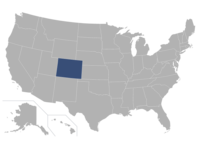
Denver, CO