NE auditor’s concerns turn to broader pandemic-era grant program: ‘We’ve got to dig deeper’
Nov 13, 2026 | 7:18 pm ET
Description
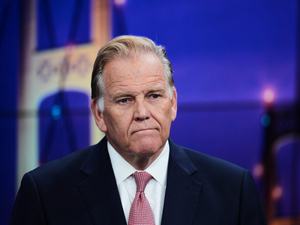
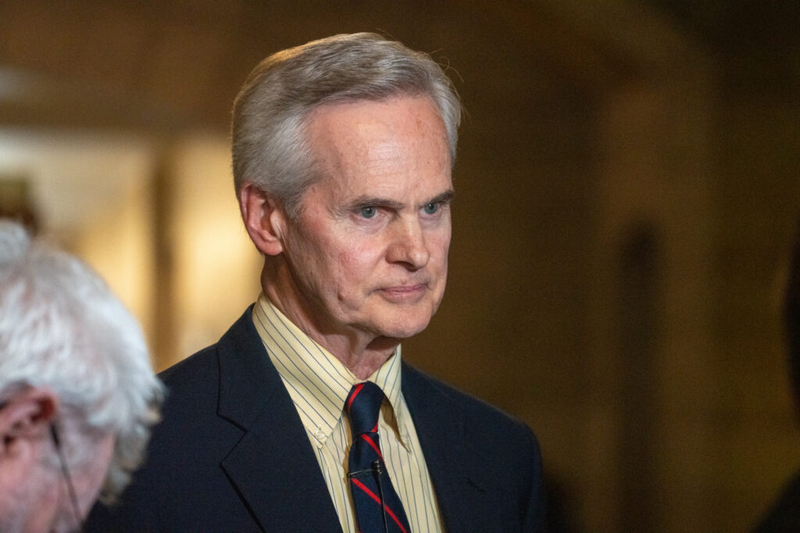
Nebraska Auditor of Public Accounts Mike Foley speaks with reporters after a hearing before the Legislature's Government, Military and Veterans Affairs Committee on a bill brought at his request. Feb. 5, 2026. (Zach Wendling/Nebraska Examiner)
LINCOLN — Nebraska Auditor Mike Foley said that delving into a $1.2 million pandemic-era public grant — whose progress he described as “pathetic” — has him questioning the broader $234 million grant program of which it is a part.

He said his office, the state watchdog of taxpayer dollars, at this point has no other investigations “in motion” regarding the North and South Omaha Recovery Grant Program managed by the Nebraska Department of Economic Development.
However, Foley said that given the complexity of the Legislature-approved initiative and the shrinking state agency charged with monitoring it — “there’s more work that we need to do.”
“Intuitively, you gotta say there’s more here,” Foley said. “We’ve got to dig deeper.”
‘Lavish’ salaries
He commented in the wake of a probe by his office into the Nebraska Startup Academy, one of roughly 130 entities that in January 2024 were awarded a piece of North-South grant funding.
Nebraska DED director defends grant management amid questions by state lawmakers
The program had a tumultuous start and more recently was a topic at an Oct. 21 legislative committee hearing during which DED defended its management but noted challenges with staff turnover. State Sen. Terrell McKinney of North Omaha, who helped shepherd the enabling legislation, said he had been contacted by grantees frustrated over what they said were shifting reporting demands. McKinney was concerned that some projects might not meet an end-of-2027 deadline to spend the money intended to lift economically disenfranchised communities hit hard by the 2020 pandemic.
Foley said his probe of the downtown-Omaha-based Startup Academy was sparked by concerns relayed to his office. Among Foley’s allegations against the nonprofit: unmet job creation milestones, commingling of funds, potential conflicts of interest and “lavish administrative salaries”— including $387,126 over two years for the executive director.
For now, Foley said, he is satisfied with DED’s response to an 11-page analysis his team presented Tuesday to Maureen Larsen, DED executive director. That same day, the state agency formally suspended the Startup Academy’s contract and remaining $313,000 grant dollars.
The auditor team highlighted issues that “merit corrective action,” but said a more comprehensive financial audit was not necessary.
Charlie Cuddy, executive director of the Startup Academy, told the Examiner his organization was taken aback, as it was unaware until Tuesday the auditor’s office was investigating.

“We found out with everybody else,” Cuddy said of the letter.
Cuddy said the Startup Academy’s grant funding effectively was suspended already. He said it hadn’t received any reimbursements since last December, and his team continues to work with DED to answer compliance questions.
The Startup Academy said it recognizes the responsibility to steward public funding, but believes Foley’s remarks created an incomplete picture. Cuddy noted that the findings did not establish “intentional misuse of public funds or fraudulent conduct.”
60 new startups?
Uncontested is an excerpt from the grant application, in which the academy said it would “directly help create and support 60 new startups” and that it anticipated 300-plus full-time jobs within three years.
According to the auditor team, the academy resubmitted forms that showed 42 fewer jobs created than originally reported to DED. Foley said amended reports showed that only two direct jobs and two indirect jobs were created over two years.
About 130 groups in North and South Omaha to share $235 million in development funds
According to Cuddy, the figures were modified as a result of guidance from DED. He said his team’s original reporting included jobs related to hires made by startups receiving academy support, but that DED changed reporting requirements to more narrowly ask for people paid by the grant.
“We’ve had so many different people to work with at the DED and they’re all amazing in their own ways, but I just think there was no clear direction,” Cuddy said.
He said the academy remained committed to working with DED to resolve outstanding matters.
Established in 2022, the academy says it has built a statewide entrepreneurship platform, offering education and mentoring that serve more than 750 entrepreneurs, including more than 80 from North and South Omaha ZIP codes.
The bulk of its resources since 2024, according to the auditor report, has come from the North-South grant. It said that during 2024-2025, the academy’s director of entrepreneurship was paid $268,840 and two academy board members each were paid $79,000.

Both Foley and the DED, in its notice of suspension, cited potential conflicts of interest that were not disclosed. They said the four academy administrators also hold leadership positions in Move Venture Capital.
That is relevant, DED’s letter said, because of overlap between startups assisted by the academy and startups that Move has invested in.
Foley said he was not comfortable with the “cozy relationship,” and that DED owes it to taxpayers to preclude even an appearance of impropriety in the use of public funds.
“The academy spent most of the money on itself, leaving behind a trail of canceled paychecks but almost nothing in terms of meaningful results,” Foley said in a media release tied to the report.
In its response, the academy said, “We take these matters seriously and remain committed to providing appropriate documentation and clarification as needed.”
‘Too much money on its hands’
In an interview, Foley told the Examiner he suspects that some DED oversight challenges now coming to light are rooted in a “short-lived era where the state had too much money on its hands and couldn’t spend it fast enough.”
He cited a $5 million grant for a film about Chief Standing Bear, which originated from pandemic-era dollars flowing from the federal government. That money was separate from the North-South pot. After Foley’s office alleged a breach of contract, the DED stopped the contract with filmmaker, I Am A Man LLC.
Omaha moviemaker says state-funded venture paralyzed as DED stretches suspension of $5M grant
Another North-South recipient also has had its contract suspended for alleged mismanagement: Fallen Giant Films, Inc., which continues to battle for the remainder of its $5 million grant.
Fallen Giant founder Randy J. Goodwin has been wrangling with DED, and earlier this month reached out again to Gov. Jim Pillen in a 16-page letter also sent to state lawmakers.
Before its funds were frozen, the state had disbursed nearly $3.4 million to Goodwin’s venture, which was to build a Hollywood-esque industry in his hometown.
Goodwin told the officials that his group often doesn’t get a clear distinction between an activity that violates a grant requirement, one that requires more documentation or one that’s a film industry purpose the DED “simply does not understand.”
A DED spokesman said there were no other North-South recipients under formal suspension. Brennan Hallock, the spokesman, said the agency has other remedies available under the grant program, including disallowing costs, contract termination and recouping dollars. He said the agency’s desire is to allow “curative” or least harmful repairs.
In DED responses included in the auditor report, the agency said it would strengthen procedures and training.
Foley believes a “perfect storm” arose with oversight demands and a more recent push by the governor to downsize state government.
“When you write those checks, what really happens next?” he said. “No question, there’s more work we need to do.”
Lincoln, NE