WV Supreme Court denies Democrats challenge over de Soto seat in House of Delegates
Nov 13, 2026 | 6:08 pm ET
Description
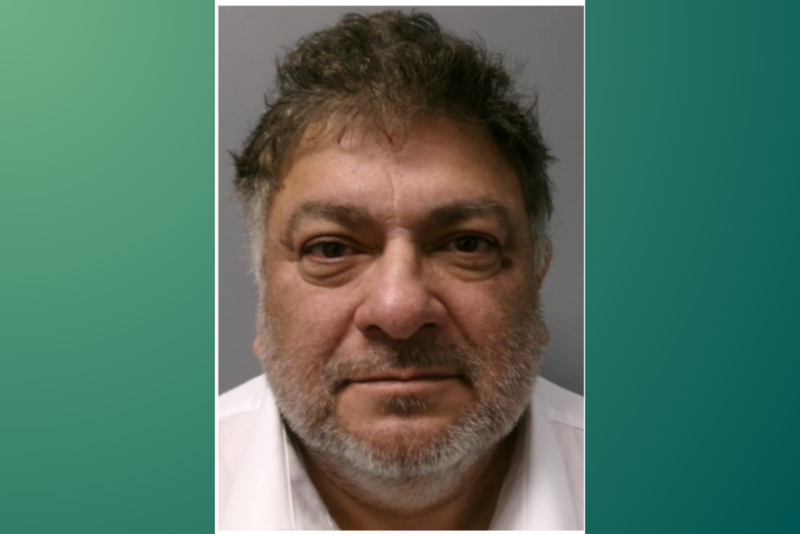
Joseph de Soto (West Virginia Division of Corrections and Rehabilitation)
West Virginia Democrats do not have standing in a legal challenge against House Speaker Roger Hanshaw and Gov. Patrick Morrisey over an appointment to the House of Delegates last year, the state Supreme Court ruled Friday.
In a decision issued Friday afternoon, justices denied the writ of mandamus by state Democratic Party Chairman Mike Pushkin and Stephen Willingham over the appointment of Republican Ian Masters to fill a vacancy made after the arrest of Joseph de Soto.
De Soto was elected to the House of Delegates district 91 seat as a Republican in the November 2024 election. He switched his party to Democrat shortly before he was arrested the next month and charged with making threats to harm or kill Republican lawmakers.
The House of Delegates passed a resolution Jan. 8, 2025 vacating de Soto’s seat. The resolution said that de Soto’s status on home confinement and at least two protective orders filed by lawmakers barring him from the state Capitol would make him unable to take the oath of office in the Capitol as required. It referred the appointment to the Berkeley County Republican Executive Committee to submit nominees to Morrisey, who named Masters to the role on Jan. 23, 2025.
In the lawsuit, attorneys for Pushkin argued that state law at the time required the appointment be made from the Democratic Party because de Soto was a registered Democrat before the vacancy.
In the court’s opinion, Chief Justice Haley Bunn wrote that the court cannot order Hanshaw to seat de Soto, or alternatively, request a list of nominations to the seat from the Berkeley County Democratic Party and then compel Morrisey to appoint a Democrat.
The Democrat’s claim lacks redressability, an element of standing. Redressability means the court has the authority to order the relief sought and that the relief is likely to correct the harm the party aims to fix.
“We find that, under the circumstances of this case, this Court cannot order either Respondent to carry out these actions, and accordingly, the Petitioners’ purported injury is not redressable,” she wrote.
Bunn noted that the Democrats filed three separate petitions for writ of mandamus after a series of “flawed filings,” that included not providing notice of the lawsuit. Pushkins’ third petition — filed in September 2025, was the one that came before the Supreme Court.
She writes further that the Democrats’ did not make their case that Hanshaw has the authority to seat De Soto or the duty to request a list of nominations. In order to seat de Soto, Masters would have to be unseated, she wrote.
The party also does not have standing in case against Morrisey, Bunn wrote. Because Pushkin is not entitled to relief from Hanshaw, Morrisey has no vacancy for which he can appoint a nominee from a list of Democrats, she said.
Justice Bill Flanigan, a former Republican lawmaker, disqualified himself from participating in the court decision.
Senior Status Justice Beth Walker, sitting by special assignment, and Justice Charles Trump, concurred with Bunn in a separate opinion. Justice Bill Wooton also concurred in a separate opinion.
Since Masters was appointed, state law about appointments has changed. Lawmakers last year approved Senate Bill 586, Democrat-sponsored legislation that requires that when filling vacancies of state officials, justices, judges and magistrates, appointments be made from the same party that originally held the seat at the time of election, not the party to which the official may have switched to before he or she resigned.
Masters did not seek reelection this year. During the November general election, Republican Chris Claggett won the seat over Democrat David Michaels. Earlier this year Claggett’s racist social media posts drew the ire of House Speaker Roger Hanshaw and condemnation from Republican Party Chair Josh Holstein.
In a statement Friday afternoon, Pushkin wrote that the party is disappointed by the court ruling, but not surprised.
“The Court resolved this case on procedural grounds — standing and redressability — without addressing the merits of whether the Governor and Speaker violated the law,” Pushkin wrote. “From the beginning, Gov. Morrisey and Speaker Hanshaw used delay and procedural maneuvering to avoid accountability and run roughshod over the law simply because the law no longer benefited them. That should concern every West Virginian, regardless of party.”
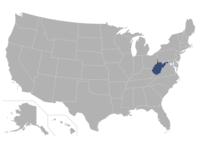
Charleston, WV