Landowners petition U.S. Supreme Court in Piedmont power line case
Nov 05, 2026 | 7:59 pm ET
Description
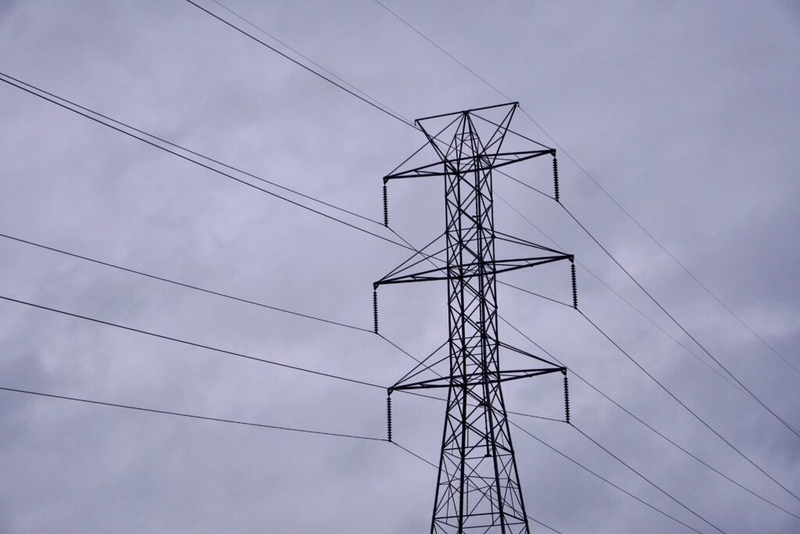
A power transmission line in Frederick County. (Photo by Christine Condon/ Maryland Matters)
A group of Maryland landowners aggrieved by land surveys for a proposed 67-mile electricity transmission line across northern Maryland are petitioning the U.S. Supreme Court to take up their case.
In their request, filed with the nation’s highest court Wednesday, 60 petitioners dispute lower court rulings that allowed surveyors from power line company PSEG Renewable Transmission to enter onto their properties for field studies for the Maryland Piedmont Reliability Project.
The landowners are represented at no cost by the Pacific Legal Foundation, a public interest firm focused on individual liberties and property rights that has brought 21 cases to the Supreme Court in its 53-year history, and cites 18 victories before the court.
The landowners “never imagined that protecting their homes, farms, and communities would lead them to petition the United States Supreme Court,” said Joanne Frederick, the resident who leads the advocacy group Stop MPRP, in a statement issued Thursday.
“Their determination has been extraordinary, and this is an important milestone in their fight for property rights,” Frederick said.
PSEG did not immediately respond to a request for comment on the latest filing in the case.
The landowners have long argued that PSEG should not be allowed to enter their properties before it has received approval from Maryland to build the power line.
Surveys for Piedmont power line can continue, appellate court rules
But in order to get approval from the Maryland Public Service Commission, PSEG needs to finish all of the surveys. So, the 4th U.S. Circuit Court of Appeals deemed the landowners’ proposal unworkable, and affirmed PSEG’s right to go on the properties for its studies.
In the petition, the landowners contend that the 4th Circuit went “further than any other circuit has dared” in affirming PSEG’s survey access based on the notion that it “likely” possessed the power of eminent domain.
Though the appellate court’s decision may seem like “a procedural quirk,” it has “devastating practical consequences going to the very heart of the fundamental right of private property ownership,” the attorneys representing the landowners wrote. “The Fourth Circuit authorized a private party to enter Petitioners’ property without first establishing that the private party possesses the sovereign power on which its claimed right of entry depends,” reads the petition to the high court.
If approved by the Public Service Commission, the line would be routed through rural areas in Carroll, Frederick and Baltimore counties. Regional grid operator PJM Interconnection deemed the project necessary to prevent power infrastructure issues such as blackouts, amid skyrocketing demands for power from data centers in the region at a time of power plant retirements.
The land surveys have been ongoing since June 2025, when U.S. District Court Judge Adam Abelson granted PSEG a preliminary injunction, allowing it to access properties despite significant landowner opposition. That injunction has since been applied to hundreds of properties with owners who oppose the surveys.
In their Wednesday filing, the landowners argue that the preliminary injunction went too far, since injunctions are meant to “protect rights that exist,” not “let a court create new ones.”
The court could have conducted a proceeding to determine whether PSEG, a New Jersey-based company, possessed eminent domain rights in Maryland. Instead, the court predicted PSEG would prevail in its arguments, and granted the injunction.
“Predictions can be wrong. A court sometimes ‘reaches a different conclusion upon full consideration of the merits,’” the attorneys wrote.
That decision came with irreversible consequences, the attorneys say.
“In an ordinary case, the final judgment corrects a wrong prediction. Here no judgment can, because the entry will already have happened,” the petition says.
By now, the field studies are nearing completion. In September, PSEG reported that only nine archaeological surveys remained for the properties in the original lawsuit. The studies have also included metes and bounds surveys, forest and wetland delineation surveys, habitat assessments and acoustic bat surveys, according to PSEG’s filing.
But the landowners said in their latest filing that they are requesting a Supreme Court decision in part because the issue may keep arising, whenever out-of-state actors are chosen by the Federal Energy Regulatory Commission to construct power lines.
The attorneys acknowledged in their filing that Maryland’s Power Plant Research Program would have the power of eminent domain — and therefore would be allowed to conduct the surveys — as would power companies already operating in Maryland.
“When the winner is new to the state, as PSEG is to Maryland, its power of eminent domain may still be unsettled when it needs to survey, and each award like that can raise the question again,” the attorneys wrote.
Annapolis, MD