Death row inmate is competent for execution, SC Supreme Court says
Nov 05, 2026 | 4:46 pm ET
Description
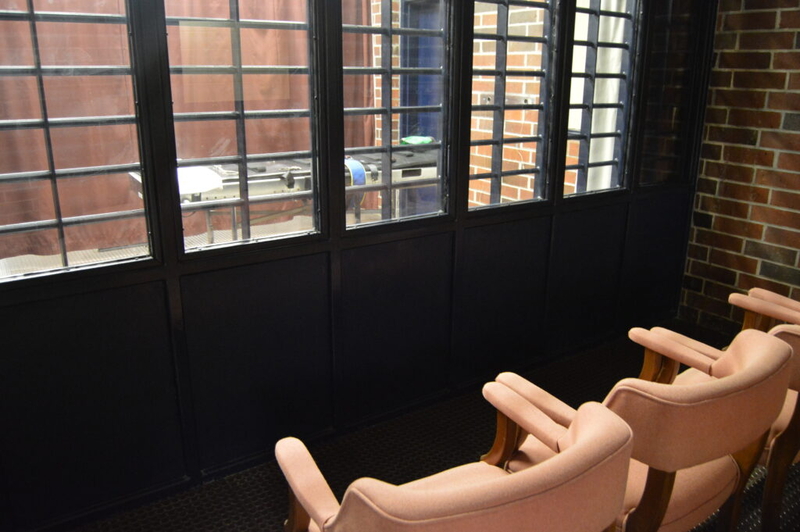
The state death chamber at the prison complex in Columbia, S.C., as seen from the witness room. (Courtesy of the S.C. Department of Corrections)
COLUMBIA — A death row inmate convicted of raping and killing his neighbor is competent for execution, the South Carolina Supreme Court decided this week.
The high court also turned down a rehearing request for inmate Steven Bixby, who the court already decided was competent.
Gary Terry, 58, was convicted in 1997 of raping and killing Urai Jackson in her West Columbia home two years yearlier. He ran out of ordinary appeals in his case in 2022, but his execution has been on hold so that judges could decide whether he had an intellectual disability.
A Lexington County judge last year said he didn’t, and the state Supreme Court agreed Wednesday.
The court also turned down Bixby’s latest appeal. The court had already ruled Bixby, who was sentenced to death in 2007 for fatally shooting two police officers during a daylong standoff at his parents’ Abbeville home, was competent for execution.
Bixby’s attorneys said they intend to appeal to the U.S. Supreme Court, according to a Wednesday court filing.
Whether any executions are imminent, though, is unclear. Attorneys for Bixby asked justices Wednesday to wait until after the holidays to issue a death warrant.
If Bixby receives a death warrant Friday, which is the earliest possible day the high court could issue it, his execution would be scheduled for Dec. 4.
That would require his attorneys, the state’s attorneys and state Supreme Court staff to work through the week of Thanksgiving, as death warrants usually bring on a flurry of last-minute appeals.
“The preparation for and carrying out of an execution during a time of year that is so important to families will take a substantial toll on all involved,” Bixby’s attorneys wrote.
The court has paused executions for the holidays before.
In 2024, amid a spate of back-to-back executions, justices agreed to halt all death warrants in November and December. Bixby’s attorneys asked for a similar pause this time, which would push back any potential warrants until at least Jan. 8.
SC Supreme Court denies death row inmate’s appeal of incompetence
Gary Terry’s case
Terry’s attorneys argued he had an intellectual disability because of brain damage likely caused by a small stroke. That damage affected parts of his brain responsible for controlling focus and behavior, his attorneys argued in court documents.
A Lexington County judge decided the attorneys failed to prove Terry had enough damage in his brain to keep him from execution. Terry’s legal team appealed to the state’s highest court, which agreed with the circuit court judge in a one-sentence order issued Wednesday.
People with intellectual disabilities generally can’t be put to death. The U.S. Supreme Court has ruled executing someone with an intellectual disability is cruel and unusual punishment, which violates the Constitution’s Eighth Amendment.
According to court filings, Terry struggled significantly in school as a child and spent several years in special education classes before dropping out of school in ninth grade. Between then and his 22nd birthday, Terry suffered multiple head injuries, including from sniffing glue, falling out of a tree, and crashing his motorcycle, his attorneys wrote.
Court documents also say that Terry struggled as an adult to care for himself, do basic chores around the house, or hold down a job.
Experts at the time of Terry’s 1997 trial and again in 2024 found his intellectual functioning to be in the “low-average” range, according to court filings.
Evidence in 2024 relied on little more than anecdotes and bad grades in school, which don’t rise to the level of making someone incompetent for execution, lawyers for the state attorney general’s office argued to the state’s highest court.
After more than a year of written arguments from attorneys on either side of the case, the state Supreme Court’s justices agreed.
Wednesday’s order said only that justices voted to deny the appeal. It was not signed by the justices or include a vote tally.
Columbia