Money To Fight Opioids Poured Into Hawaiʻi. The Real Problem Was Meth
Oct 29, 2026 | 6:01 am ET
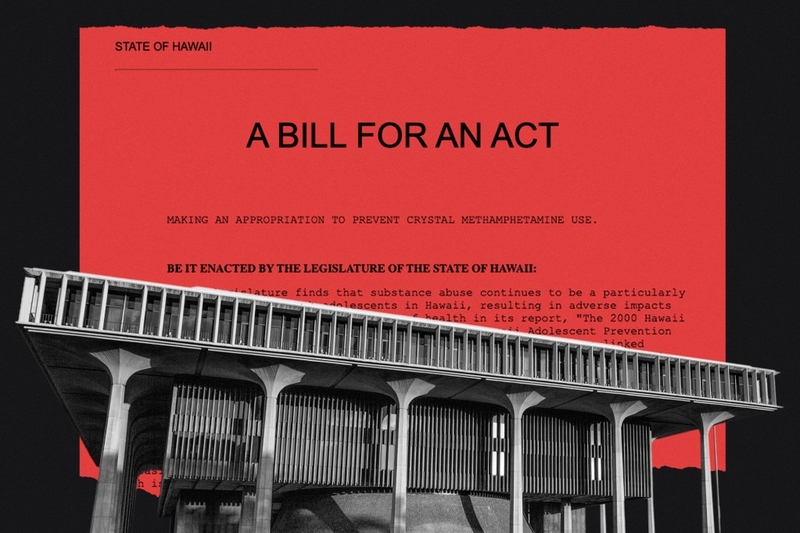
Description
Photo courtesy of Honolulu Civil Beat
This is part of an ongoing series exploring Hawaiʻi’s methamphetamine crisis. Read the other stories.
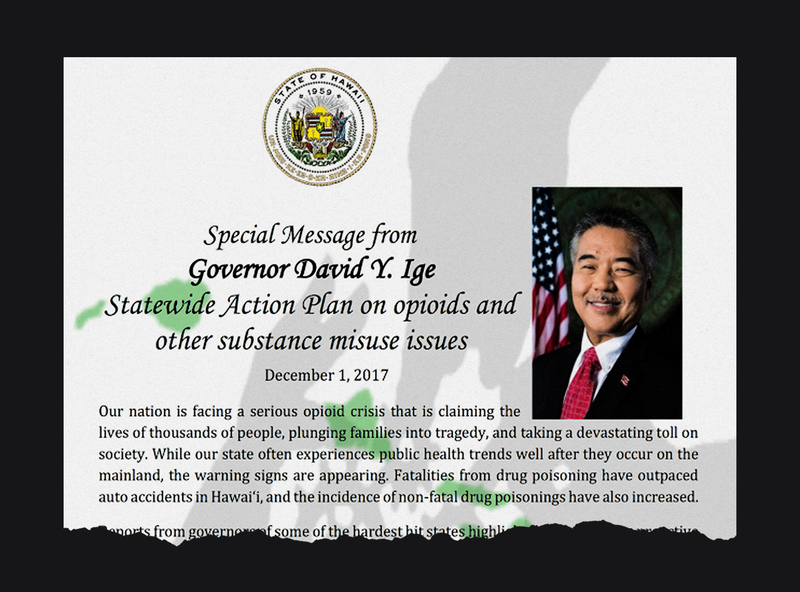
The opioid epidemic was well underway on the mainland when Gov. David Ige launched a new anti-drug program, noting that “the warning signs are appearing” in Hawaiʻi.
His health department released a 58-page report in 2017 launching the Hawaiʻi Opioid Initiative, a strategy for dealing with what it depicted as an emerging crisis. The report’s preface included a list of 150 officials who had participated.
In the coming years, Hawaiʻi would hire staff, create new boards and spend millions of dollars from federal grants and a legal settlement with opioid manufacturers to combat the drug.
There was only one problem. As Ige’s own health officials acknowledged, Hawaiʻi was facing a far more formidable drug scourge, one that had been around for more than three decades: methamphetamine. And the state had no analogous plan for targeting its No. 1 drug challenge.
Among the states, Hawaiʻi is unique: Meth causes far more deaths than opioids, and accounts for many more admissions to drug treatment.
That didn’t stop the state from shifting its focus to conform with the national priority and make plans for what to do with its share of federal money designated for opioids.
Ige says his administration "just wanted to make sure we weren't being discriminated against in terms of receiving federal funds," which he felt "would benefit the community more broadly."
But almost a decade later, many on the front lines of addiction lament Hawaiʻi’s failure to zero in on its most destructive drug. In that time, more than 1,500 people have died directly from meth toxicity. Many more no doubt succumbed to the health effects of years of use, but their deaths were not counted because they had not smoked meth recently enough for the drug to show up in their blood post-mortem.
Michele Navarro Ishiki, herself a former meth user, left the treatment field, demoralized by the relapse rate among meth users who didn’t get adequate therapy.
“You get tired of seeing your people fall like flies because the rest of the world is shifting to focus on opioids,” said Ishiki, who decided she could serve her community better through a mental health nonprofit that deals with the issues that underly drug use.
After publishing a 2024 paper on Hawaiʻi meth overdoses, University of Hawaiʻi researcher Treena Becker was invited to the state Department of Health to give a presentation on her findings.
“They were stunned,” Becker said. “They’re like, ‘We forgot about meth. We thought meth was … a problem 30 years ago.’ And I said, ‘No, it’s still very much a problem. And the proof is that they’re dying’.”

Health department officials told Civil Beat they haven’t forgotten.
“We recognize that methamphetamines and stimulants are more of a problem, especially for overdose deaths,” said John Valera, administrator of the health department’s Alcohol and Drug Abuse Division.
The department has ideas for reaching meth users, such as expanding residential treatment programs that offer therapies that show promise for meth. But as the death toll mounts, as of now they are just ideas.
A Misfit National Policy
Around the time of Ige’s 2017 announcement, meth overdose deaths in Hawaiʻi were two-and-half times those from opioids here. In the U.S. as a whole, by contrast, opioid deaths were more than four times as common as those from meth.
That year, and every year since, only a handful of other states have seen meth overdose deaths surpass opioid deaths, and even then only by a small amount. In Hawaiʻi, it’s been consistently more than double.
Only 8.5% of the state’s admissions to drug treatment in 2017 were for opioids, according to data from the U.S. Department of Health and Human Services. Five times that number were admitted for amphetamines, the category of drug made up almost entirely of meth.
That also contrasted dramatically with the U.S. as a whole, where more than a third of admissions to drug treatment were for opioids and only 10.2% for amphetamines.
In justifying his opioid initiative, Ige — who left office four years ago — and others cited another statistic: Fatalities from drug overdoses had surpassed auto accident deaths in Hawaiʻi. What they uniformly failed to mention was that most of those overdose deaths were not from opioids, but from ice.
Twelve pages into its 58-page report on the initiative, the health department conceded that meth was the bigger problem.
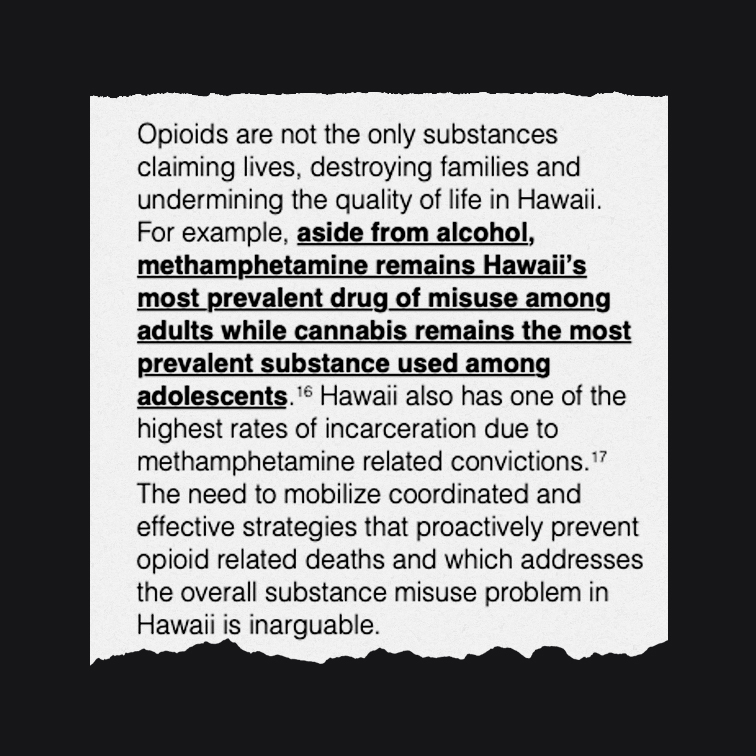
“Aside from alcohol, methamphetamine remains Hawaiʻi’s most prevalent drug of misuse among adults … ,” the report stated. “Hawaiʻi also has one of the highest rates of incarceration due to methamphetamine related convictions.”
But to make meth a priority would have set Hawaiʻi against the national tide and a federal government fixated on opioids.
Jarrett Keohokalole had seen that firsthand after being elected to the Hawaiʻi House of Representatives in 2014. One reason he had run for office was to try to do something about meth’s devastation.
“Very few families in Hawaiʻi are untouched by it,” Keohokalole said. “People I’ve known my whole life, that I’ve been very close to, have fallen into it. It’s a scourge in our community.”
Keohokalole moved over to the Senate in 2018 and was assigned to the health committee, which heard a briefing on Ige’s opioid initiative.
“My initial reaction was, ‘Why are we focused on opioids?’,” he said. “‘That’s a Midwest, Northeast problem. We have a meth problem’.”
He came to understand the reasoning: Much of Hawaiʻi’s money for drug treatment came from the federal government, which was encouraging opioid initiatives. Pinched for resources, the state was hardly going to turn down those funds.
It was a prime example of how federal policy made 5,000 miles away failed to take into account unique conditions in Hawaiʻi.
A Lack Of Attention To Meth
From Washington, D.C., the nation’s drug use challenges looked far different than they did from the middle of the Pacific.
“It’s long been the case that meth is a bigger problem in the Western United States” including Hawaiʻi, said Keith Humphreys, professor of psychiatry and behavioral sciences at Stanford University. “But a lot of federal policy is driven more by the East,” the hub of media and policymaking.
And the opioid narrative – huge corporations hooking pain patients to maximize profits – was compelling in a way that has no parallel in the meth world.
Meth did seize the limelight for a time in the 1990s. A public awareness campaign using the slogan “Cook rice not ice” and lurid TV ads warning youngsters not to try the drug “even once” seemed to be everywhere in Hawaiʻi for a while starting in 2009. But, Humphreys said, meth has “never gotten the attention that’s proportional to the amount of damage it’s done.”
Then, too, opioids are a more familiar issue. Methadone clinics have been around since the 1960s to treat heroin addiction. And more recent medical treatments such as buprenorphine to reduce cravings and naloxone to reverse overdoses make opioid abuse far more manageable than meth addiction.
“Perhaps understandably so, the opioid crisis and fentanyl kind of sucked all the oxygen out of the room,” said Rosanna Smart, co-director of the RAND Drug Policy Research Center.
The downside of the focus on opioids, Smart said, was that policymakers gave short shrift to developing a holistic approach to treatment regardless of which drug happened to be grabbing headlines at the moment – an omnibus approach that could have benefited meth users.
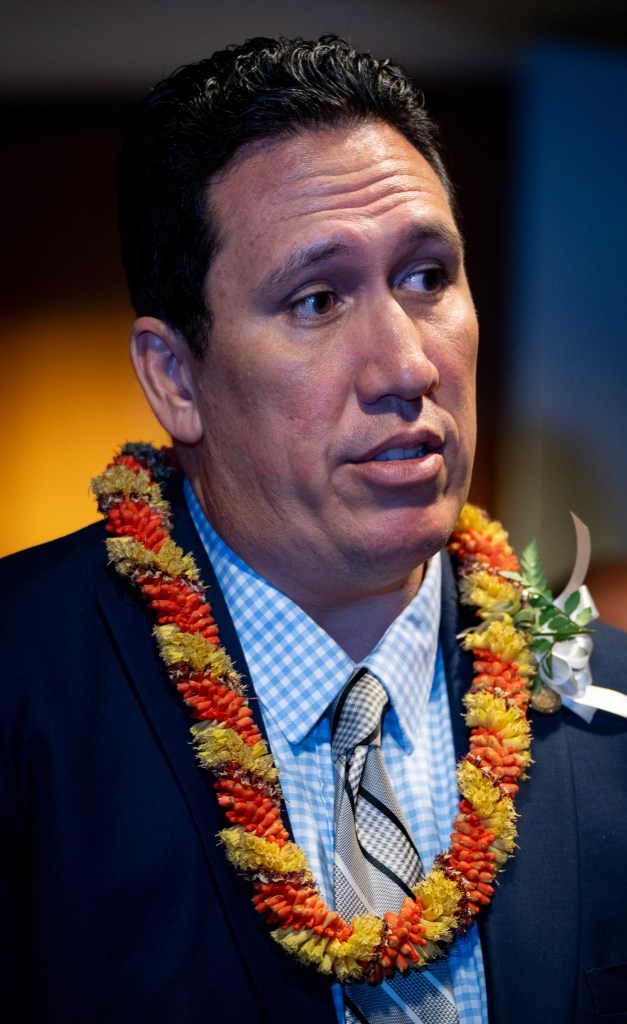
As a legislator, Keohokalole met a couple of times during the Biden administration with officials from the Substance Abuse and Mental Health Services Administration, part of the U.S. Department of Health and Human Services, to ask for help with the meth epidemic. Only the federal government, he said, had the resources to research new treatments specifically for meth addiction.
“They’ve acknowledged that there’s just not as much attention and resources on new best practices for treatment and avoidance … ,” he said. “They talked about how there’s not enough research and development into medical interventions for stimulants.”
Recently, the National Institute on Drug Abuse has funded research into new treatments for meth, including a drug combination that shows promise, said Mariah Kalmin, a health policy researcher at RAND.
But there are no easy answers. Meth addiction presents a “more severe disease profile” than opioid dependence, Kalmin said. And “it’s hard to divert money away from opioids,” she said, “because opioids are still killing a lot of people.”
Meth use can also carry a stigma not associated with opioids because it triggers erratic and sometimes alarming behavior that can erode public sympathy and support. Opioids often come with a different backstory – people hooked on the drug they first got from a doctor rather than a street dealer.
Smart, the RAND economist, set up Google News alerts for both opioids and meth. The opioid stories are mostly about federal policy changes or new research on treatment. For meth, she said, “every single thing that gets pinged is a DOJ press release on a methamphetamine trafficker who was busted.”
Fentanyl Test Strips And Naloxone Kits
In 2017, when Ige launched his initiative, the federal government started awarding grants to the states to deal with the opioid epidemic. For the first three years or so, the money could only be spent on opioid initiatives.
Congress changed the law at the end of 2019 to allow the money to also be used for stimulants such as meth after some members argued that those problems were just as urgent.
Hawaiʻi has gotten some $36 million in all from these State Opioid Response grants on top of other revenue for drug treatment, including state money that has stagnated for more than a decade. Of the $4 million in annual revenue from that series of grants, about $750,000 was set aside specifically for drug treatment.
Since the law changed, about three-quarters of the treatment money has ended up covering meth because it is by far the dominant addiction in Hawaiʻi, with 6 of 10 people admitted to publicly funded treatment listing it as their primary substance.
But treatment has accounted for only 19% of Hawaiʻi’s federal opioid grant money. The remainder went to other activities, much of it focused on opioids and the treatment system in general.
As part of a settlement in states’ lawsuits against pharmaceutical companies that manufactured and marketed opioids, Hawaiʻi is now getting an even bigger pot of money – $150 million. The state has received $51.4 million from that settlement and payments are scheduled to continue through 2038.
But this money is more restricted than the federal grants: 85% of it must be spent on opioid treatment and prevention.
Together, the grants and settlement funds have paid for distributing naloxone – a drug that can reverse opioid overdoses – fentanyl test strips, needle exchange programs and other initiatives.
The number of naloxone kits disseminated by the state grew more than twentyfold, from 3,029 in 2020 to 67,328 four years later, according to a DOH presentation made in June 2025 to the Hawaiʻi Advisory Commission on Drug Abuse and Controlled Substances, which advises the Department of Health on drug policy.
“Looks like the numbers (of naloxone kits) are starting to decrease and could indicate naloxone saturation in the state,” according to the meeting minutes.
This advisory commission is well aware that meth is Hawaiʻi’s most formidable drug issue, something it has acknowledged publicly.
Yet in formulating its recommendations for state policymakers, the commission has concentrated far more on opioids. From 2023 through 2025, the word “opioid” appeared in its minutes 103 times, while “methamphetamine” showed up 16 times.
In 2023, the health department’s Alcohol and Drug Abuse Division reported filling a number of positions to support a new committee on how to spend the money from the opioid settlement. In 2025, the division said it had hired a new opioid response coordinator. There is no equivalent drug czar for meth.
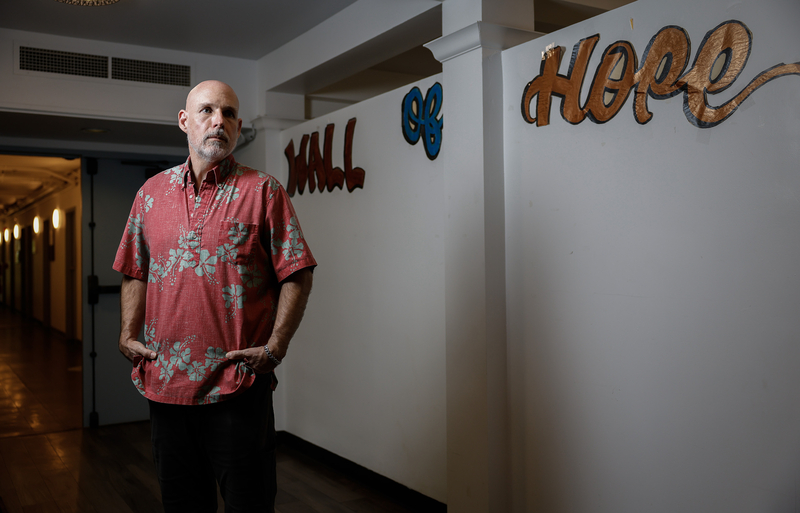
Brian Baker, chief executive officer of drug treatment center Hina Mauka, has been frustrated by the shift of attention away from meth.
“We’ve got this money that, quite frankly, is not being used” for meth, he said. “And then we have people dying from meth addiction. Those two things should not be happening at the same time.”
Baker hopes there’s a way to divert more of the opioid settlement money.
“If ever there was an opportunity to really impact methamphetamine by use of these opiate settlement dollars,” he said, “that would be huge.”
Meth's Brief Time In The Limelight
There was a time when meth grabbed the attention of Hawaii’s policymakers. Two decades ago, the state made a concerted effort to address its meth problem. But it largely fizzled as Democrats and Republicans squabbled over whether to emphasize treatment or tougher laws.
By the early 2000s – 15 years into Hawaiʻi’s ice surge – the toll in ruined lives and societal ills had become so heavy that policymakers and the public were demanding action.
In one of many grim statistics, Honolulu had the highest rate among U.S. cities of people arrested who tested positive for meth – 40.3%, according to the 2009 book, “Methamphetamine: Its History, Pharmacology and Treatment.”
One of the most prominent voices calling for action was U.S. Attorney Edward Kubo.
Somewhat surprisingly for a lawman, Kubo advocated for more drug treatment. He suggested a law in the early 2000s to allow families to force loved ones to get help when they were spiraling out of control.
"If we don't grab a hold of this moment in time, we're going to lose a lot more lives before things get better," Kubo told the Associated Press at the time. "Clearly, Hawaiʻi is being killed. We're on our knees right now."
Meth had become such a public concern that all four of Hawaiʻi TV network affiliates dedicated an hour of prime-time programming that year, foregoing ad revenue, to air a documentary called “Ice: Hawaiʻi’s Crystal Meth Epidemic.”
Gov. Linda Lingle, elected in 2002, said “We simply can’t afford to go along as we have. A lot of money has been spent, but we haven’t gotten the result that we want.”
She turned to Lt. Gov. Duke Aiona to lead the anti-meth effort. Aiona held 27 community talk-stories leading up to a summit, which included several hundred policymakers, drug treatment administrators and law enforcement officials, including contingents from Guam, Micronesia, Saipan and American Samoa, the Honolulu Advertiser reported.
“Now that we have this surge, this groundswell, you’re going to see more prioritizing and more commitment,” Aiona told the Honolulu Star-Bulletin.
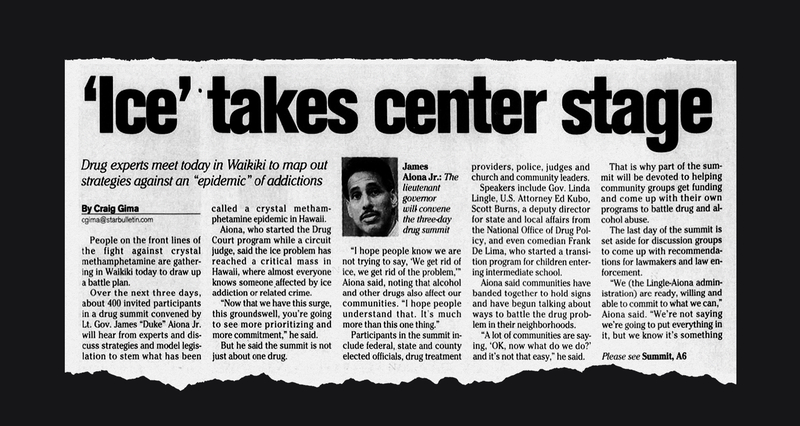
But as the Legislature opened its session in 2004, Lingle dismissed a $22 million plan from Democrats to combat meth with prevention and treatment initiatives as “simply throwing money at the problem.”
Instead, Lingle wanted to give law enforcement new tools to stop the flow of meth. Specifically, she called for granting police the power to wiretap suspects and to engage possible drug smugglers at the airport in conversations that might reveal they were carrying contraband.
The Legislature ended up appropriating $14.7 million for treatment and prevention. The spending became law without Lingle’s signature.
The governor vetoed another measure that required judges to offer treatment to nonviolent drug offenders and health insurers to treat addiction like other medical conditions, along with several other provisions.
Within hours, the Legislature overrode Lingle’s veto. And lawmakers had harsh words for Lingle and Aiona’s meth initiative, which they said had not resulted in any new ideas.
“The administration has nothing but a plan to do more planning,” House Judiciary Chairman Eric Hamakawa said, according to press accounts at the time.
Lingle declined to spend $600,000 of the $14.7 million the Legislature had appropriated without her signature, saying some of it duplicated existing projects. Drug treatment providers said that her refusal to release the money meant that they had to turn away clients.
Policymakers Move On
Seven bills and resolutions dealing with meth were introduced in the following session in 2005, a steep drop-off from the 19 the year before. Several would have included more money for treatment, with a couple focused on tougher criminal penalties. None passed.
The following year – 2006 – the Legislature considered 12 measures that mentioned meth in the title or summary. Three passed. One expanded the definition of the crime of endangering the welfare of a minor to include allowing or causing a child to ingest meth. The other two required the Department of Health to come up with rules for cleaning up meth labs and funded a pilot clinic for pregnant women with a history of meth use.
Five bills failed in 2007, four in 2008, one in 2009. Then came a four-year stretch from 2010 to 2014 when the Legislature didn’t consider a single bill with methamphetamine in the title or summary.
Meth’s moment in the spotlight as a public crisis had passed.
The shift didn’t mean the problem had gone away. Quite the contrary: The number of adults 50 and older entering treatment who listed meth as their primary drug had doubled in the previous five years alone.
Some were nonetheless intent on keeping the meth problem in the public eye.
One was the Hawaiʻi Meth Project, launched in 2009. The initiative had started in Montana four years earlier, and then expanded to other states – Arizona, Idaho, Georgia, Wyoming and Colorado.
The initial funding came from a Montana foundation. Hawaiʻi spent most of its first $6 million on graphic ads depicting teens whose lives descended into chaos after they tried meth. Many who grew up here when they were being aired still remember the lurid scenes of, for instance, a teenage boy meeting a man in a hotel for sex to support his habit, or a young boy cowering in his bedroom as his brother ripped apart the room looking for spare change to pay for a fix.

It was the project with the memorable slogan: “Cook rice, not ice.
Gerorgianna DeCosta, executive director of the project, said it subsequently received a few grants from foundations, corporations and the state. But the money soon fell short.
“There just wasn’t enough political will to support the program,” DeCosta said. “In my opinion, it really should have been something the government was sponsoring, because it was such a big epidemic in Hawaiʻi.”
Prevention was a hard sell in the Legislature, DeCosta said, because keeping people from ever trying a drug would only show results years later.
“Prevention is never sexy,” DeCosta said. “It doesn’t move the numbers the way everyone wants to.”
The Hawaiʻi Meth Project shut down in 2016 after seven years. Some of the other states kept theirs going longer. Two – in Colorado and Montana – are still up and running.
'Meth Has Just Kind Of Been Embedded In Our Community'
One argument repeated over the years has been that any money spent on strengthening Hawaiʻi’s treatment and prevention network to help opioid users would also aid others struggling with addiction.
In response to questions from Civil Beat, for instance, Department of Health's Valera wrote that the department hoped to use both the opioid settlement and grant money “to improve Hawaiʻi’s substance use treatment infrastructure to combat all harmful and addictive substances, which would of course include crystal methamphetamine.”
But experts say that’s just one side of the story.
It’s true that drug users today are more likely to mix opioids and meth, sometimes unintentionally when meth is adulterated with an opioid. So a fentanyl test strip, say, or the revival drug naloxone could save a meth user’s life.
Opioid settlement money might pay for a new clinic that could take on meth users, too. Or the counselor workforce could be expanded and trained to also cater to their needs in a way that also benefited them.
But the two drugs are dramatically different, from their brain mechanisms to user demographics to the secondary ailments they may cause.
Asked if the focus on opioids in the settlement money made sense in Hawaiʻi, where the bigger problem is meth, Humphreys said, ““It’s a fair question.”
“None of these things were designed for you. You may be able to make them work, but that’s different than saying they were designed with you in mind. They really were not.”
The meth-using population is different as well – older, less likely to seek drug treatment and prone to other maladies, particularly of the heart, that make smoking ice even more perilous.
“Ensuring that one is dealing with the physical health and potentially other mental health issues is critical to ensuring effective treatment,” Smart said.
Very few older adults go into treatment, where they can feel out of place among much younger clients. A state Department of Health grant report in January found that only 27 of 1,910 clients in publicly funded drug treatment in Hawaiʻi were 65 or older. Only about 20% were between 45 and 65.
Experts say the state needs to make a concerted effort to reach them.
It’s “a particularly difficult population to engage and retain in treatment,” Smart said. “And so I do think a targeted effort may be necessary. “
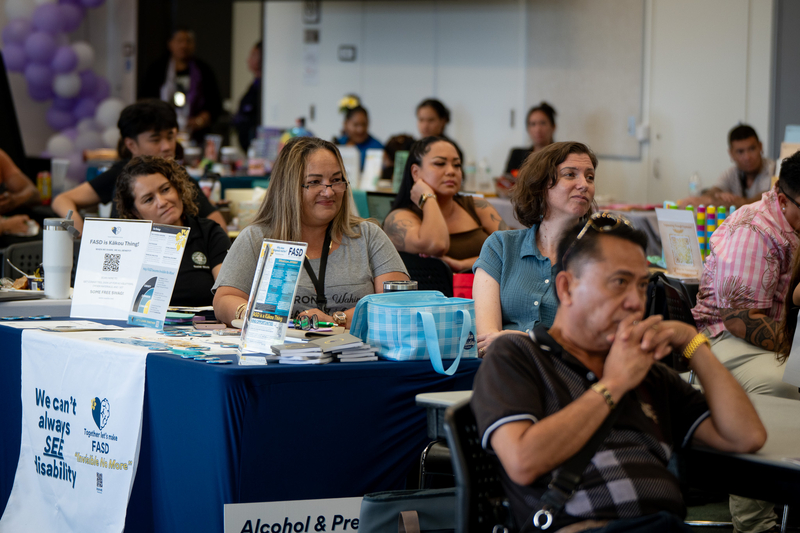
As long ago as 2021, the state advisory commission called for the Hawaiʻi to “recalibrate” the opioid initiative to also address meth – not only with prevention and treatment, but also “public outreach and public service campaigns.”
Hawaiʻi’s health department has taken some steps in this direction, but they have been minimal.
It sponsored a student video contest developed by ʻŌlelo Community Media, including one category on “Methamphetamine Awareness and Prevention.”
The health department is considering disseminating the winning video. But that video, featuring teenagers in classrooms and assemblies and doing youthful activities, is clearly aimed at high school students, not the middle-aged and older men most likely to be succumbing to meth.
A public service announcement created by the health department in recent years on fentanyl distributed on television and the internet discussed the dangers of mixing it with meth. And the department has contributed about $17,000 over three years to an annual summit, End Meth, dedicated to reducing the use of the drug.
But health officials concede that there’s much more to be done.
“There is a need for more services … geared toward the meth population,” said Valera, the Alcohol and Drug Abuse Division administrator.
The state would like to expand residential treatment and therapeutic living programs, especially on the neighbor islands, he said
It wants to promote therapies that have shown promise with meth users, such as cognitive behavioral therapy and contingency management, in which users get small rewards such as gift cards for each negative drug test.
The state also wants to develop a more sustained year-round public information campaign that would include reaching out to older users of meth, Valera said.
“They might say, ‘OK, I have this issue with meth, but treatment is not really for me right now,” Valera said. “But what can we do to help them to move that and to destigmatize it so they can get help?”
Today, various methods for counting overdose deaths come up with slightly different numbers, but they all agree on one essential point: Meth kills more than twice as many people on the Hawaiian Islands as opioids.
After increasing for several years after the state launched its initiatives, opioid overdoses have leveled off or declined slightly in the past couple of years.
Even so, there’s been a marked increase in the number of meth overdoses in which opioids were also detected in the blood. In that sense, the two problems have merged but meth remains the more lethal of the two.
The CDC says that almost half the people admitted to treatment in Hawaiʻi in 2025 listed their primary substance use as meth. That compares to just 12% for heroin and other opiates.
“Meth has just kind of been embedded into our community now,” DeCosta said, “part of what we are.”
Can't see the form below? Answer here.
Honolulu, HI