Heavily watched Sussex County Council races become a referendum on development
Oct 26, 2026 | 6:00 am ET

Description
Photo courtesy of Spotlight Delaware
Why Should Delaware Care?
As development and population booms in Sussex County, residents must often look to the county government for key land use decisions. The results of two competitive county council races this November will determine who is voting on growth and development in the county for the next four years.
Two closely-watched races for seats on the Sussex County Council have drawn outsized sums of money and could become referendums on the future of land use policy in Delaware’s booming southernmost region.
While long-serving Republican incumbents seek to retain their seats and defend their approach to balancing landowners’ rights with community calls to slow development, Democratic challengers are looking to elevate their smart growth agenda — and flip the council’s balance of power for the first time in recent memory.
Republican County Council President Doug Hudson and Vice President John Rieley are defending their experience as vital to guiding Sussex into the future, while Democratic challengers Justine Cuccia and Jill Hicks say they aim to prioritize expanding infrastructure and affordable housing opportunities.
And in a county that is largely made up of unincorporated land, meaning it does not fall within any town or city limits, decisions about development projects often begin and end at the county council’s gavel.
All four candidates are laser focused on having a seat at the table when county leaders begin work this winter on the all-important 2028 Comprehensive Plan, which will determine where developers can build over the next decade.
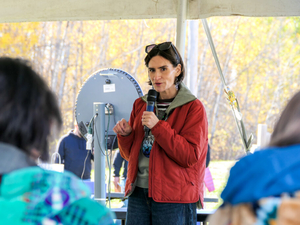
“Land use is not a red or blue issue,” Hicks said. “No matter who I’m talking to, everybody is equally upset and dissatisfied with the direction of the county when it comes to land use.”
Hudson, a retired state police officer seeking his third term, will face former New York City-based attorney Justine Cuccia to represent their Bethany Beach- and Selbyville-area council district.
Rieley, a farmer and retired financial planner, is also running for his third term to represent a district encompassing Millsboro and Georgetown against Hicks, founder of the influential land conservation advocacy group Sussex Preservation Coalition.
Beyond differing land use policies, some have framed the election as a reflection of the “come here versus from here” debate in Delaware’s southernmost county, juxtaposing longtime residents Hudson and Rieley as embodiments of a more traditionally conservative Sussex County culture, against Cuccia and Hicks as part of the new, more liberal wave of residents who have brought different perspectives and pushed for new approaches to county politics.
The election also comes just two years after a consequential 2024 race, in which three new, self-proclaimed slow-the-growth candidates took seats on the council, and the first Democrat was elected to the body in nearly a decade.
How should Sussex develop?
All four candidates have spent the majority of their campaigns discussing the type of development they would prioritize, if elected. The fundamental difference between the incumbents’ and challengers’ strategies lies in how much authority they believe the county has to impose restrictions on developers.
Rieley and Hudson said they are proud of how the county has balanced developers’ rights to build with preserving farmland and open space through programs like the Sussex County Land Trust.
“We’ve been careful over the last eight years,” Rieley said. “I know a lot of people think we have a tendency to rubber stamp. We’ve taken steps to tap the brakes on growth.”
Both pointed to examples of proposed projects they voted against in recent years, like the controversial Atlantic Fields commercial project on Route 24, which would have included a Target and Costco.
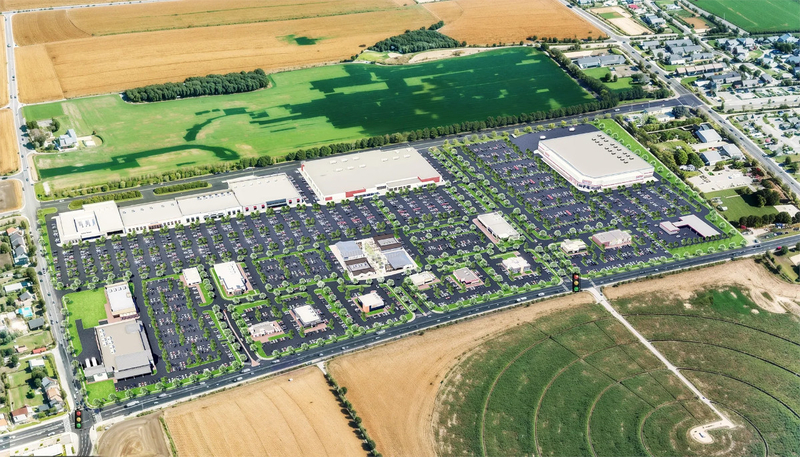
Hudson said the upcoming comprehensive plan is a chance to revisit where the county’s growth zone — the area where development is encouraged — boundaries are drawn. It also would be a time to consider implementing more affordable housing requirements as a part of all project proposals, he said.
Rieley described similar priorities heading into the comprehensive plan design. He also said he would like to consider creating a zoning code for tiny homes, which have been a hotly debated affordable housing option in towns like Georgetown.
Cuccia and Hicks, however, said the farmland and open space preservation programs their opponents touted do not go far enough in preserving land and imposing stipulations on developers.
Hicks said she would adopt a combination of tightening land use codes to limit the types of properties on which developers could build, mandating affordable housing within all projects and charging developers higher fees to go toward forest preservation.
Cuccia, too, described a plan of imposing higher environmental impact fees on developers and encouraging the building of cluster subdivisions, where a project includes homes grouped together and a portion of the land is retained as open space for the community.
“We need to build as many requirements into the plan as possible to give us the authority when the need arises,” Cuccia said. “It doesn’t mean we’re saying ‘no’ to development. It means, ‘Yes, but…’”
One thing the candidates agree on is a shared concern for how the county will implement Senate Bill 23, which aims to increase affordable housing production in the state while prohibiting formal public hearings for some development projects.
All four candidates expressed varying degrees of opposition for the law, which has become a political flashpoint in recent months.
Infrastructure pressures
If development is the most commonly discussed topic in Sussex County, the lack of adequate road infrastructure to support it is a close second. Residents and tourists alike are frequently backed up year round on coastal thoroughfares like Route 1 and Route 24.
Despite the fact that none of the roads in Delaware are county-owned, all of the candidates argued they have the best working knowledge of the state’s road improvement initiatives to apply toward county decision-making .
Cuccia and Hicks both suggest allowing development only in areas where the Delaware Department of Transportation (DelDOT) has plans to expand roads in the coming years.
Hicks said this means doing some “serious master planning” with the state about what roads are intended for fast traffic, like Route 1, and what routes are appropriate for a mix of housing and commercial properties, like Route 9 between Lewes and Georgetown.
Rieley and Hudson both acknowledged the county has not always ensured that development occurs where there is adequate infrastructure to support it. But the pair said they have made serious progress over the past eight years toward a closer working relationship with DelDOT, allowing for more efficient coordination moving forward.
In addition to road strains from population growth, Sussex County has struggled to keep pace in recent years with enough emergency medical services, health care providers and teachers to serve the population.
Rieley and Hudson both cited recently adopted programs to buy new ambulances for fire companies and levy a fee on new home construction to go toward school improvement projects as examples of their work in this area.
They said they are committed to keeping property taxes consistent while finding innovative strategies to meet increasing infrastructure demands.
Hicks pointed toward increasing the affordable housing inventory as a way for the county to close the health care worker and teacher gap.
Cuccia added that building affordable housing closer to where essential jobs exist would also limit wear and tear on Sussex County roads.
Hicks and Cuccia both said they would not raise property taxes. The county’s property tax rate has remained steady at 2.14 cents per $100 of assessed value for more than three decades.
Money pours in
Particularly high spending from individual donors, political action committees (PACs) and third party advertisers has only fueled the messaging from candidates that this election will determine the future of development in Sussex County.
Third-party spending from developers and a “common sense growth” focused PAC has dominated the race’s campaign finance conversation.
The Sussex County Association of Realtors has spent roughly $10,000 and $9,000, respectively, in third party advertising supporting Hudson and Rieley’s campaigns.
Stephanie Moody, CEO of the realtors association, said the group supports Hudson because he is an “advocate of private property rights,” and Rieley because of his focus on “infrastructure-first growth.”
When asked about the third party advertising money flowing in his support, Rieley said he is “blown away” that anybody would spend that kind of money on a county council race. He added that this will be his last county council race, so he will not be beholden to campaign contributions, if reelected.
Hudson said he had no knowledge of the realtors association donating to his campaign.
Hudson and Rieley had received $4,301 and $2,400, respectively, in direct campaign contributions as of the Oct. 6 reporting deadline, mostly from individual donors and the local Republican Party.
Cuccia and Hicks, however, have raked in whopping $34,811 and $42,920 sums of individual donations, respectively, surpassing the amount raised in many statehouse races. Both candidates’ donations have come from a combination of individual donors and Democratic-associated PACs.
Hicks described the large amount of funding she received as evidence that “people want change, and they’re putting their money behind it.”
The two Democrats have also been tied to more than $10,000 each in third-party advertising from Save our Sussex, a PAC focused on “common-sense growth policies,” according to its website.
John Atkins, a former state representative now running for office again as a Republican in the Millsboro-area 41st House District, submitted a complaint in early October to the Department of Elections alleging the PAC was inappropriately collaborating with Hicks, Cuccia and Atkins’ Democratic opponent for state representative, Ryan Stuckey.
Atkins told Spotlight Delaware his campaign team initiated the complaint because the other candidates “broke the law and accepted illegal campaign donations.”
Hicks and Cuccia both denied having collaborated with the PAC, as alleged in Atkins’ complaint.
A spokesperson for the Department of Elections confirmed the department had received the complaint and has since closed an investigation into it. The Department of Elections worked with the PAC to “correct its campaign finance reporting,” but the PAC’s operations were never halted, the spokesperson said.
According to the state’s campaign finance website, that investigation resulted in Save our Sussex receiving fines totaling $900.
A spokesperson for the PAC said it had misreported certain dates in a recent campaign finance report, resulting in the fines. The spokesperson said the organization had been in communication with the Department of Elections about the errors and planned to appeal the penalties.
As the final week before the election approaches, all four candidates said they are spending virtually every day knocking on doors in their district, in hopes that personal interactions with voters will propel them to victory.
Get Involved:
Early voting is now open from 7 a.m. to 7 p.m. through Oct. 27, and from 11 a.m. to 7 p.m. beginning Oct. 28 through Nov. 1. Polls will be closed on Sunday, Oct. 25. Polls will be open on Election Day, Tuesday, Nov. 3, from 7 a.m. to 8 p.m. A list of early voting locations can be found here.
Maggie Reynolds is a Report for America corps member and Spotlight Delaware reporter who covers rural communities in Delaware. Your donation to match our Report for America grant helps keep her writing stories like this one; please consider making a tax-deductible gift of any amount today by visiting https://spotlightdelaware.org/support/.
Dover