Alani Bankhead wants to be ‘the fighter in DC’
Oct 20, 2026 | 6:05 pm ET

Description
Democratic candidate Alani Bankhead speaks to Montana Democrats during a gathering at the Northern Hotel in Billings during the summer of 2026. She is running for the U.S. Senate in the 2026 Election as the Democratic nominee, facing off against three other candidates (Photo by Jenna Martin for the Daily Montanan).
Alani Bankhead’s quest to win a U.S. Senate seat as a newcomer to politics doesn’t sound like an impossible task to former Gov. Brian Schweitzer.
Schweitzer, a Democrat who won a race for governor in Montana in 2004 with a Republican lieutenant governor, endorsed Bankhead after the primary.
He said he doesn’t buy the claim that a Democrat can no longer win in the state, and he doesn’t fault Bankhead for seeking statewide office as a political unknown.
“I’d never been elected to anything when I ran for governor. Nothing,” said Schweitzer, who lost a Senate election in 2000, but was elected as governor again in 2008.
Nonetheless, Bankhead faces fierce headwinds, from the pipeline of money flowing to her independent opponent, Seth Bodnar, to the dysfunction of the Montana Democratic Party, to the support Republican Kurt Alme has by virtue of his political party.
Bankhead, who lives in the Helena area, came swinging out of the gate. Her aggressive stance turns off some Democrats, but the military veteran argues it’s a spirit Montanans need in Washington, D.C.
“We are in a fight for our democracy right now, and it’s important for people to understand who’s going to be the fighter in D.C.,” Bankhead said to the Daily Montanan.
Progressive candidates clashing
Bankhead, who is the third generation of her family to serve in the military, was a bodyguard to the secretary of the U.S. Air Force when a review of nuclear sites was ordered, and she visited Malmstrom Air Force Base, she said.
“I remember tooling around Great Falls, and people would wave on side roads,” Bankhead said.
She said she and her husband decided that’s what they wanted.
They landed in the Helena area five years ago after her husband retired from active military duty and became a U.S. Environmental Protection Agency agent investigating clean air and clean water violations.
The couple intended to recover from a couple of decades of military service, with Bankhead retiring as a U.S. Air Force lieutenant colonel and special agent.
But she said one reason she decided to run for office is they encountered neighbors who were struggling to put food on the table.
“We did not sacrifice and deploy and get shot at and bombed so that this could be happening in the richest country in the world,” Bankhead said.
In December 2025, Republican U.S. Sen. Steve Daines of Montana failed to appear for a vote to extend the Affordable Care Act subsidy.
A spokesperson told MTN News at the time that Daines was traveling, but Bankhead figured it should be curtains for Montana’s senior senator.
“Your whole job is to meet with people and vote on their behalf,” Bankhead said.
She decided to try to take his job.
“You’re getting fired,” she recalled thinking.
Daines maneuvers, Dems misfire
Daines had his own plans.
With two terms under his belt in the Senate, he would have been the tough-to-beat Republican incumbent, but at the last minute, he withdrew and endorsed Alme — who filed eight minutes before the deadline on the last possible day.
Daines’ sudden exit left some Montanans, including members of his own political party, miffed because it closed the field to candidates who may have been interested if only they had been given notice.
At least a couple of powerful Democrats tried to convince Bodnar to file as a Democrat too, but he filed as an independent. He has said he feels “politically homeless.”
Democratic political consultants pitched a strategy to boost Bankhead in the primary election and back the independent in the general election, said political scientist Jessi Bennion, of Montana State University and the University of Montana.
It’s a roadmap playing out in other conservative states, but Bankhead meant to campaign to the finish.
“They (Democrats) boosted her not even asking her if she would actually get out,” Bennion said to the Daily Montanan.
Bankhead holds on
Bankhead never intended to back out, said so repeatedly and said Bodnar was the “last person” for whom she’d drop out.
She’s been stumping on a message of connecting her military service to her ethic as a future senator — she worked around the world to protect vulnerable people, she said, and she would work in D.C. to protect the powerless.
She has said she has the connections in D.C. and understanding of the political landscape to be effective.
On the campaign trail, Bankhead talks about stopping child exploitation around the world. Her campaign site quotes Brig. Gen. Amy Bumgarner, who signed her meritorious service medal award.
Bumgarner said Bankhead’s leadership in training agents, prosecutors and intelligence analysts led to 120 arrests in child sex abuse cases and a 96% conviction rate, according to a copy of the medal commendation on her website.
“When I talk about who I serve, it’s always been the vulnerable and the forgotten, right?” Bankhead said in an interview with the Daily Montanan. “And you can see that in my career trajectory. I hate bullies. I hate people who use power against weaker folks. I think if you have power and money, you should use that to create a better community for everybody.”
On paper, Bankhead and Bodnar appear similar in some ways. They both served in the military, moved to Montana within the last decade, espouse an ethic of public service and have criticisms of both political parties.
Healthcare, a top election issue for Montana voters, is one area where they part ways. Bankhead supports universal healthcare, and she said the country already has a model that works.
She points to TRICARE for military families, a program funded with public dollars but provided by private doctors and hospitals.
Bankhead said the path is to extend Medicaid and Medicare until everyone is covered. She said the state and federal government already pay the cost of universal healthcare, but people are not getting the coverage.
“It’s a phenomenal system,” Bankhead said of TRICARE. “I mean, it’s not perfect, right?”
But Bankhead said it would have benefits for Montana’s rural healthcare needs, such as housing and pay incentives for providers who step into hard-to-fill vacancies.
“We have those solutions already in place,” Bankhead said.
She and Bodnar differ in style as well. Bodnar is personable in front of an audience, and Bankhead is punchy.
She’s comfortable on the attack, and one Missoula supporter said “she has fire and purpose in her attitude.”
“I thought that Alani ate Bodnar’s lunch in their debate appearances,” said Dan Jensen in an email. “She is twice the fighter he is.”
Fighting within
Bankhead has had to fight on some unexpected fronts in the campaign.
On Oct. 12, right after ballots went out, Shannon O’Brien, chairperson of the Montana Democratic Party, resigned to endorse Bodnar, but Bankhead said O’Brien had been working against her all along.
Her campaign gave an example: Bankhead had asked O’Brien after the primary when the Democratic party “would push back on Bodnar the way it had on Republican candidates,” her spokesperson said.
“She never got an answer,” said spokesperson Kaight Meyers, with the Bankhead campaign, in an email.
Only nine days later, when Bankhead followed up with the entire executive board, did O’Brien respond, Meyers said: “We continue to stand with you!”
O’Brien did not respond to a text message from the Daily Montanan that outlined that narrative.
In stepping down from the party and endorsing Bodnar, O’Brien said Bankhead didn’t have the momentum or resources to win.
But the Bankhead campaign said the lack of resources falls on the party; the Democratic Senatorial Campaign Committee sent $0 to Montana Democratic Party this cycle, but $2.8 million by the same time in 2024.
“The national party starved its own nominee, then cited the starvation,” Bankhead’s campaign said in an email.
Trends for GOP
Schweitzer said the people who argue a Democrat can’t win in Montana anymore “apparently don’t own a calculator.”
He rattles off presidential election years and the percent of voters in Montana who supported the Republican, generally 49.5% to 59.1% since 2000.
In 2004, 59.1% of Montana voters supported the GOP president, the same year Schweitzer won.
In 2016, 56.2% supported Republican Donald Trump for president, the same year Democrat Steve Bullock won re-election as governor.
Schweitzer said Democratic insiders talked to each other and decided it was impossible to elect a Democrat for governor the first year he ran too.
“I consider myself fortunate that I didn’t know any of those people and fortunate that I wouldn’t have listened to any of their advice anyway,” Schweitzer said.
More liberal Montanans wanted the state to show its purple roots again with one choice on the ballot.
But Bodnar registered as an independent. His supporters tried to push Bankhead out of the race, and Bankhead called for Bodnar to step down. Both were unsuccessful.
So on the ballot, left-of-center voters and anti-MAGA Republicans have options, and political analysts have Alme leading the pack.
Bennion, the political scientist, said it’s hard for average Democrats to feel like they have a voice in politics with such maneuvering behind the scenes.
“That right there is the big mistake, as far as the political gamesmanship of it all,” Bennion said.
Editor’s note: Reporter Jordan Hansen contributed to this story.
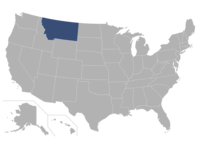
Helena, MT