K-12 scholarships through federal tax credits start in January. Nonprofits will oversee spending.
Oct 20, 2026 | 5:25 pm ET
Description
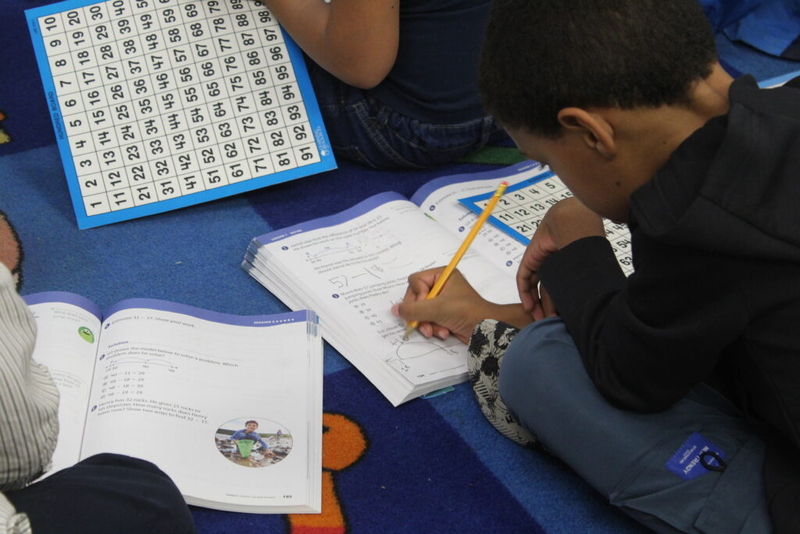
A federal funding program will give students money for private school tuition, tutoring and textbooks, with no set limit on how much they can receive. (File photo by Skylar Laird/SC Daily Gazette)
COLUMBIA — Starting in January, nonprofits can dole out scholarships to South Carolina students for K-12 private tuition and other education expenses, thanks to a federal tax credit program.
The program, approved as part of last year’s One Big Beautiful Bill Act, has similarities to a state tax credit approved over a decade ago that legislators ultimately revised because of concerns about how one nonprofit handled the money.
That same nonprofit, Palmetto Kids FIRST, plans to participate in the federal program, said its president, Jeff Davis, who is also chair of the Greenville County Republican Party. While critics have concerns about the program’s accountability, Davis pointed to federal oversight to keep the program in check.
The nonprofit’s participation is ultimately up to the state Department of Revenue. Last week, Gov. Henry McMaster instructed the agency to begin evaluating applicants.
So far, 30 states, including South Carolina, have opted in. Each state must decide annually whether it wants to continue, meaning the next governor will get to decide if South Carolina remains in the program.
A proposed federal rule laying out the specifics of how it will work, issued earlier this month, still needs final approval before going into effect. Public comments are open until Dec. 1.
How does the federal program work?
Starting Jan. 1, taxpayers can give approved nonprofits up to $1,700 annually for a dollar-for-dollar reduction in the federal taxes they owe. A married couple filing jointly can donate up to $3,400 for a corresponding reduction in their tax liability.
Unlike similar state-run programs, there’s no cap on how much nonprofits can collect in donations or award as scholarships. They just can’t spend more than they collect.
They’re also don’t have to give equal amounts to students. So, some students could get their entire tuition covered while others get partial scholarships through the same nonprofit. That’s entirely up to the nonprofit.
Scholarships through the federal program can stack on top of state funds. So, a student whose parents receive scholarships through South Carolina’s voucher or tax-credit programs can also get money through the federal program. For some students, that will allow private tuition to be fully paid. It could also allow additional expenses to be covered.
Expenses that qualify for a scholarship are broad. They include tuition, tutoring, books, computers, internet fees, transportation and uniforms.
The only eligibility limitation for students is that their parents’ income can’t be more than triple the local median.
That means families in Richland County, for example, can’t make more than $277,200. In Greenville County, the cap rises to $319,200, and in Charleston County, it’s $352,500.
Nationwide, as many as 90% of children qualify, according to a study by public policy think tank Urban Institute.
Although states are responsible for overseeing the program and approving nonprofits for participation, South Carolina can’t add any rules beyond what’s in the federal law.
Under those rules, each nonprofit must award scholarships to more than 10 students attending more than one school. That’s meant to prevent schools or parents from setting up nonprofits for their own students. And nonprofits can keep up to 10% of what they receive; 90% of donations must go toward children’s education.
It’s not yet known how many nonprofits could be collecting money in South Carolina. The state Department of Revenue has until Feb. 1 to report a full list of qualifying nonprofits.
How is the federal tax credit similar to SC’s programs?
In 2013, South Carolina legislators adopted a similar, though much more limited, program to help pay for educational expenses.
The tax credit allowed children with documented disabilities to receive up to $11,000 each to pay for education expenses, such as tuition at specialized schools. Like the federal program, nonprofits registered as “scholarship granting organizations” to raise and distribute funds.
Palmetto Kids FIRST, one of five registered nonprofits, far outraised all the others during the initial years of the program.
But after complaints from parents and school officials, a Department of Revenue investigation found Palmetto Kids FIRST was soliciting donations from parents in exchange for money for their child. Every parent who donated later received money from the program, while parents who didn’t donate were less likely to get funds, according to the report.
Davis, whose wife was listed as the nonprofit’s president at the time, denied the claims of offering parents a quid pro quo. Although he sent letters asking parents for donations, and many of those same parents later received money for their own children, he said he never promised anything.
Concerns over Davis’ handling of the money ultimately led legislators to overhaul the program, renamed the Educational Credit for Exceptional Needs Children, in 2018.
Legislators created a single nonprofit, Exceptional SC, to dole out the scholarships. Changes in the program’s structure, combined with changes to federal tax law that reduced the benefit for donating, tanked the amount the program raises and donates each year, said Edward Earwood, chair of the Exceptional SC board.
During the 2023-24 school year, the program distributed $5.8 million to 1,322 students, according to the most recent data from the Department of Revenue. The nonprofit is allowed to collect up to $12 million under the law.
On average, each student received $4,500, according to agency data.
The federal program, by design, will have a much larger reach than the state tax credit, Earwood said. The credit will be easier to claim than the state version, giving people more of a benefit for participating, and the rules will allow more children to qualify, he said.
“It’s pretty distinctively different,” he said.
The limited “exceptional needs” tax credit remained the state’s only private school choice program until 2023, when the Legislature passed its first broad K-12 scholarship program using state taxes.
Advocates have fought since to expand that Education Scholarship Trust Fund, which provides qualifying students money for educational expenses. The scholarship amount is adjusted annually, as a percentage of how much the state spends on public schools, and awarded on a first-come, first-served basis.
This school year, 15,000 students whose parents make up to 500% of the federal poverty level are receiving about $7,600 each.
That scholarship program could be dwarfed by the federal one.
What might the federal tax credit look like in SC?
For Miracle Academy in Bamberg County, scholarships through the federal program could help recruit more students, as well as pay tuition for parents who are barely scraping by, said Principal Teresa Middleton.
“We definitely want to start with the parents who are really making the sacrifice,” Middleton said.
She also wants the money to help students who are already enrolled pay their $12,000 annual tuition. About 25 of the school’s 40 students are already receiving state funding, but that doesn’t cover the full amount, Middleton said.
“We’re hoping the federal system will be better for parents, better for children, better for schools and better for people who are looking for educational options,” she said.
If Palmetto Kids FIRST is approved to distribute funds under the federal program, the nonprofit’s loftiest goal is to raise $300 million, Davis said. That’s his guess for what it would take to cover private school tuition for all interested parents in South Carolina.
Around 70 schools have already signed up to receive money through the nonprofit, he said.
The nonprofit will ask parents and families at those schools to donate, Davis said. He emphasized that donors can designate a specific school to get the money but not a certain child.
“There are a lot of people that would just like to know where their federal tax dollars are going,” Davis said. “Instead of a big black hole in D.C., they at least want to know that it’s going to support a child.”
Davis pointed to federal oversight measures as a way of keeping the program on track. Nonprofits are subject to annual third-party audits under the federal guidelines, which will look at the organization’s eligibility, as well as whether students were selected based on their need for services.
What are critics’ concerns?
That didn’t stop Dena Crews’ concerns. The use of nonprofits to oversee the funds worried the president of the South Carolina Education Association, who said those oversight practices likely won’t be enough to decide if the money is spent as intended.
“There’s no accountability,” Crews said. “You’re just handing over money.”
Crews pointed to the state’s scholarship program as an example. During the first year, the Department of Education removed 1,005 ineligible students after some had already spent $64,000, a problem that did not repeat.
Legislators have yet to receive test scores for students using the money after the state Education Oversight Committee decided the first year didn’t have enough usable results. A report of test scores for the first two years is expected before the end of the year.
The federal program could run into similar issues monitoring student progress, Crews said. She suggested it would be better for the taxes to be collected and spent addressing needs in public education.
Middleton called the program bittersweet.
While she’s glad to see students receiving educational choice, she also sees how families are affected by federal cuts.
The private school also operates a daycare, and while she expects her private school enrollment to soar with the help of the federal tax credit, daycare enrollment has plunged, she said.
Other families are losing access to healthcare and grocery assistance because of policy changes, she added.
“We’re picking up one group and leaving another group behind,” she said.
Columbia