Kaua‘i Needs More Affordable Housing. Council Candidates Have Ideas
Oct 16, 2026 | 6:01 am ET

Description
Photo courtesy of Honolulu Civil Beat
With median sales prices on Kaua‘i at nearly $1.5 million for a single-family home and over $700,000 for a condo, candidates for the county’s seven-member council say that more needs to be done to prevent local families from being priced out.
Kaua‘i needs 4,900 more homes by 2027, according to the 2024 Hawai‘i Housing Planning Study. Nearly 5,000 units were built between 2010 and 2020, but so many were vacation rentals or seasonal units that the county had a net loss of 334 available units to house residents.
Many of the 14 candidates running in the Nov. 3 general election want to see the county continue purchasing land and developing perpetually affordable homes. While some want to look at potential property tax changes, others have their eyes on infrastructure investments and removing barriers that prevent more housing from being built.
At least four seats are open this year, providing Hawai‘i’s smallest county with a chance to see a significant shift in who controls its majority. The Kaua‘i County Council is the only one in Hawaiʻi with elected leaders who represent the entire county, rather than districts. The council sets policy, property tax rates and an annual county budget of nearly $500 million. Voters were expected to receive their mail-in ballots by Friday.
‘No Such Thing As Affordability’
Candidate Dane Smith, a retired Kaua‘i firefighter who lives in Wainiha, said that while the county and state are doing good work increasing the number of homes, more needs to be done to help residents stay housed. For him, property taxes are the council’s biggest tool to affect change.
In his first six months if elected, he wants to look at increasing Kaua‘i’s homeowner exemption, which decreases the assessed value of a property that’s occupied as the owner’s principal home by $220,000. Simultaneously, he’d look at making up revenue shortfall by increasing rates for the higher tiers of the non-owner-occupied properties.
“It’s a powerful statement to say like, you know what we can double this homeowners exemption because that’s … fair in the face of the cost of living that we’re having to incur because of all this outside pressure,” said Smith, who works as a project manager for The Hanalei Initiative’s Hale Kāko‘o affordable housing project.
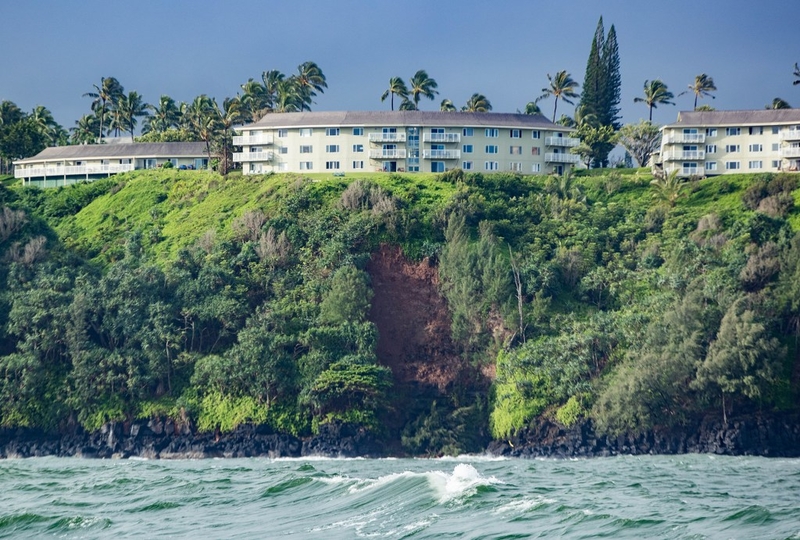
In 2024, the county amended property tax rates so that vacation rentals, hotels, resorts and other non-owner-occupied properties had higher rates, while owner-occupied rates remained flat. Roughly 6% of real property tax revenues each year are designated for the county’s Housing Development Fund.
Smith is not the only candidate looking at whether it would make sense to further increase rates for higher valued non-owner-occupied properties, which are often used for investments rather than providing homes. Umi Martin, a Kekaha farmer, said he’d have to consider the specifics of a given proposal, but generally, he doesn’t think Kaua‘i can tax high-end properties worth tens of millions of dollars to the point where they’d move away.
Keola Kaiminaauao, who works as a county bus driver and at the Līhu‘e airport, said his support for further increased taxes on higher-end properties would depend on the details. He added that it’s integral that revenue from any higher taxes on non-owner-occupied properties go to providing homes for locals.
“That’s not about punishing property owners,” he said. “It’s about creating one fair tax system that is investing in the future of our local families.”
Current council member Addison Bulosan agrees, saying he’d support a higher tier on ultra-luxury properties. While some of those properties’ owners are generous and give back philanthropically, the county needs a mechanism to help locals better retain their homes.
Michelle Kaleiohi Correa, who manages the county’s Waimea Neighborhood Center, said non-owner-occupied properties already contribute significantly to the county’s revenues. Roughly 27% of the county's property tax revenues come from non-owner-occupied residential rates, according to Meghan Wright, a county public information officer; another 30% come from vacation rental rates. Additionally, some local homeowners have second homes, so Correa wants to thoroughly consider whether it’s fair to keep raising rates.
John “Scooby” Mattos, a shift supervisor for the Kaua‘i Island Utility Cooperative who lives in Kekaha, is also concerned about how a further increase in taxes could affect those local families.
His own family is one of them; they own a second home, which they rent to family members under the county’s long-term affordable rental program, which gives qualifying property owners the same property tax rate as owner-occupied homes.
Not all landlords want to participate in the county’s long-term rental program because they can still make more money by paying higher taxes and charging higher rent. He said he’d want to see if there are ways to create more incentives to participate in the program.
Cheree Rapozo, a business owner and real estate professional, said landlords are already struggling with increasing homeowners insurance, so even if they want to rent their homes affordably, they can’t make it pencil out because the savings from the program are so small.
“On our island, there’s no such thing as affordability,” she said.
She added that she’d also want to see the council revisit the county’s low-income property tax programs, which don’t consider the expenses that self-employed residents pay for health insurance, social security and other business costs when determining whether applicants’ income qualifies for the programs. According to the Wright, gross income is used to determine eligibility for these tax relief programs. Additional factors are not factored, regardless of if the individual is a business owner.
Council member Fern Ānuenue Holland wants to look at ways to remove pressure from generational families. She co-introduced a bill in September that would allow residents who can trace ownership of their land prior to statehood to pay a lower and fixed property tax rate for 10 years. If it passes, Kaua‘i would be the third Hawai‘i county to create an ‘Āina Kūpuna program.
“This is just one of what I hope will eventually be kind of a complete restructuring of our tax system and the way that property taxes are valued to take off the pressure from generational families who are being priced out,” she said.
She added that it’s unclear exactly how many families the proposed bill will help. Maui’s ‘Āina Kūpuna program helped 33 families in fiscal year 2025.
She and others, like Paul Noboru Applegate, a retired Kaua‘i police captain, and Mattos are also interested in looking at a tax on vacant homes.
“If nobody’s living there for any reason, I think that we should incorporate a higher tax rate for that vacant property to incentivize them to rent it,” Applegate said.
County-Led Affordable Housing Development
Kaua‘i County is set to develop over 2,000 new affordable, rental and for-sale homes across the island over the next 15 years.
Much of the county’s housing strategy focuses on building master-planned, affordable housing communities on county-owned land and working with private developers to build the homes.
The first such community, Lima Ola in ‘Ele‘ele, is expected to have 550 homes on 75 acres once fully built. The homes range from supportive housing for homeless residents to senior rentals, low-income rentals and for-sale houses. Similar communities are being planned for Waimea, Kīlauea and Līhu‘e.
Several council candidates say the county should continue this model and especially focus on workforce — sometimes called gap — housing for households that make too much money to qualify for affordable homes but not enough to purchase market-rate homes.
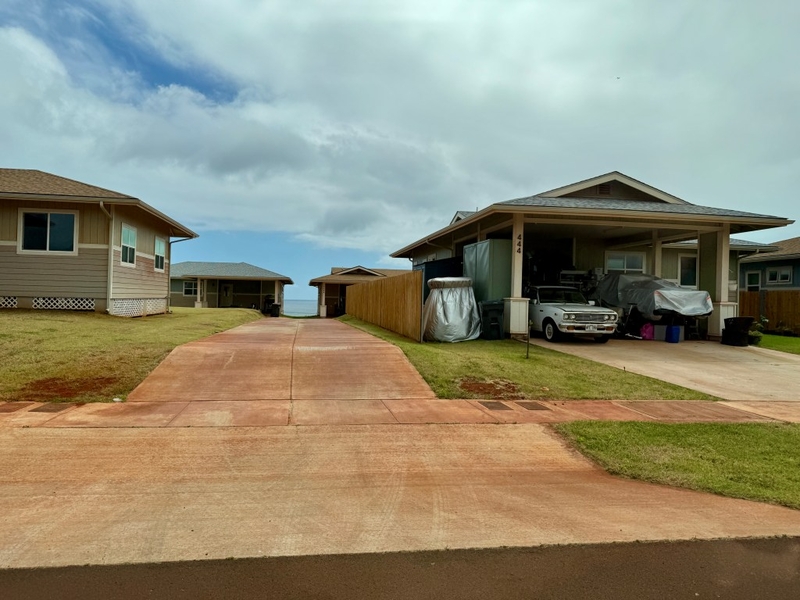
Most of the homes the county has built recently are affordable rentals for households making less than 60% of the area median income. Council member Arryl Kaneshiro said most state and federal subsidies target that income group. He’d like to see more workforce housing so that households can move up the housing ladder, though he also said he doesn’t think the county should be providing all the island’s new housing.
“We’re going to have to look at the island and say, you know, where are we at right now for low-income housing, where are we at for gap housing, and what does the island need?” he said.
Todd Ozaki, executive assistant to the mayor and Capital Improvements Program manager, shares a similar view. He thinks the county's model is working because it leverages the strengths of both the public and private sectors.
If elected, he’d also want to understand how much Kaua‘I is relying on outside funds — such as from the federal government — and what happens if those funds or incentives go away. He'd also want to focus heavily on infrastructure to support housing projects.
Earlier this year, Hawai‘i’s federal lawmakers secured $7.5 million in federal money for housing and transportation projects on Kaua‘i. Roughly $5 million is for affordable housing in Lima Ola and Kīlauea. Kaiminaauao said that shows what happens when partnerships with federal and state government are aggressively pursued.
Correa said she wants to make sure that existing projects like that continue to be funded, especially given how long they take to build. The county purchased the 75 acres for Lima Ola in 2010 and the first homes — part of a supportive housing project — were completed in fall 2024. Families began moving into the first single-family homes in early 2025.
“I’d love to focus on making sure that those projects are funded and complete,” she said. “I think that’s the best way to get people in housing.”
Voters will be asked whether they support amending the state constitution to empower the counties to issue certain bonds to pay for housing infrastructure in designated districts.
Taylor Shigemoto, a former banker, said the amendment will help Kaua‘i, provided it passes and that the Kaua‘i council decides to use it. The bonds are excluded from counties’ debt limits and are funded by future growth in property tax revenues within those districts.
“This mechanism will be hugely vital to future affordable housing development moving forward,” he said.
Some candidates want to see existing and new homes be kept affordable for longer. Maui County earlier this year launched a pilot program to provide eligible homeowners with grants of up to $100,000 in exchange for voluntary 25-year deed restrictions that limit property sales. If a homeowner wants to sell, the county has the first chance to buy the property and then sell it at an affordable price to an income-qualified household made up of existing Maui residents.
Martin said he’d like to see something like that work for Kaua‘i. Earlier this year, the council and county Housing Agency talked about using some of the county’s Housing Development Fund to create a similar program.
In general, he said he’s a fan of deed restrictions to preserve the limited housing available on Kaua‘i for local families.
“We growing at such an unsustainable rate that there’s no way to bring down the cost of land on Kaua‘i,” he said.
Housing In Town Cores, Ag Land
Billy DeCosta, who served on the council from 2020 to 2024, co-introduced a bill to allow one 800-square-foot guest house per dwelling unit on lands zoned for agriculture, residential and certain other uses. The bill, passed unanimously by the council, enabled families who have owned agricultural lands for generations to finally add more long-term housing.
“We doubled the density on all ag lots across Kaua‘i,” he said. The bill also prohibited guest houses on agricultural land from being subdivided, a move DeCosta still stands by.
Rapozo said she’d like to see the county increase the size of guest houses to 1,000 square feet and allow more dwelling units, not just guest houses, on small ag properties. Currently, properties under 4 acres can have two units — a main house and a guest house. Properties 4 to 7 acres in size can have four units — two main houses and two guest houses.
“Most people have two or three children, and all these children are now adults, and they have their families, so how are we supposed to help housing with our extended family when you’re on ag land?” she said.
Mike Coots, a Kīlauea small business owner, agrees that Kaua‘i needs to make it easier to build small housing on agricultural land, such as by allowing pre-approved, pre-fabricated homes that can be fast-tracked through the permitting process.
Bulosan is also a proponent of strengthening the island’s town cores to help address other cost of living challenges, such as food and transportation, in addition to housing. It’s expensive to build outside of existing developed areas and means more taxes for maintenance and “the more we price our own people out of Kaua‘i,” he said.
Election Resources
-Civil Beat candidate Q&As
-Hō‘ike Community Media’s council candidate interviews
-KauaiVotes.org’s KKCR candidate listening room
-Hō‘ike Community Media’s council candidate interviews
-KauaiVotes.org’s KKCR candidate listening room
Some candidates say addressing homelessness also needs to be considered when talking about housing. Earlier this year, the council tripled the amount of the county’s homeless grant-in-aid to $1.5 million, with $500,000 designated for establishing safe zones where individuals experiencing homelessness can get food, use a clean bathroom and access support services.
Shigemoto said he supports safe zones and has been talking with pastors about allowing all or part of their church properties to become safe zones. He added that he’d want to see if a policy change is needed so that safe zones can automatically be an allowed use for church properties, rather than something they have to get a permit for.
Coots said many of the candidates, including himself, are running because they want to help address Kaua‘i’s housing challenges. For him, it’s about making decisions that help give the next generation a chance of having a home where they grow up.
“I do think with creative solutions … it is possible to lessen that burden on homebuyers,” he said.
Honolulu, HI